The trailer for 1937's Public Wedding touts "Two young newcomers really going places," Jane Wyman and William Hopper, both in their first starring roles. Wyman and Hopper eventually did "go places," but it didn't happen overnight for either one. For Wyman, it was a long, slow climb of supporting roles in "A" pictures and leads in lesser films before she earned critical notice for The Lost Weekend in 1945. Hopper, the tall, dark and handsome son of sometime actress and gossip columnist Hedda Hopper, never achieved movie stardom, but later became a star on television in the 1950s, playing private eye Paul Drake in the Perry Mason series.
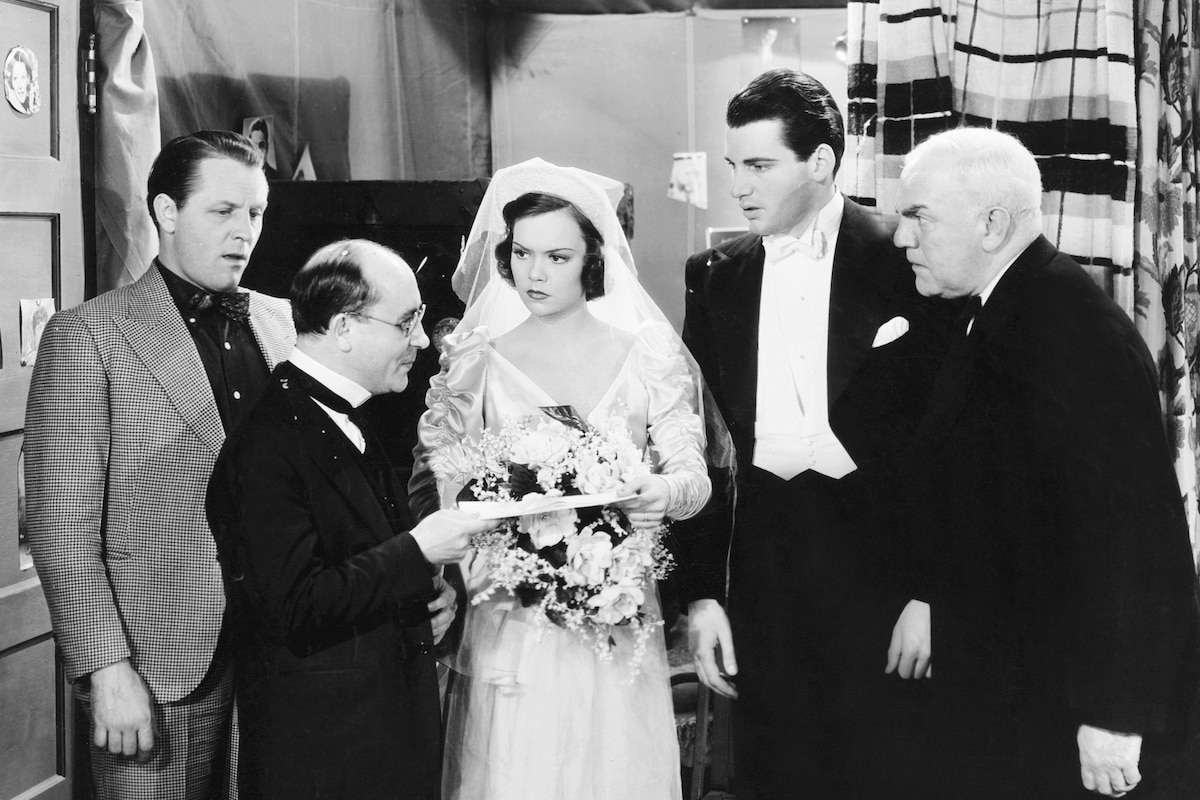
That said, Public Wedding, a rollicking comedy about the payoffs and perils of publicity, is lively, fast-paced and highly entertaining, and the two leads are charming and capable. Wyman is Flip, running a failed carnival with her father and a couple of con men. To attract customers, they stage a phony wedding in the mouth of a giant stuffed whale, with Flip as the bride. To everyone's surprise, the "minister" is actually a clergyman, and Flip finds herself married to the artist reluctantly drafted to play the groom. Comic complications abound before all ends happily for the young lovers.
By the time Wyman appeared in Public Wedding, she had been under contract with Warner Bros. for about a year, and the former Sarah Jane Mayfield had begun using the name Jane Wyman professionally. After five years of bit parts, she was working steadily and films like Public Wedding highlighted her gift for comedy. In the postwar years, Wyman proved her versatility with a series of dramatic roles finally winning an Oscar® for her performance as a deaf-mute woman in 1948's Johnny Belinda.
Hopper, whose late father was stage star DeWolf Hopper, had been signed to a contract at Paramount in 1936, but only had bit parts there. Moving to Warner Bros. the following year, his prospects improved, and he began playing leads in "B" features. That same year, his mother Hedda, whose own minor film career had languished, found her true calling when she began writing her Hollywood column. After service in World War II, Bill Hopper, a reluctant actor, worked in auto sales for several years until he returned to the screen in the mid-1950s at the urging of director William Wellman, in a small role in Wellman's The High and the Mighty. Finally, comfortable as an actor, Hopper had roles in other prestige films such as Natalie Wood's father in Rebel Without a Cause and played investigator Paul Drake in the long-running television series Perry Mason in the 1950s and 1960s.
Marie Wilson began her film career in the mid-1930s and specialized in "ditsy blonde" roles, such as the one she plays in Public Wedding. But it wasn't until the late 1940s that she found her biggest success in radio, and later on television, as My Friend Irma. In Public Wedding, Wilson leads a wonderfully familiar cast of supporting players. You may not recognize their names--Berton Churchill, Dick Purcell and the epitome of "cheap blonde" bimbos, the delightfully-named Veda Ann Borg--but you will recognize their faces.
Director: Nick Grinde
Screenplay: Roy Chanslor, Houston Branch
Cinematography: L. William O'Connell
Editor: Frank Dewar
Art Direction: Esdras Hartley
Principal Cast: Jane Wyman (Flip Lane), William Hopper (Tony Burke), Dick Purcell (Joe Taylor), Marie Wilson (Tessie), Berton Churchill (Pop Lane), James Robbins (Nick), Raymond Hatton (the Deacon), Veda Ann Borg (Bernice)
61 minutes
by Margarita Landazuri
Public Wedding
by Margarita Landazuri | December 15, 2016
SIGN UP FOR OUR NEWSLETTERS

CONNECT WITH TCM