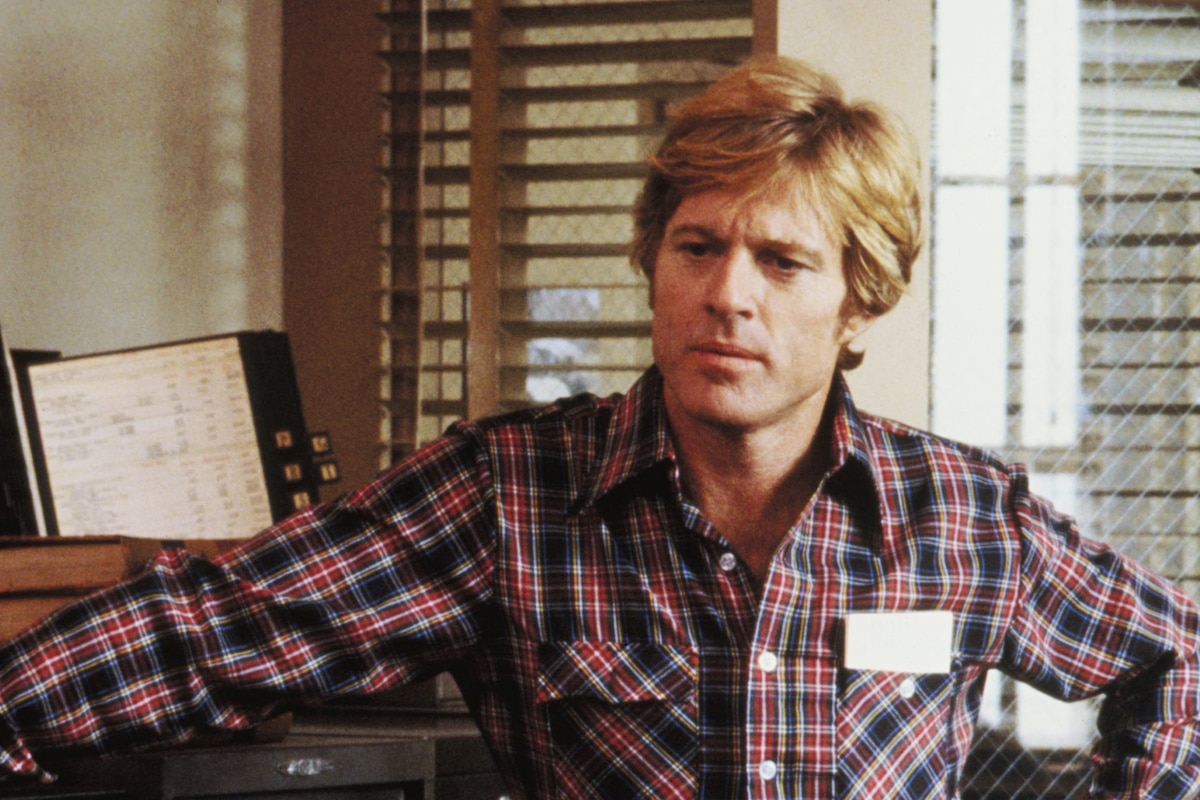
Warner Bros. made film history back in 1932 with I Am a Fugitive from a Chain Gang, an angry protest film about prison corruption during the Great Depression. But in later years, political outrage films were often dismissed as propaganda. A project to film an exposé of the Arkansas prison reformer Tom Murton was tossed around Hollywood for a decade before finally being filmed as Brubaker (1980), starring Robert Redford. The screenplay by W.D. Richter adds new twists to the old story of corruption. To get to the bottom of ugly rumors at a rural prison, the new warden Brubaker (Redford) first appears in disguise as a normal prisoner. He's horrified by the corruption he discovers. Prison authorities are selling paroles, collecting premiums on non-existent heavy equipment, and stealing the prisoners' food to be sold elsewhere. The prison doctor treats only those prisoners that can pay.
When Brubaker assumes his official role he finds that the prisoners are as hostile to his reforms as the guards and the local fat cats. The reform effort then becomes a nightmare when Brubaker hears about unexplained mass burials out on the prison property. Robert Redford's nervous underplaying serves to heighten the suspense. The supporting cast is a veritable dream team: Yaphet Kotto, Morgan Freeman, Murray Hamilton, David Keith, Matt Clark, M. Emmet Walsh, Albert Salmi, Everett McGill, Val Avery, Joe Spinell, John McMartin and Wilford Brimley. The only element lacking is romance, as almost the only woman character is a governor's assistant played by Jane Alexander. Director Stuart Rosenberg had already enjoyed one hit with a prison movie, 1967's Cool Hand Luke. The Hollywood trade papers compared Brubaker to the recent 'issue' films Norma Rae and The China Syndrome (both 1979) and predicted that the film wouldn't do well. The grim story instead proved a substantial hit, bringing in a healthy $19 million dollars. The film took up residence on the editorial pages, where pundits asked if the public really cared about prison reform, and debated whether exposé films had any real positive effect on social issues.
By Glenn Erickson
Brubaker
by Glenn Erickson | December 14, 2016
SIGN UP FOR OUR NEWSLETTERS

CONNECT WITH TCM