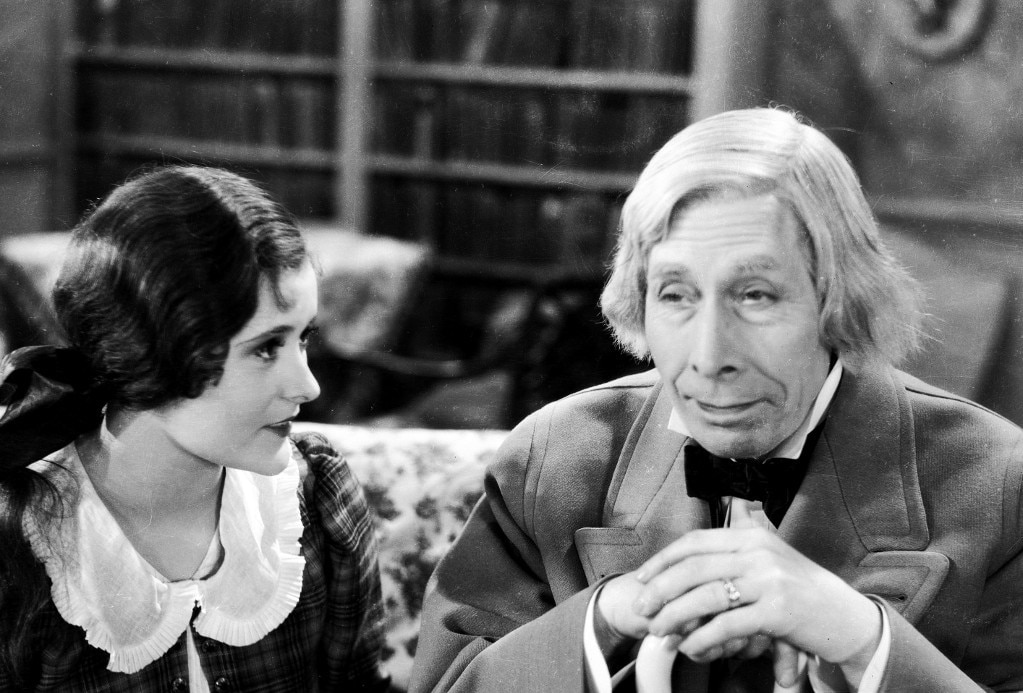
Early talkies were in awe of the fabled actor George Arliss, who was born in 1868 and was still going strong in the 1930s. His third talking feature Old English (1930) isn't about a great statesman, but instead the Dickens- like character Sylvanus Heythorp, a creaky old Liverpool ship builder who holds his failing company together by ignoring advice and bluffing his way through financial difficulties. The original 1924 play is by John Galsworthy, whose most lasting work is his 1906 novel The Forsyte Saga. Almost a solo acting showcase, Old English lets the play unspool in interior sets, staying focused on its star. Critics from the time fawned over Arliss' every move and gesture, marveling at how beautifully the actor captured the hesitant way that old people move. The critic for Variety wondered in print if director Alfred E. Green was really necessary on an Arliss film. Heythorp's shady financial tricks are designed to hide the fact that he's bankrupt, and secure a steady income for his beloved grandchildren, some of them the progeny of his illegitimate affairs. When his business enemy Charles Ventnor (Murray Kinnell) discovers his chicanery Heythorp realizes he can only 'win' if he's dead, and so spends his last evening gorging himself on all the rich food his doctors have forbidden him to touch. Old English was given prestige status in New York cinemas, with first-run bookings asking top prices. Arliss boasted that the play, which he had performed on the New York stage, was sold to Hollywood only because he would appear in it. Arliss would continue acting until his Doctor Syn in 1937; he's credited with promoting the career of Bette Davis, when Warner Bros. saw little promise in the actress. His Old English co-star Doris Lloyd would enjoy a long and fruitful film career as a character actress, with late-career roles in The Time Machine (1960) and The Sound of Music (1965).
By Glenn Erickson
Old English
by Glenn Erickson | November 23, 2016
SIGN UP FOR OUR NEWSLETTERS

CONNECT WITH TCM