If there's a movie subgenre of "Zodiacsploitation," the list is an odd one indeed with everything from the influential action hit Dirty Harry (1971) and David Fincher's masterpiece Zodiac (2007) to Ulli Lommel's dire Zodiac Killer (2005), with oddities in between like Exorcist III (1990). However, the very first film out of the gate tied to the true crime phenomenon was the 1971 production The Zodiac Killer, which beat Dirty Harry by eight months.
The real-life Zodiac Killer terrorized the areas around San Francisco from the end of 1968 to autumn of 1969, claiming at least seven confirmed victims and famously chiding the press and law enforcement with chilling cryptogram letters that still remain partially undecoded. The case remains unsolved despite several possible suspects, and the investigation has been occasionally revived by the San Francisco Police Department as recently as 2007.
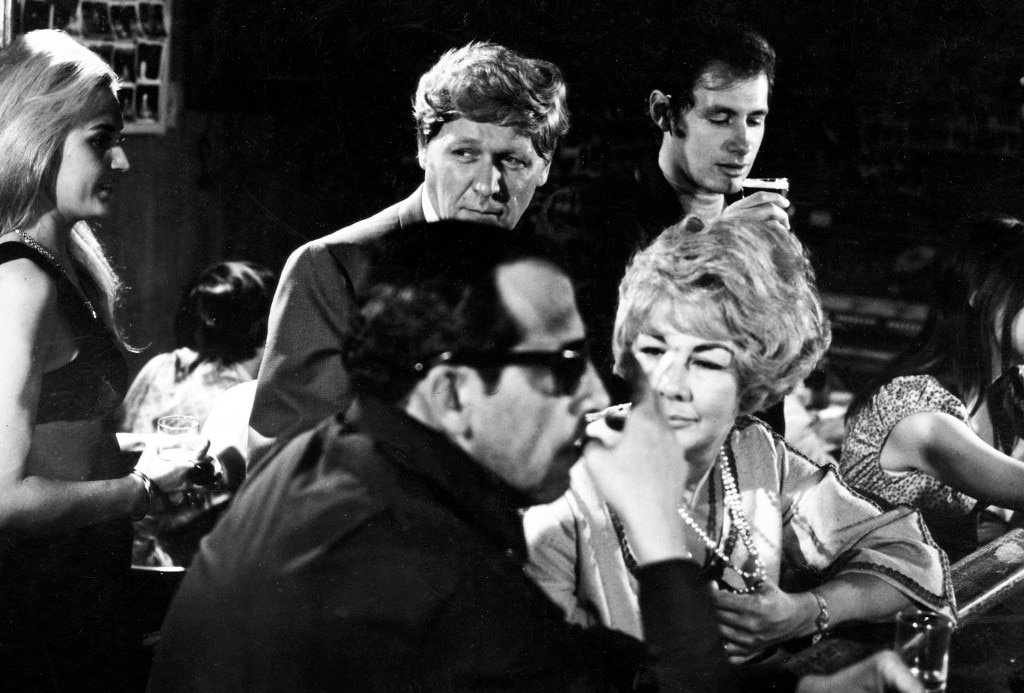
What makes the 1971 The Zodiac Killer so fascinating is the fact that it was shot in the Bay Area where the real serial killer preyed, and the filmmakers even consulted with reporter Paul Avery from the San Francisco Chronicle, later played in Fincher's film by Robert Downey Jr. "The motion picture you are about to see was conceived in June 1970," reads Avery's opening statement. "Its goal is not to win commercial awards but to create an 'awareness of a present danger.' Zodiac is based on known facts. If some of the scenes, dialogue, and letters seem strange and unreal, remember - they happened. My life was threatened on Oct. 28, 1970 by Zodiac. His victims have received no warnings. They were unsuspecting people like you." That last reference was a Halloween card sent to Avery reading "You are doomed," which inspired the reporter to start carrying a revolver. Fortunately he lived to the age of 2000 and went on to cover the notorious Patty Hearst story.
The independent production The Zodiac Killer marked the directorial debut for actor Tom Hanson, who had earlier appeared in such films as The Hellcats (1967) and the Mystery Science Theater 3000 staple, Red Zone Cuba a.k.a. Night Train to Mundo Fine (1966). Hanson's career behind the camera only extended to one more film, the marijuana-smuggling comedy The Big Score (1972), originally released as A Ton of Grass Goes to Pot. According to Chris Poggiali's Temple of Schlock, Hanson and company played with the blurring of reality and fiction with that film as well by implying that they had in fact smuggled a sizable amount of pot from Mexico to the United States via a crated hot air balloon! Giant trucks filled with fake stashes of pot were even planted in front of the film's brief Los Angeles theatrical run to drum up business. Also present in both of Hansons films are a couple of recurring faces, boxing referee Arnie Koslow and actor Hal Reed (as the Satan-worshipping Zodiac). Deciding to get out of the movie business, Hanson also founded the still-existing Los Angeles chain of Pizza Man stores (a modified version of his profile is still their logo) and ran a restaurant called The Wild West in the San Fernando Valley.
The screenplay for The Zodiac Killer was a one-shot attempt by Ray Cantrell, a fellow actor alongside Hanson in The Hellcats (an enjoyable female biker film distributed by Crown International Pictures) who also pops up in this film as a cab driver. His co-writer here was Manny Cardoza, also a single writing credit, who cameos here as a hippie and worked as an assistant director the same year on this and another biker film, the now rare Outlaw Riders.
In a Temple of Schlock interview by Poggiali, Hanson reveals that this film was actually shot under the simpler title of Zodiac for $13,000, "I shot it with the intention of bringing it up to San Francisco and four-walling a theater, which I did, with six guys to set a trap and catch that son of a bitch," he says. "I was gonna catch him and use that for the end of the film, and I thought that would then launch me into making other films with a few more bucks and doing it right."
When it opened on April 7 at the Golden Gate Theater in San Francisco, The Zodaic Killer featured a clever contest idea designed to nab the Zodiac, described in the book Zodiac by Robert Graysmith (played by Jake Gyllenhall in the Fincher film) in which a motorcycle giveaway at the theater required patrons to submit a handwritten response about the Zodiac's motives on a yellow card. The idea was to compare handwriting samples, with numbered cards and hired watchmen (one tucked inside an ice cream freezer) keeping an eye out for suspicious messages. According to Poggiali's interviews with Hanson, one card was indeed submitted that read, "I was here, the Zodiac," and Hanson was followed into the men's room by a dead ringer for the Zodiac wanted posters who commented, "Y'know, real blood doesn't come out like that." The mystery man was questioned and released, later turning up at the theater to check in on Hanson... for reasons that remain unexplained. Even creepier, Hanson later learned that the same man was fired from his bank job and became a mailman, just like the culprit in this film.
After its San Francisco run, Hanson's film was picked up for national release by Audubon Films, Radley Metzger's distribution company behind such successful exploitation releases as I, a Woman (1965) and The Libertine. Audubon paired it up with the delirious Italian erotic thriller The Frightened Woman (1969), an odd double feature to be sure, before it was sent onto the drive-in circuit by distributor and producer Billy Fine, who went on to New Year's Evil (1980) and Hellhole (1985). From there it slipped out of circulation for several years before earning a VHS release from Academy in 1985, followed by its accessible release as a DVD triple feature from Something Weird with a pair of far more sexualized serial killer films, Barry Mahon's The Sex Killer (1967) and Lee Frost's Zero In and Scream (1971). However, to this date the Zodiac's identity remains an ongoing source of speculation in countless books and news stories, and Hanson's film has become an invaluable piece of docu-fiction in the ongoing lore about one of America's most notorious unsolved cases.
By Nathaniel Thompson
The Zodiac Killer
by Nathaniel Thompson | October 07, 2016
SIGN UP FOR OUR NEWSLETTERS

CONNECT WITH TCM