Touted on its first American theatrical release in 2015 as "the most dangerous movie ever made," Roar can actually stake an honest claim to that title, at least since the safety-impaired Hollywood productions of the silent era. A barrage of real-life jungle cats are the real stars of this astonishing production, which began when Tippi Hedren and husband Noel Marshall were in Africa shooting the film Satan's Harvest (1970). Best known at the time as the star of Alfred Hitchcock's The Birds (1963) and Marnie (1964), animal lover Hedren was alarmed by the plight of the dwindling big cat population on the continent; furthermore, the couple was astonished by the sight of a Mozambique game warden's abandoned house, now filled with wild lions and tigers.
Deciding the idea of visualizing this scene on film was too much to pass up, Hedren and Marshall decided to produce the film with both starring as well. Marshall took on writing and directing duties, Hedren's daughter, Melanie Griffith, was brought on to star as well, though she would make several other films in the interim before it was finally released in Europe, Asia, and Australia in 1981. Making it even more of a family project, Marshall's sons John and Jerry were brought in as actors as well.
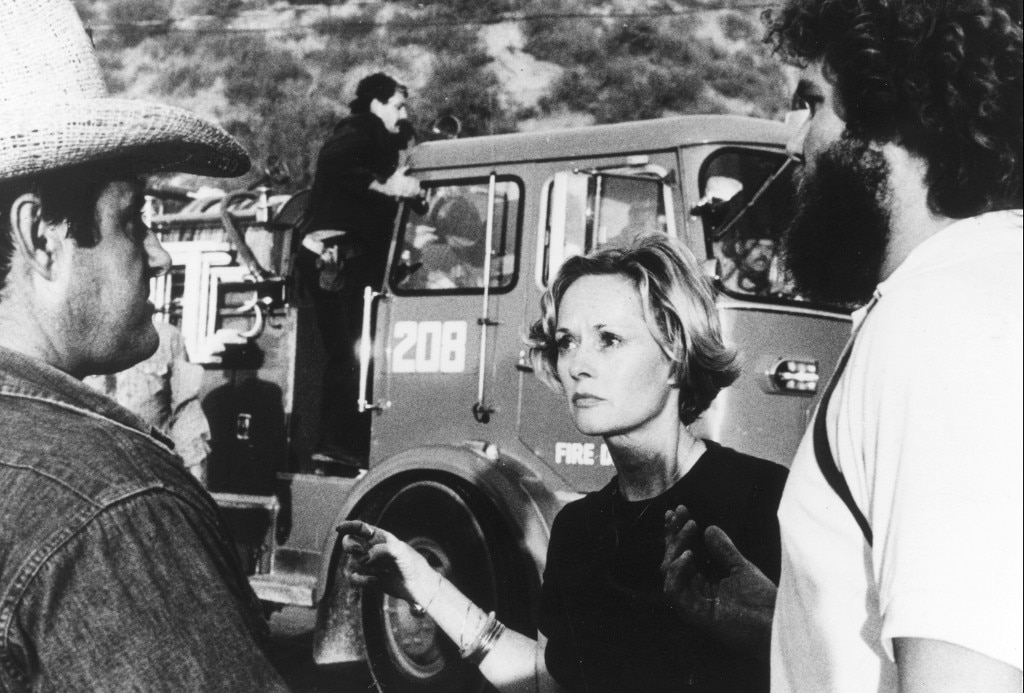
Though it takes place over less than two days, the film took a grueling five years to bring to completion (or eleven if you count the original development though its first theatrical appearance). The financing process alone was arduous with its projected $5 million budget ballooning to $17 million by the end, with at least 70 cast and crew members injured in some way during the shoot. The Marshalls' own ranch in Acton, California was the primarily shooting location, with Noel repeatedly running afoul of overly zealous lions and cheetahs. Some of the scratches and bites remain in the final film (including a nasty one on his hand), but the sheer accumulation of his injuries eventually resulted in gangrene. One oft-told tale from the set involved his worst wound, a lion bite to the neck, which resulted in him running out of the house bloody, naked, and screaming in front of a group of potential Japanese investors. Needless to say, they declined to participate.
Misfortunate also befell the film's cinematographer, Jan de Bont, who was partially scalped and had to receive extensive stitches. Nevertheless he soldiered on to finish the production and went on to shoot such films as Die Hard (1988) and The Hunt for Red October (1990) before going on to a career as a director with Speed (1994) and Twister (1996).
The humans involved weren't the only ones damaged by the production, as several of the big cats (including its star, Robbie) were injured or killed when a flood swept through the ranch in 1978 and nearly derailed the entire project. A brushfire also broke out in 1979, decimating more of the shooting area.
When it opened in several countries in 1981, Roar proved difficult to market. Was it an action-adventure film? A family feature? Or even a horror movie? Most English-language territories took the curious route of pushing it as "a furr-ocious comedy," which probably isn't how most viewers would describe it. Though it failed to secure an American release at the time, it was eventually rediscovered, earning that aforementioned theatrical issue on the repertory circuit and earning a wide release on DVD and Blu-ray.
However, its greatest legacy may be Hedren's ongoing activism for big cats, including the descendants of this film's stars who reside on the same ranch now called the Shambala Preserve. (One of the elephants from the film still lives there, too!) She also wrote a 1985 book based on the experience, The Cats of Shambala, and has introduced legislation to protect them.
By Nathaniel Thompson
Roar
by Nathaniel Thompson | September 22, 2016
SIGN UP FOR OUR NEWSLETTERS

CONNECT WITH TCM