The dual cinematic fads for European westerns and Asian martial arts epics resulted in some odd hybrids during the 1970s, with gunfighters and karate champions sometimes crossing paths under the most unlikely of circumstances. The most prestigious of these cinematic experiments came in 1971 when a cast of European stars joined forces with Akira Kurosawa leading man Toshirô Mifune for Red Sun, an ambitious international project designed for as much global appeal as possible.
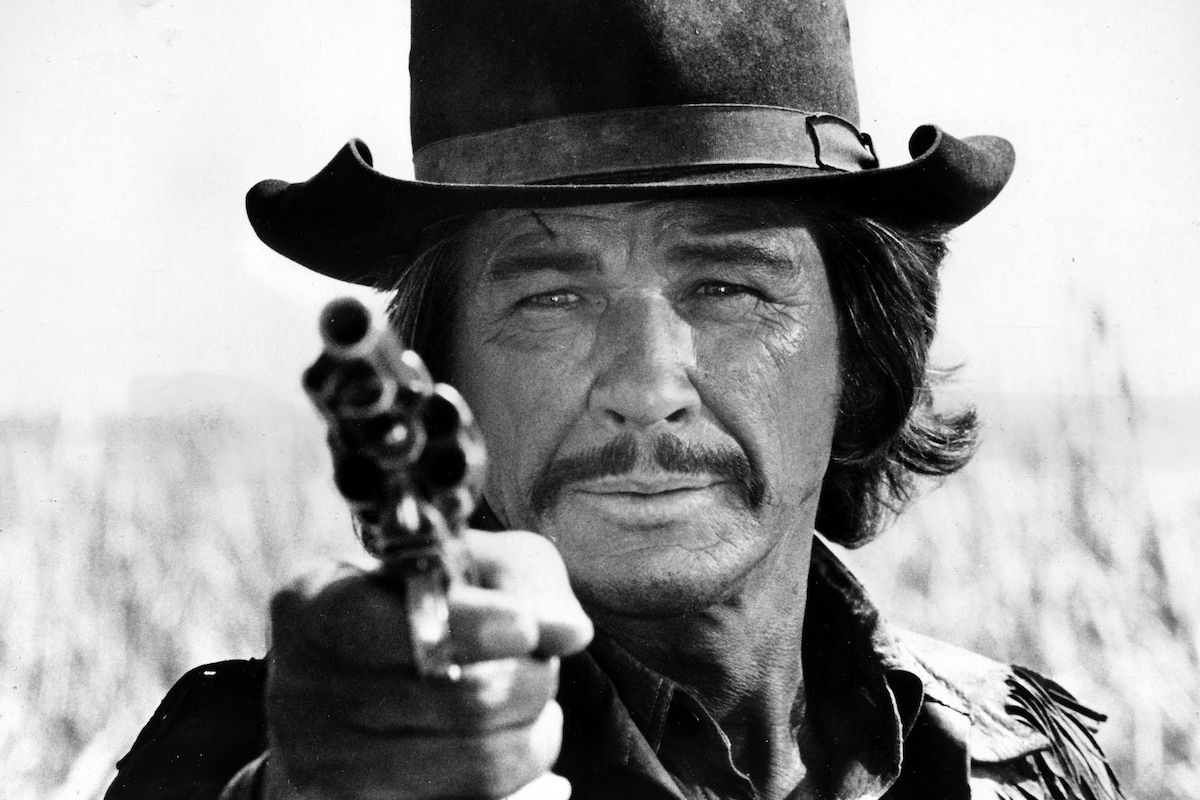
The man chosen to helm this undertaking was Terence Young, best known at the time as the director of some of the best-loved James Bond adventures including Dr. No (1962), From Russia with Love (1963), and Thunderball (1965). By this point Young's fluency in Spanish, French, and Italian made him an ideal candidate for multilingual European productions, with titles like Mayerling (1968) already under his belt. On top of that Young was in the middle of a three-film collaboration with actor Charles Bronson (along with 1970's Cold Sweat and 1972's The Valachi Papers), which meant the gun-slinging actor from Once Upon a Time in the West (1969) could be brought in to provide the necessary American appeal.
Budgeted for $3.6 million, Red Sun began shooting in mid-January of 1971 in Madrid and Almeria, Spain. Originally a Warner Bros. production, it eventually went to France's Corona Films and Ted Richmond Productions with Bronson shooting it at the same time as Chato's Land, bookending this around the other film's shoot. Originally the film was intended to be made in 1967 after associate producer Ted Richmond's Villa Rides, with Laird Koenig (The Little Girl Who Lives Down the Lane) writing the original draft. Koenig eventually received a story credit as the script was drastically reworked a number of times, most significantly by Denne Bart Petitclerc. David Goodman was also brought to write a version in 1968, and final screenplay credits in 1971 went to Petitclerc, William Roberts, and Lawrence Roman.
Despite his Bronson connection, Young originally wanted a different Sergio Leone actor to star, Clint Eastwood. At the same time he signed on to this film, Young was also preparing a biography of artist Benvenuto Cellini, potentially to star Claudia Cardinale, Raquel Welch, Ursula Andress, Romy Schneider, and Kim Novak. That film would never come to fruition, but that connection meant Andress was retained to star in Red Sun instead.
Young clashed throughout the production with Richmond, who later told International Soundtrack Madrid in 1971, "We were both under tremendous tension, but I'm planning three more pictures with Young." Not surprisingly, that turned out to be wishful thinking as the two never worked together again.
Before handing off screenplay duties, Richmond based the idea for the film on a story he heard from an authority on Eastern history about a Japanese representative dishonored during a trip through the American West. He prepared a 15-page outline and courted Mifune for the role during a trip to Japan in 1966, getting the first casting commitment for the international cast that also included Alain Delon, Capucine, James Bond actor Anthony Dawson, and even a young Luc Merenda, who would become a star in several '70s Italian crime films. In an unusual move, composer Maurice Jarre, who had already earned Academy Awards for his work on Lawrence of Arabia (1962) and Doctor Zhivago) (1965), was brought onto the set to get a feel for the atmosphere of the film; though evocative and certainly worthy of the composer, the score was never released as a soundtrack album in the United States but has remained in steady circulation in France, Japan, and Spain.
The costly production went smoothly for the most part, though a heavy, unexpected rainstorm added 18 days to the shooting schedule. Mifune entertained the cast and crew throughout the entire production with his refined culinary skills, bringing over a supply of Japanese meats, watercress, seaweed, and other ingredients. He would also exchange recipes for French and Italian dishes, including spaghetti. Family man Bronson brought an entourage of 16 people including wife Jill Ireland and their five children, while Andress fell in love with the area and bought a Spanish villa during the shoot. Meanwhile the busy schedules of Delon and Capucine meant that they flew back to France and Switzerland respectively for weekends and were helicoptered back to the location each Monday.
Red Sun was picked up for American distribution by the up-and-coming independent company National General Pictures, which emerged as a production company in 1967 after years as a theater chain company. The wound up releasing the film in June of 1972 after nabbing it in an ambitious, pricey slate of titles including Pocket Money, The Getaway, Up the Sandbox, The War Between Men and Women, Snoopy Come Home, Prime Cut, and The Dead Are Alive. By the following year, the company would be bought out by American Financial Corporation with its in-house films quickly passing into the hands of Warner Bros. Fortunately the film's star appeal and genre-mashing novelty have ensured that it survives long after the forces that created it vanished into film history.
By Nathaniel Thompson
Red Sun
by Nathaniel Thompson | June 24, 2016
SIGN UP FOR OUR NEWSLETTERS

CONNECT WITH TCM