The perils of cocaine addiction were a going concern in America long before the Jazz Age. Coca leaves were worked into the recipes for the soft drink Coca-Cola and Vin Mariani, a "coca-wine" endorsed by Pope Leo XIII, Ulysses S. Grant, Thomas Edison, and Queen Victoria, while cocaine powder was carried by pharmacies nationwide as a curative for indolence, dandruff, toothaches, arthritis, even flatulence. (Across the Atlantic, cocaine was endorsed by Sigmund Freud as a treatment for morphine addiction and Sir Arthur Conan Doyle made it the calmative of choice of Baker Street sleuth Sherlock Holmes.) By the turn of the 20th century, dissenting voices endeavored to break Americans of what was becoming a bad habit. "We seem to be rapidly becoming a nation of cocaine fiends," crowed a cautionary editorial in a December 1898 edition of The Nashville American. "If the number of those addicted to the use of the dreadful drug continues to increase at the present rate, the importation of what was originally regarded as a blessed alleviator of pain will have to be classed with opium and its use prohibited by law."
Though the Coca-Cola Company 86-ed cocoa leaves after the passing of the 1906 Pure Food and Drug Act and cocaine was declared illegal in America in 1922, drug use remained prevalent in the first half of the 20th Century, due in part to its use by infantrymen as a battleground stimulant during World War I and, later, as a substitute for alcohol during the dry years of Prohibition. Narcotics addiction made itself manifest within the Hollywood colony during the silent era, taking (or severely curtailing) the lives of a number of former film stars: Wallace Reid, Mabel Normand, Barbara LaMarr, and the husband and wife double tragedy of Jack Pickford and Olive Thomas. There remains a longstanding rumor that the manic antics of Mack Sennett's Keystone Kops were fueled by cocaine use while coke jokes popped up in a number of comedies starring Harold Lloyd, Charlie Chase, and Douglas Fairbanks (who, in the 1916 short Mystery of the Leaping Fish, plays a powder snorting satirical Sherlock named Coke Ennyday).
Among the movie-makers who failed to see the humor in substance abuse was D. W. Griffith, whose 1912 one-reeler For His Son (1912) chronicled a physician's development of a cocaine-infused soda pop whose success guarantees the family financial security even as it makes an addict of his son. Other cautionary tales followed, among them Chester Withey's anti-cocaine screed The Devil's Needle (1916), starring Norma Talmadge, and John Griffith Wray's Human Wreckage (1923), produced by and starring Wallace Reid's widow, Dorothy Davenport, as an anti-drug crusader. Davenport largely forsook her acting career to fight the narcotics trade. Davenport also got behind the camera, sharing writing and directing duties with independent producer Willis Kent on The Road to Ruin (1928), a cautionary tale of the wages of loose living whose footloose protagonist (Helen Foster) parties her way to work in a bordello, a back alley abortion, and a for-hire tryst with a john who turns out to be her own father. Davenport and Kent remade the film as a talking picture in 1934, with the director signing herself as "Mrs. Wallace Reid."
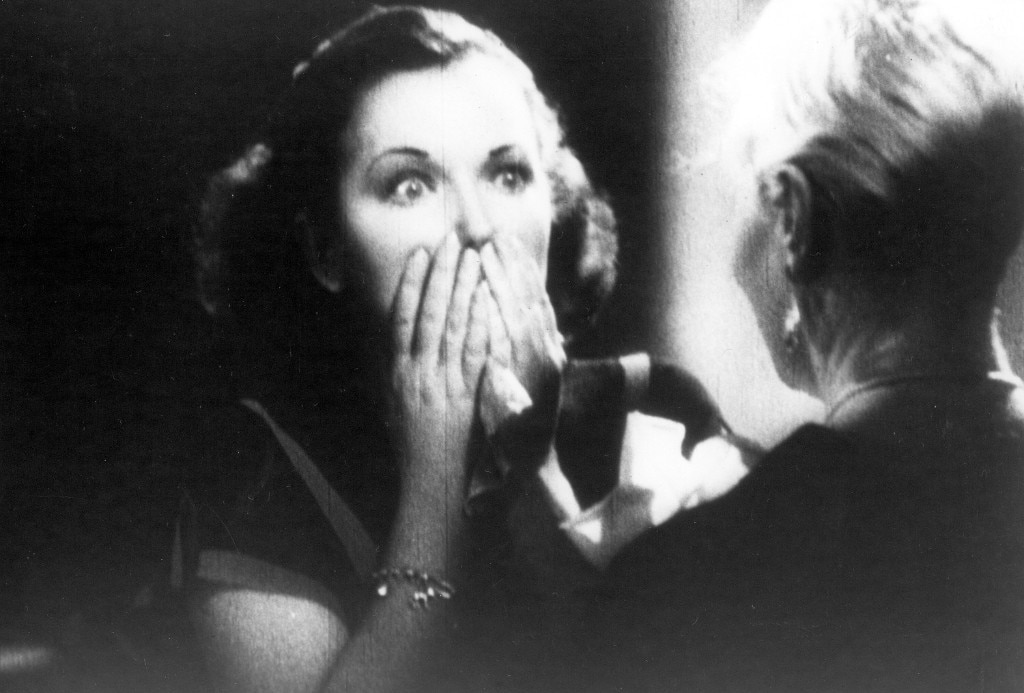
Like any number of independent producers at liberty in Hollywood between World Wars, Willis Kent had no studio of his own, just offices on Sunset Drive and a staff of six; when Kent wanted to make one of his Poverty Row westerns or modern day melodramas, he rented ranch space in the San Fernando Valley or any number of cut rate soundstages. With his career spanning the silent and sound eras, Kent maximized profits by recycling existing material - in particular, remaking his silents as talking pictures, more often than not with the same actors and technical crews. In addition to giving The Road to Ruin a second life as a sound film, Kent remade his drug addiction meller The Pace That Kills (1928) in 1935, retaining the original title and the story's mission statement as an expose of "the dope evil" (as seen through the eyes of a brother and sister fresh off the farm, afoot and vulnerable in Los Angeles). Kent kept the film alive on the road alongside such other "states' rights" titles as Dwain Esper's Narcotic (1933) and Marihuana: The Weed with Roots in Hell (1935), and Louis J. Gasnier's Tell Your Children (1936); as Gasnier would twice-bake Tell Your Children under the more exploitatively salacious title Reefer Madness, so Kent would attract new audiences by re-releasing The Pace That Kills in 1937 as The Cocaine Fiends.
Redolent with open alcohol and drug use, jazz joint libidinousness, sexual relations outside of the institution of marriage, implied prostitution, occasional murder, and not infrequent suicide, films such as Marihuana, Reefer Madness, and The Cocaine Fiends could skirt the censorious Hollywood Production Code by selling themselves as clinical case histories of dreams dashed and lives lost. (Even the name on Kent's shingle - True Life Photoplays - was a veiled plea for legitimacy.) "This picture is a lesson for every teen-ager and a warning for every parent," declared one-sheets for The Cocaine Fiends (exhibited also as Cocaine: The Thrill That Kills). As was common under the states rights method of film distribution, local censors could block exhibition of an offending title outright or demand cuts. The Cocaine Fiends was banned in New York, Kansas, Ohio, and Alberta, Canada; in Maryland, lines referring to a couple living together in sin and having a child out of wedlock were cut. In perpetual re-release, The Cocaine Fiends would undergo additional title changes to Cocaine Madness, Girls of the Street , and What Price Ignorance?.
The Cocaine Fiends leading lady Lois January had a brief but storied Hollywood career. The Texas native got her start in Los Angeles as a Denishawn dancer and later appeared in small roles for Columbia. A contract with Universal got her bit parts and background work in The Black Cat (1934), Let's Be Ritzy (1934), and The Man Who Reclaimed His Head (1935) but it was Willis Kent who gave the pretty brunette a shot at something like stardom. On loan out from Universal, January was cast as a cattle rustler's stepdaughter in Arizona Bad Man (1935) and in The Cocaine Fiends she played Jane Bradford, a hardworking hashslinger who falls for rap of a honeydripping drug courier and winds up addicted to "dope... cocaine... the Kid Catcher..." and working as a "hostess" in a back alley speakeasy. January stuck around on Poverty Row to play leading lady to B-movie western stars Buck Jones, Bob Steele, and Fred Scott but her career fizzled out by the end of the decade. She pops up as an Emerald City beautician in The Wizard of Oz (1939) and in 1942 she became the face of Chesterfield cigarettes. In later life, January returned to acting for television, appearing in multiple episodes of My Three Sons and Marcus Welby, M.D.
By Richard Harland Smith
Sources:
Bold! Daring! Shocking! True! A History of Exploitation Films, 1919-1959 by Eric Schaefer (Duke University Press, 1999)
Cocaine Fiends and Reefer Madness: An Illustrated History of Drugs in the Movies by Michael Starks (Ronin Publishing, 2015)
Poverty Row Studios, 1929-1940: An Illustrated History of 55 Independent Film Companies by Michael Pitts (McFarland & Company, Ltd., 2005)
Hooked in Film: Substance Abuse on the Big Screen by John Markert (Scarecrow Press, 2013)
"The Cokey Comedies of the Silent Screen Era," by Cary O'Dell (May 2014), rogerebert.com
Cocaine Fiends
by Richard Harland Smith | June 24, 2016
SIGN UP FOR OUR NEWSLETTERS

CONNECT WITH TCM