Randolph Scott was a study leading man in Hollywood entertainments since the 1930s, making everything from comedies to musicals to adventures to westerns, but it was in westerns and frontier dramas where he thrived. The genre was a natural for Scott who cut a commanding figure at 6'2" and sat a horse with ease. He looked right at home on the frontier. By 1947, as his long face became craggy and weather-beaten with age (he increasingly resembled the great silent western star William S. Hart as he aged), his career turned almost exclusively to westerns and in 1949 he formed a production company with Harry Joe Brown. They released their productions through Columbia Pictures but Scott continued starring in films for other studios as well and signed a contract with Warner Bros. that began in 1950. Fort Worth (1951) was his third Warner western in run that continued through the decade.
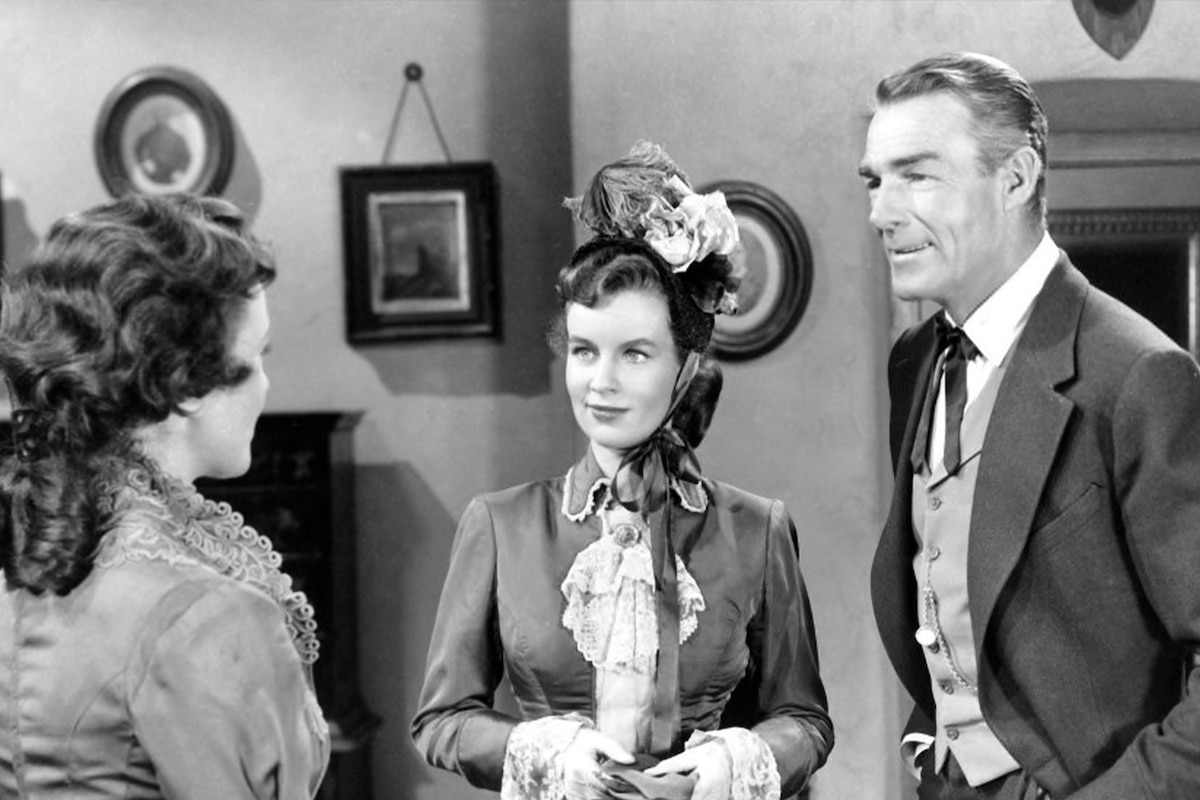
The film opens on a wagon train with Scott in familiar form in buckskin and riding a horse like a scout or a trail hand. His character, Ned Britt, is no stranger to a gun but he's traded his revolvers for a printing press and has come to Texas to find a growing town big enough to support a newspaper. Fort Worth, his hometown, is merely a stop along the way until his childhood friend Blair (David Brian) shares his dream of making Fort Worth a major cattle town and shipping hub in the territory and convinces Ned to help him grow the town. Standing in their way is cattleman Gabe Clevenger (Ray Teal), whose cowhands and gunmen run wild through the town. He's determined to keep the railroad (and the civilization that comes with it) far from Fort Worth. The script by western veteran John Twist complicates things when Ned discovers that his buddy is making a fortune thanks to the chaos unleashed by Gabe. The shifting tensions between the three keeps the drama curiously off balance for a genre where the good guys and bad guys are usually easy to sort out, while the action is sustained by gunfights, hold-ups, and a climactic railway robbery. The budget-minded film makes effective use of the Warner backlot and the nearby Warner Ranch, located just outside of Los Angeles
Phyllis Thaxter, newly arrived at Warner Bros. from a busy career at MGM, co-stars as Flora, the tomboy who grew up with young Ned now grown into a beautiful, capable woman torn between Ned and Blair. David Brian, who made his film debut opposite Joan Crawford in Flamingo Road (1949), starred in Intruder in the Dust (1949) and in the radio and TV courtroom drama series Mr. District Attorney, but to later generations he's remembered as the Fascist figurehead in the "Patterns of Force" episode of the original Star Trek TV series. Ray Teal, a familiar face from hundreds of movies and TV shows, is probably best known as Sheriff Roy Coffee in the TV western Bonanza. And Luther, the spunky copy boy and apprentice reporter on Scott's newspaper, is played by Dick Jones, a former child star (under the name Dickie Jones) and voice of Disney's Pinocchio (1940) who went on star in the TV westerns The Range Rider and Buffalo Bill, Jr..
The prolific Edwin L. Marin made almost 60 films in two decades, among them the 1938 A Christmas Carol, the modest film noirs Johnny Angel (1945) and Nocturne (1946) with George Raft, and the energetic John Wayne western Tall in the Saddle (1945). He first directed Randolph Scott in Abilene Town (1946) and ultimately made a total of seven westerns in five years with Scott. Fort Worth was the final film that Marin completed before his death on May 2, 1951, two months before the film debuted.
Sources:
Randolph Scott: The Gentleman from Virginia, Jefferson Brim Crowe. WindRiver Publishing, 1987.
The BFI Companion to the Western, ed. Edward Buscombe. Da Capo, 1988.
The Warner Bros. Story, Clive Hirschhorn. Crown, 1979.
AFI Catalog of Feature Films
By Sean Axmaker
Fort Worth
by Sean Axmaker | June 24, 2016
SIGN UP FOR OUR NEWSLETTERS

CONNECT WITH TCM