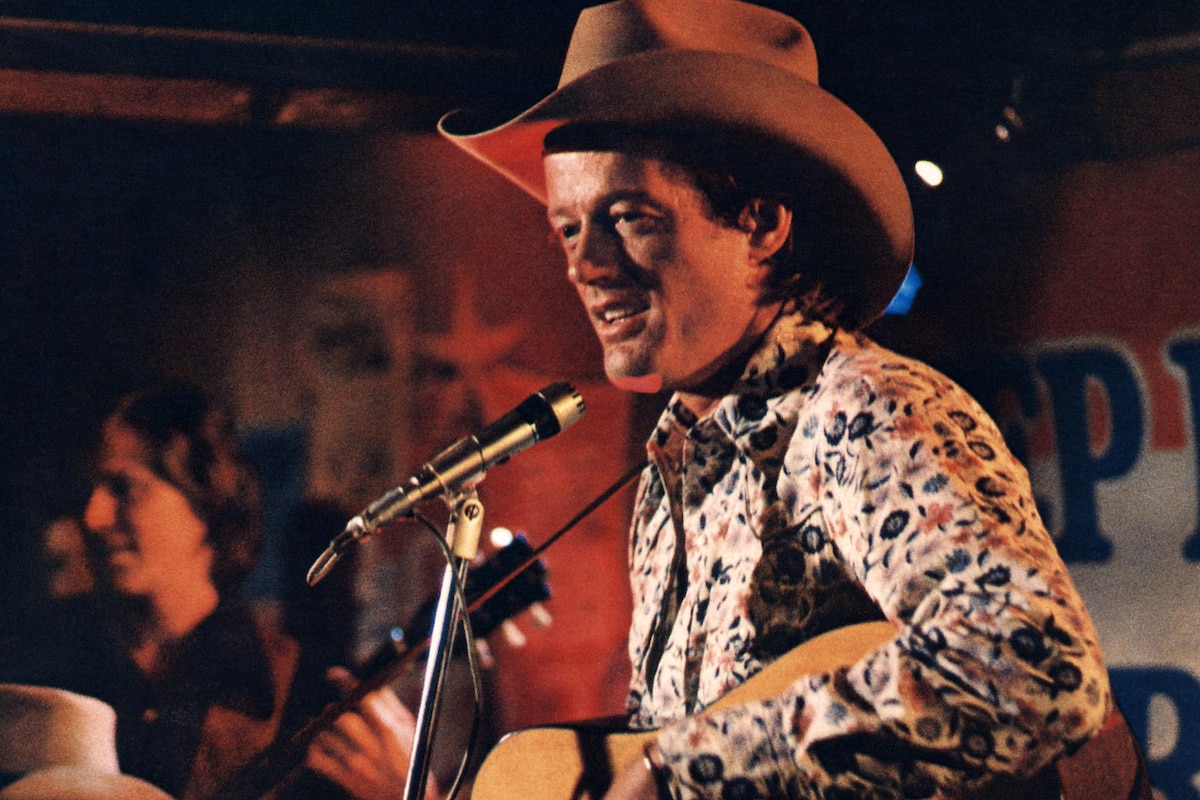
Outlaw Blues (1977) takes its title from the song that drives its plot. A Texas inmate (Peter Fonda) has composed it, only to have it "stolen" by a country-western star (James T. Callahan) who comes to the prison to perform. The song becomes a hit, and when Fonda is released, he heads to Austin to confront Callahan and demand his rightful royalties. One of Callahan's backup singers (Susan Saint James) helps Fonda, but soon he is on the lam once more, leading to car and speedboat chases in a film that stays in the realm of light action comedy.
In its review, The New York Times called the movie "an amiable, lilting, if lightweight, diversion... Pleasantly palatable if not especially nutritious... To the credit of B. W. L. Norton's script, the film also strongly indicates the vicious competition and sleaziness that could lurk behind the glamorous facades of some of the medium's recording giants."
The cast drew praise, with the Times enjoying Fonda's "gently appealing" performance and "pleasant tenor voice," and Variety applauding Susan Saint James as "a sexy knockout who ought to be on theater screens much more often." This was her first big-screen feature since completing a five-year run on the hit television series McMillan & Wife.
Outlaw Blues marked Fonda's screen singing debut, which he enjoyed doing very much, though he did not care for the title tune by John Oates (of Hall & Oates fame). Other original songs were composed by such country-western notables as Hoyt Axton, Lee Clayton, and Harlan Sanders.
In his autobiography (Don't Tell Dad: A Memoir), Fonda recalled: "Working with Susan Saint James was fun... We developed moments for our scenes and didn't tell the director, who loved the way we filled them. Lots of chase scenes in boats and on motorcycles. Great toys. The stunts were very well done, and once again I got to do most of mine. So did Susan."
The last few days of the shoot, Fonda recounted, were done at Huntsville Prison, "the largest state prison in the country." One day nearby, he found a field full of psychedelic mushrooms. He consumed them before shooting a scene where his character runs into a field and toward a swamp: "The effect of these 'shrooms was almost uncontrollable fits of laughter over the smallest things... I felt like I was running in slow motion. And each time the director called 'Cut!,' I would fall to the ground doubled up in laughter."
Director Richard Heffron had just helmed a fairly major film, Futureworld (1976) (the sequel to Westworld [1973]), but he had also made a name for himself with documentaries. He brought his interest in authentic locations to bear on Outlaw Blues as he shot in and around Austin; in fact, this is the rare film to use Austin not as a proxy for other settings but rather as itself.
By Jeremy Arnold
Outlaw Blues
by Jeremy Arnold | April 22, 2016
SIGN UP FOR OUR NEWSLETTERS

CONNECT WITH TCM