The Big Idea Behind BRIEF ENCOUNTER
After the success of In Which We Serve (1942) -- written by Noel Coward, who co-directed with David Lean and co-produced with Anthony Havelock-Allan -- Lean and Havelock-Allan had broken off from producer Filippo Del Giudice's Two Cities films to create Cineguild in order to keep a larger share of the profits from subsequent films. Their first production re-united them with Coward for the hit adaptation of his play Blithe Spirit (1945).
As a follow-up, Lean wanted to direct a film about Mary, Queen of Scots, but Coward convinced him that he wasn't ready for a costume picture. Instead, he suggested a contemporary story adapted from his own one-act play "Still Life."
Coward had written "Still Life" for himself and Gertrude Lawrence as part of Tonight at 8:30, three rotating bills of one-act plays with which they dazzled London and New York audiences in the '30s. "Still Life" was a rarity for the comic playwright in that it was a serious drama.
MGM had originally picked up the rights to Tonight at 8:30, but had only filmed one of the plays, We Were Dancing. British producer Sydney Box then bought the rights from them and sold each play separately to The Rank Organization. Cineguild had to pay 60,000 pounds for the screen rights.
When Lean read Coward's first draft of what would become Brief Encounter, he hated it, and told Coward there was nothing to hold an audience. When Coward asked him how he could do that, Lean came up with the idea of telling the story in flashback. They opened with a seemingly innocuous scene in which a talkative woman interrupts two friends sitting in a railway café. Only as the story unfolded in flashback would the audience realize that the scene was really about a final farewell between two lovers.
According to Lean, Coward took his suggestions and re-wrote the screenplay in four days. Havelock-Allan, however, claimed that Coward never worked on the screenplay. Rather, he, Lean and co-producer Ronald Neame did all the work, inventing additional scenes to flesh out Coward's 30-minute play. They received the only screenplay credit.
Neame missed much of the writing process, as he was in the U.S. researching American filmmaking techniques. On his return, he says the three credited writers met with Coward frequently to create dialogue.
In coming up with a new title, Coward suggested they emphasize the smallness of the picture. When the word "brief" came up in brainstorming sessions, Coward's personal artistic supervisor, Gladys Calthrop, suggested Brief Encounter.
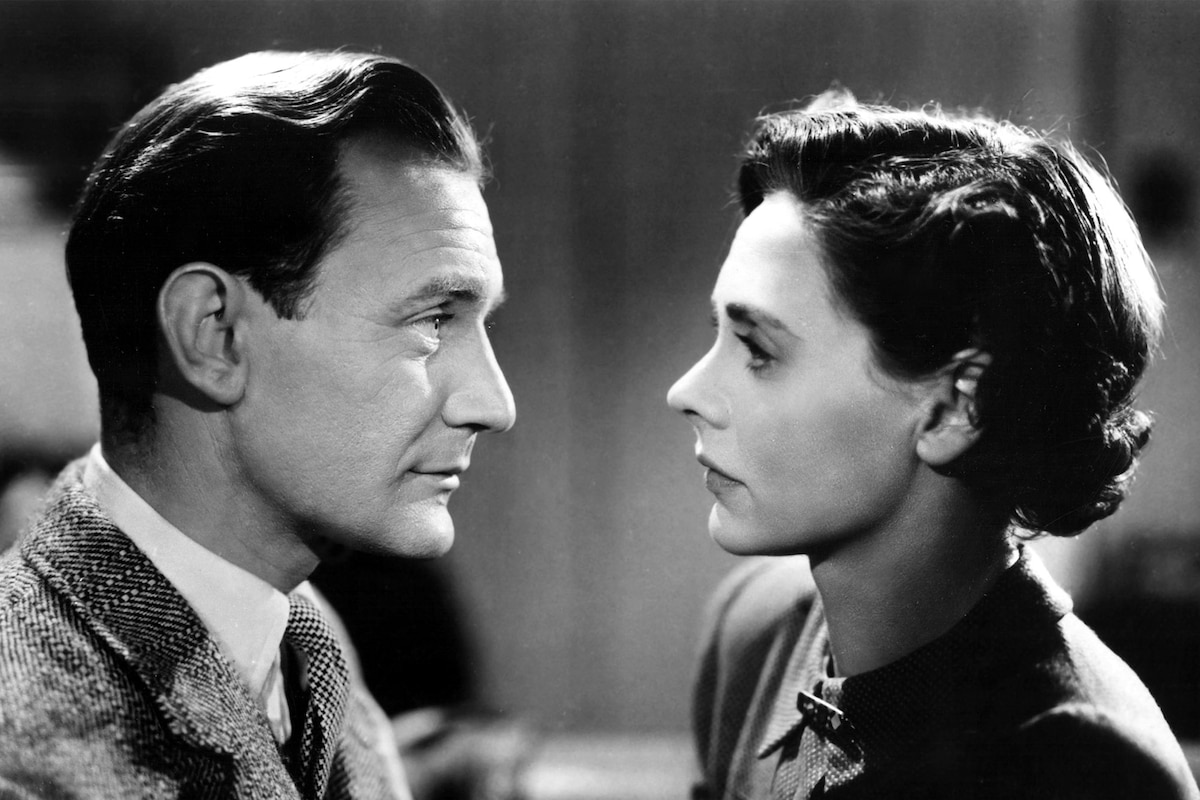
Celia Johnson, who had made her feature film debut in In Which We Serve and later appeared in This Happy Breed (1944), was first choice to play Laura Jesson.
The production team had a harder time deciding on the film's male lead. Havelock-Allan suggested Roger Livesey, but Lean wanted a relative unknown. While screening Anthony Asquith's The Way to the Stars (1945), Lean became intrigued with an actor cast in a small role as a doomed RAF officer. After one shot of him with a plane flying overhead, he decided Trevor Howard was the perfect actor to play Dr. Alec Harvey.
Howard almost lost the role before he had it. The actor rarely paid attention to his mail, and the script and job offer sent by his agent lay on a table unopened for weeks. When Havelock-Allan called the actor in for a costume fitting, Howard said he couldn't come because he had promised to take his wife to the movies.
by Frank Miller
The Big Idea - BRIEF ENCOUNTER
by Frank Miller | February 28, 2006
SIGN UP FOR OUR NEWSLETTERS

CONNECT WITH TCM