The Big Idea Behind THE HUSTLER
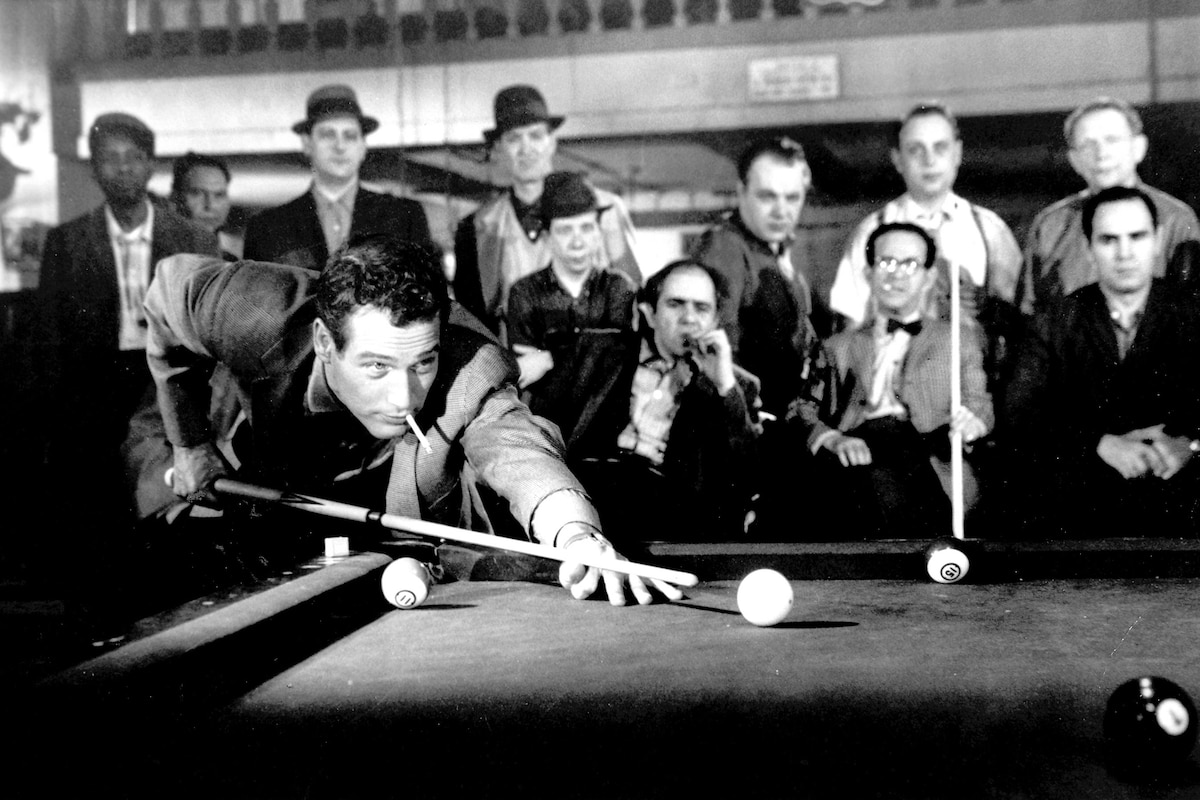
After acclaim on the stage, Paul Newman's film career started badly with the lead in a poorly received sword-and-sandals epic The Silver Chalice (1954). That bomb may have been enough to ruin any career, but Newman bounced back two years later with an outstanding performance as real-life boxer Rocky Graziano in Somebody Up There Likes Me (1956). Better parts followed, and by 1958 he was garnering great notices for his work in four films, including his Oscar®-nominated role in Tennessee Williams's Cat on a Hot Tin Roof (1958). But although big-budget pictures followed, Newman felt himself to be in an acting slump and in need of a career-defining part. He was persuaded by veteran maverick director Robert Rossen that a gritty, downbeat script about a pool shark was what he needed.
Robert Rossen started in motion pictures as a writer in the late 1930s, finding a natural niche for his talents and sensibilities in the socially conscious dramas produced by Warner Brothers. In the late 40s, particularly after the multiple awards and great acclaim for his hard-hitting adaptation of Robert Penn Warren's political novel All the King's Men (1949), he emerged as one of a new breed of directors able to command a greater sense of independence and control over their work by being their own writers and producers as well. But the 50s had not been the boom years he expected. By the end of the decade, owing in part to difficulties with the House UnAmerican Activities Committee, Rossen had released only five pictures, successful enough in varying degrees either critically or commercially. But he was scouting around for a personal project he could truly put his mark on. He found it in Walter Tevis's relatively obscure novel about pool hustlers.
Rossen apparently had great confidence in the project's ability to become an important, high profile film, and communicated that confidence to the actors he was soliciting for the cast. "Rossen expected it to be the critical and commercial hit that it was," according to Piper Laurie. "I think he said something about we were all going to win Academy Awards. I thought that was sort of crazy, but sweet."
Piper Laurie was another participant in this project who needed something new and challenging, a role that would really display her previously untapped gifts as an actress. Talented, intelligent, and with an intense presence she had rarely been able to display on screen, she had started in films in 1950 and spent the decade with only a handful of opportunities to be more than pretty window dressing or a winsome ingénue. With The Hustler, she immediately found something worthy. "I knew it was a good script. I knew it by page 40, that there was something special about it, but I really didn't think beyond that. I made my decision to do it on page 40, even before you got to my character. I didn't even finish reading the script, as a matter of fact."
Although known primarily as a TV comic, Jackie Gleason's dramatic abilities were recognized by Rossen, who sought him for the part of Minnesota Fats. It also helped that Gleason was already a master pool player.
To help with adapting the screenplay, Rossen brought in Sidney Carroll, whose prior work had been almost exclusively for television.
by Rob Nixon
The Big Idea - THE HUSTLER
by Rob Nixon | February 28, 2006
SIGN UP FOR OUR NEWSLETTERS

CONNECT WITH TCM