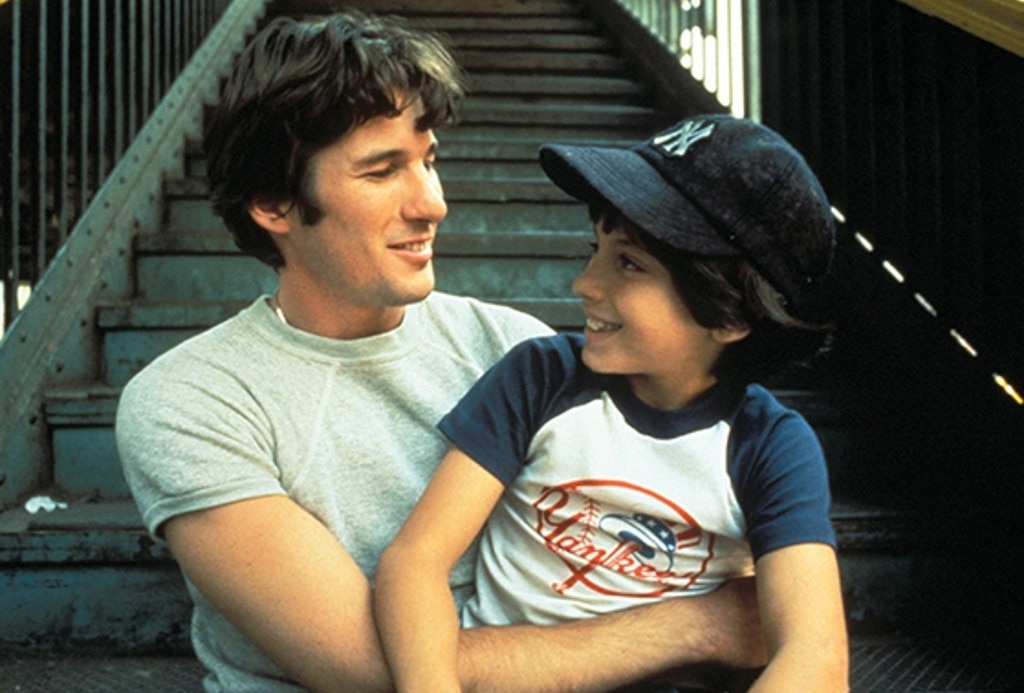
Set in the Italian blue collar culture of The Bronx in the 1970s, Bloodbrothers (1978) is a variation on the coming-of-age story. Stony De Coco is a young man just out of school with little idea of what he really wants out of life. While his father and his uncle map out a future following in their footsteps as a union construction worker, Stony takes a position helping kids a local hospital, a job that gives him great satisfaction but puts him in conflict with a father that has definite ideas about masculinity.
Richard Gere, then a rising star thanks to attention-grabbing performances in Looking for Mr. Goodbar (1977) and Days of Heaven (1978), takes third billing behind Paul Sorvino (playing his uncle, Chubby) and Tony Lo Bianco (his father). They provide the boisterous, sometimes violent backdrop to the film while Lelia Goldoni (as Stony's unstable mother) helps set the operatic family life with an emotional hysteria that matches his father's temper, but it is very much Stony's story. Gere received good notices as the sensitive young man trying to maintain the pose of toughness and machismo his father demands.
Bloodbrothers is based on the second novel by Richard Price, then the young author of The Wanderers (which was turned into a 1979 movie). Though not Italian himself, he was surrounded by the Italian-American culture and drew from the lives of his friends for the characters. "Maybe I thought of my Italian friends' families as more externally dramatic than my own," suggested Price years later. Like The Wanderers before it, it has autobiographical elements; Price drew from his own experiences working summers on a construction crew while attending college. "Stony was a stand-in for an entire crew of kids that were born around 1949 into families that were basically blue collar. There's a lot of me in him, but not all of me."
Price went on to adapt The Color of Money for Martin Scorsese, became a prolific screenwriter of the 1980s and 1990s, and penned such acclaimed novels as Clockers and Lush Life, but he was still a young author when his book was bought in 1976 and the producers brought in Walter Newman to script the film. Newman earned nominations from the Academy Awards and Writers Guild of America for his adaptation.
Director Robert Mulligan learned his craft directing live TV in the era of original television plays and made his name in film with a series of intelligent, mature dramas marked by fine performances, including To Kill a Mockingbird (1962), Inside Daisy Clover (1965), and The Summer of '42 (1971). He shot exteriors on location in New York City, including scenes shot at an abandoned construction site at City College, to capture the color and texture of the culture, with interiors filmed on soundstages back in Hollywood.
The film also gave actress Marilu Henner her first significant big screen role, playing a club waitress who supports Stony's personal ambitions. By the time the film was released in the fall of 1978, however, she already debuted in the role that made her famous: Elaine O'Connor, the sole female cabbie in the hit sitcom Taxi. Robert Englund is featured in a small but memorable role years before he became a horror star in A Nightmare on Elm Street (1984) and you can spot Danny Aiello, then a journeyman actor, in bit role as a member of the construction crew.
By Sean Axmaker
Sources:
"An Interview with Richard Price," in Bloodbrothers, Richard Price. Picador, 2009 edition.
AFI Catalog of Feature Films
IMDb
Bloodbrothers
by Sean Axmaker | January 25, 2016
SIGN UP FOR OUR NEWSLETTERS

CONNECT WITH TCM