"I came up with the title for my next script--She's Gotta Have It. I want it to be different from my other work. First of all, the protagonist will be female; a change for me." - Spike Lee, from his journal, October 4, 1984.
Spike Lee's She's Gotta Have It (1986) was a trailblazer in a decade that redefined what American independent cinema could be. It followed such films as Chan is Missing (1982), another small indie from a distinctive ethnic culture rarely explored on American screens, and Stranger Than Paradise (1984), from fellow NYU film student Jim Jarmusch. It trumpeted a fresh perspective and creative energy from outside of the traditional system. And perhaps most importantly, it was a film from an African-American filmmaker about black American characters that excited audiences and made money.
The son of successful jazz musician and composer Bill Lee, Lee graduated from Morehouse College and enrolled in the Graduate Film School at New York University, attending at the same time as fellow New York indie trailblazers Jim Jarmusch, Sara Driver, and Ernest Dickerson. When his thesis film Joe's Bed-Stuy Barbershop: We Cut Heads won the Student Academy Award, Lee went to Hollywood with an original script he called "It's Homecoming" (it would later become School Daze, his second feature) and found the studio doors closed to him. "I never got one offer, not even an 'Afterschool Special'," he later remarked. "And there were a lot of my classmates who didn't even win Academy Awards who did get 'Afternoon Specials'." So he turned his energies to making a film he could produce himself on a small budget, with talent from New York in front of and behind the camera. "I'm going to give people what they want," he told his friend Monty Ross, who served as Lee's production supervisor. "The next script is going to have sex in it. I'm going to do something that's gonna be simple but still have integrity. And I'm going to go all the way to Hollywood."
"Nola Darling is my heroine. I love and respect her, and I must show that love and respect in my treatment of her in the script. That's the way it's gotta be." Spike Lee, from his journal, October 9, 1984.
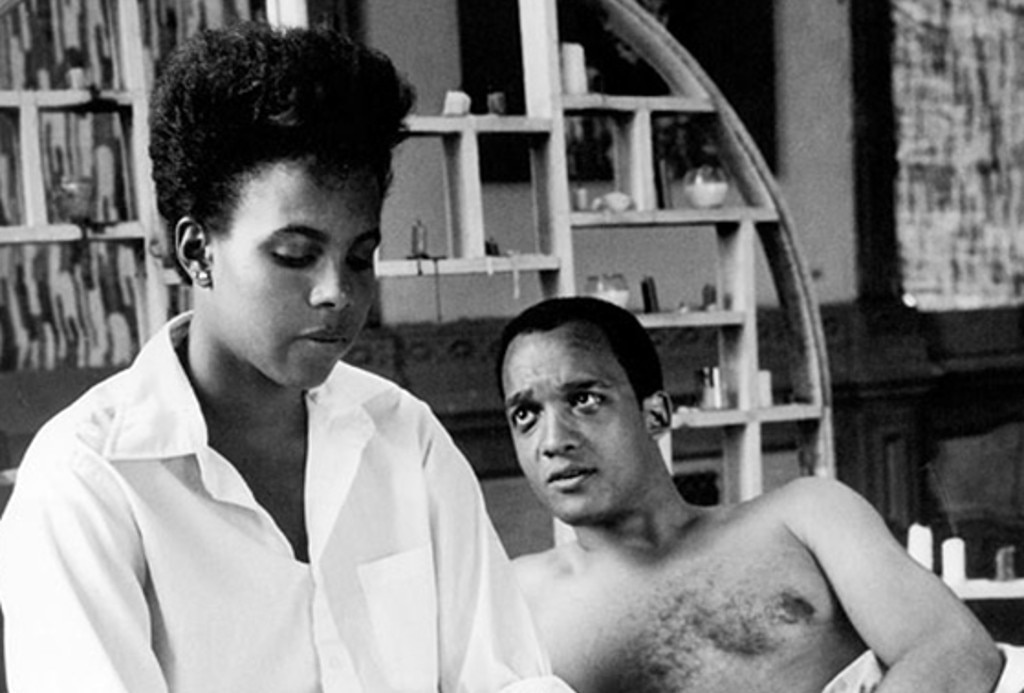
She's Gotta Have It, set in New York City, explores the lives of young urban African-Americans and features an all-black cast centered around a single, sexually-liberated young woman. Nola Darling is an educated, thoughtful artist with an unapologetic sexual appetite and strong independent streak, which frustrates the three men in her life: Jamie, a straight-talking, stand-up guy who wants a commitment; Greer, a narcissistic male model, and Mars, an immature, unemployed homeboy in high-top sneakers who wears a flashy necklace emblazoned with his name. To create an authentic portrait, Lee interviewed women about their sexual desires, experiences, and attitudes, and he read literature by black women authors before embarking on his first draft.
Lee wrote the role of Jamie for Tommy Redmond Hicks, who starred in Joe's Bed-Stuy Barbershop, but had to search for the key role of Nola. When he found stage actress Tracy Camilla Johns, he spent months convincing her that she could trust him to create a rich, fully-developed character and portray the sexuality sensitively. It was important to Lee that the film challenge sexual stereotypes and offer a cross section of African-American men and women not seen in Hollywood films.
To finance the film, Lee applied for arts grants, reached out to friends and family, and approached black professionals and artists. Nelson George was so impressed with the project that he not only contributed but introduced Lee to other potential investors. But money was still tight and to cut costs Lee played the role of Mars himself; he later channeled the street-smart character in the film's trailer (where he humorously hawked the film along with tube socks) and subsequent TV commercials. His sister Jolie took a small role as Nola's former roommate and his father, Bill Lee, composed and performed the score. His friend and NYU classmate Ernest Dickerson, who was gaining a reputation as a cinematographer, encouraged Lee all through the process and shot the film. It was Dickerson who suggested that he shoot the dance sequence in the middle of the otherwise black-and-white film in color. As Lee continued to look for money, he kept honing the script.
"The film will be a hybrid of narrative and documentary. I'm gonna call it FREE STYLE." Spike Lee, from his journal, October 18, 1984.
She's Gotta Have It was shot over 12 days in July 1985. Lee took an unconventional narrative approach to the film, with characters directly addressing the camera, montage sequences of comic commentary, shifting perspectives, still photos, and dream sequences, all of which were carefully planned out in the script stage. Post-production took another six months. The film ultimately cost around $175,000, cheap by Hollywood standards but a hefty sum for a first-time filmmaker. As Lee notes in his journal, he was behind on rent and utilities as he finished the film.
She's Gotta Have It premiered at the 1986 San Francisco International Film Festival. The screening was a major success despite the fact that there was a power outage in the middle of the film (the audience remained seated until the power was restored). Two months later it made its international debut at the Cannes Film Festival, where it played in the Director's Fortnight section and won the Prix de la Jeunesse for Best First Film. Island Pictures, the independent distributor that nurtured Kiss of the Spider Woman into an indie hit, took up distribution and marketing. It became one of the great indie success stories of the decade, playing to black and white audiences alike and making $7.1 million, more than Blood Simple (1984), the debut film from the Coen Bros. It was one of the most successful independent films ever made. After finding Hollywood's doors closed to him, Spike Lee opened his own door.
by Sean Axmaker
Sources:
Spike Lee: Director, Dennis Abrams. Chelsea House, 2008.
Down and Dirty Pictures, Peter Biskind. Simon and Schuster, 2004.
Spike Lee's Gotta Have It, Spike Lee. Simon and Schuster, 1987.
"Spike Lee Interview," Tod Lippy, from Projections 11. Faber and Faber, 2011.
She's Gotta Have It
by Sean Axmaker | January 05, 2016
SIGN UP FOR OUR NEWSLETTERS

CONNECT WITH TCM