Behind every great man, the old saying goes, is a great woman, and Jean Negulesco's elegantly directed Woman's World (1954) puts that theory to the test. Released just four months after MGM's hit Academy Award-nominated boardroom drama Executive Suite (1954), Twentieth Century-Fox offered up its own take on the genre, with a decidedly feminine twist.
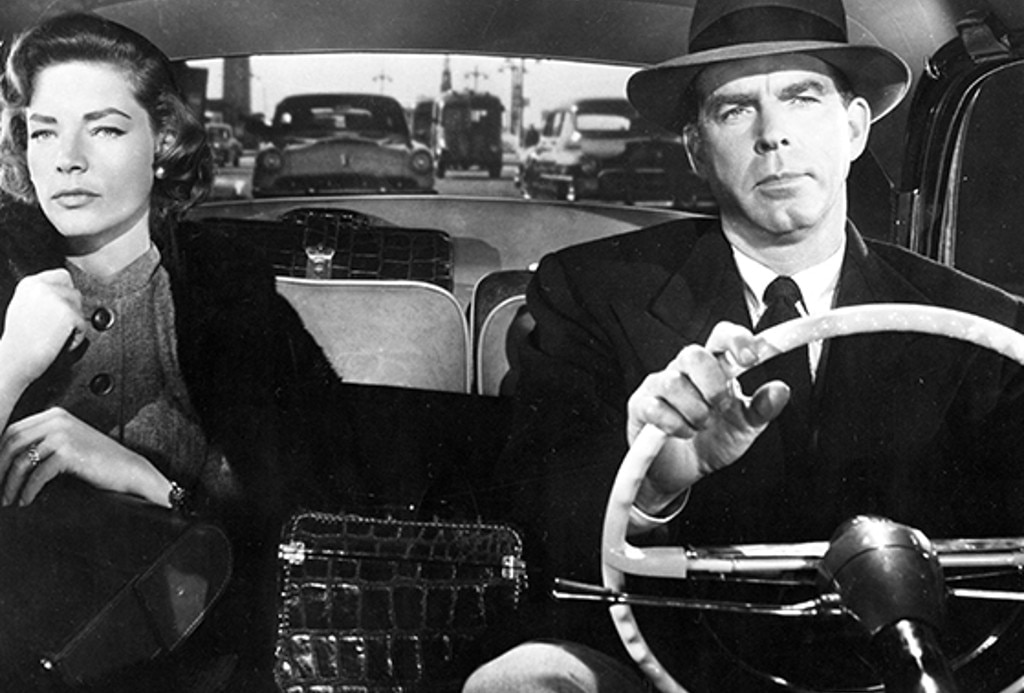
When the top job of General Manager opens up at Gifford Motor Company, a luxury car manufacturer in New York, the corporate boss Ernest Gifford (Clifton Webb) summons his top three regional salesmen to the Big Apple along with their wives. Sid and Liz Burns (Fred MacMurray and Lauren Bacall) are a sophisticated couple from Philadelphia with their marriage on the verge of collapse due to Sid's workaholic ways. Bill and Katie Baxter (Cornel Wilde and June Allyson) are a loving family-oriented couple from the Midwest, but Katie has no interest in moving to New York, and her frequent social blunders make her ill-suited to the jet set crowd. Finally, there is Jerry and Carol Talbot (Van Heflin and Arlene Dahl), an ambitious couple from Texas, with the va-va-voom Carol willing to do just about anything to help her husband get ahead. What the three couples don't realize is that Mr. Gifford will decide who gets the coveted promotion based on how the wives -not just the men-- stand up to his thorough inspection. Filmed in lush CinemaScope and Technicolor, Woman's World features top-notch performances from an all-star cast as well as plenty of gorgeous time capsule shots of 1950s New York.
According to the American Film Institute Catalogue, the initial story idea for Woman's World came from the novelette May the Best Wife Win by Mona Williams, first published in McCall's Magazine. No fewer than five screenwriters tinkered with the script, one of whom - Claude Binyon - was initially tapped to direct the film. However, Twentieth Century-Fox chief Darryl Zanuck ultimately replaced him with the more established Jean Negulesco. The widescreen anamorphic CinemaScope process was still quite new, and Negulesco had just delivered two big Oscar-nominated CinemaScope hits for Fox: How to Marry a Millionaire (1953) and Three Coins in the Fountain (1954). Negulesco was considered a polished director who not only understood how to showcase CinemaScope well but could also bring a light, sophisticated touch to the melodrama, all while serving up delicious shots of the luxurious settings and sumptuous gowns worn by the leading ladies. With his experience, Negulesco managed to pull off a delicate balance of marital drama, corporate politics, and just enough humor to keep it from getting bogged down in its own seriousness. June Allyson handled the bulk of the comic relief with her character's bumbling bouts of foot-in-mouth disease, with Lauren Bacall throwing her share of side-eyed zingers along the way.
By all accounts, Woman's World was a happy set. Negulesco was a much beloved director who had just worked with Bacall on How to Marry a Millionaire, and Clifton Webb on Three Coins in the Fountain. Webb was also a close friend of Bacall and her husband Humphrey Bogart, and the two were thrilled to be working together. Love was also in the air for some of the cast, creating an atmosphere of joy that permeated the set. Arlene Dahl was in the midst of a romance with dashing Fernando Lamas whom she would marry that same year, and Fred MacMurray was busy romancing actress June Haver, who would become his second wife soon after shooting wrapped on the film.
Despite all the positive energy and talent that surrounded Woman's World, the film was not the big hit that Fox hoped it would be. Box office business was impacted by its inevitable comparisons to MGM's just-released Executive Suite, which almost every critic pointed out in their reviews. However, reviewers were also quick to praise the excellent casting choices and single out its gorgeous visuals. "Woman's World is Hollywood at its commercial best," said Variety, "a highly-polished product, technically and story-wise...The entire cast, under Jean Negulesco's fine direction, contribute a performance as polished as the entire production."
The sleek cars featured in the film befitting the fictional Gifford Motor Company were provided by Ford and Lincoln-Mercury. According to Clifton Webb in his 2011 autobiography Sitting Pretty: The Life and Times of Clifton Webb, Ford also built two specially designed "futuristic" cars for the film at a cost exceeding three million dollars.
The sexual politics of Woman's World may be a throwback to its 1950s era, but it stands up as a thoroughly entertaining and well-acted film that should delight any viewer. As for who gets the top job in the end, the film is sure to keep you guessing until the final moment.
By Andrea Passafiume
Woman's World
by Andrea Passafiume | December 14, 2015
SIGN UP FOR OUR NEWSLETTERS

CONNECT WITH TCM