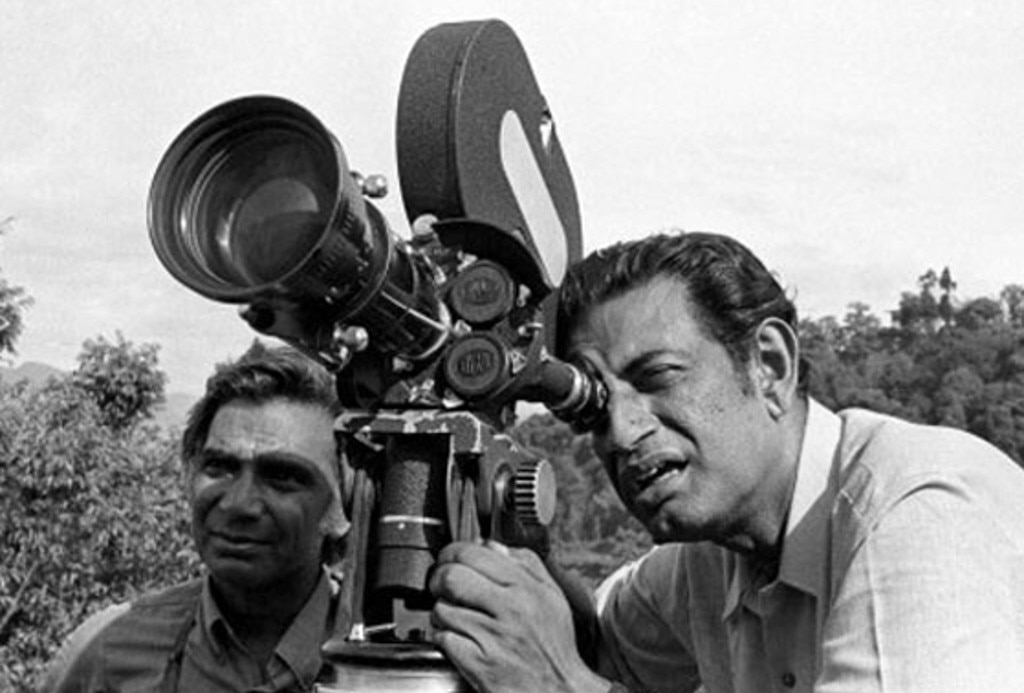
India's most famous film director became the subject of the 1982 documentary Satyajit Ray. Filmmaker Shayam Benegal recorded Ray at work on scenes for his feature The Home and the World (Ghare-Baire, 1984), and followed that with an extensive interview with Ray on his life and career. Accompanying the interview are family photographs and extensive scene excerpts from the director's films. The first internationally known Indian filmmaker, Satyajit Ray, also wrote many novels and screenplays. He rejected the pretty fantasies and romances that were the norm in his country's film industry.
Ray says that he wanted his B&W images to look like the candid stills of photographer Henri Cartier-Bresson, and he had to operate the camera himself to get that look. He is harshly critical of some of his own work and states his belief that outsiders find appreciation of Indian art difficult. Ray's earthy family sagas and stories of economic survival humanized the ordinary Indian experience. Domestic audiences approved, while Western art filmgoers were stunned by the strange customs and exotic settings.
Contradicting the notion that his film work is autobiographical, Satyajit Ray emphasizes that his best-known features are from books by other authors. When Benegal asks about his famed Apu Trilogy, the director reveals that he did not originally conceive of the films as a unit, that the trilogy idea was a programming ploy invented to attract viewers at the Venice Film Festival. Critics noted that filmmaker Benegal seems to be in awe of Ray, who appears to control the interview. Variety's review thought the show too detailed to have more than limited interest outside of India. That criticism now reads as praise: Benegal's documentary is definitely not a superficial career overview.
