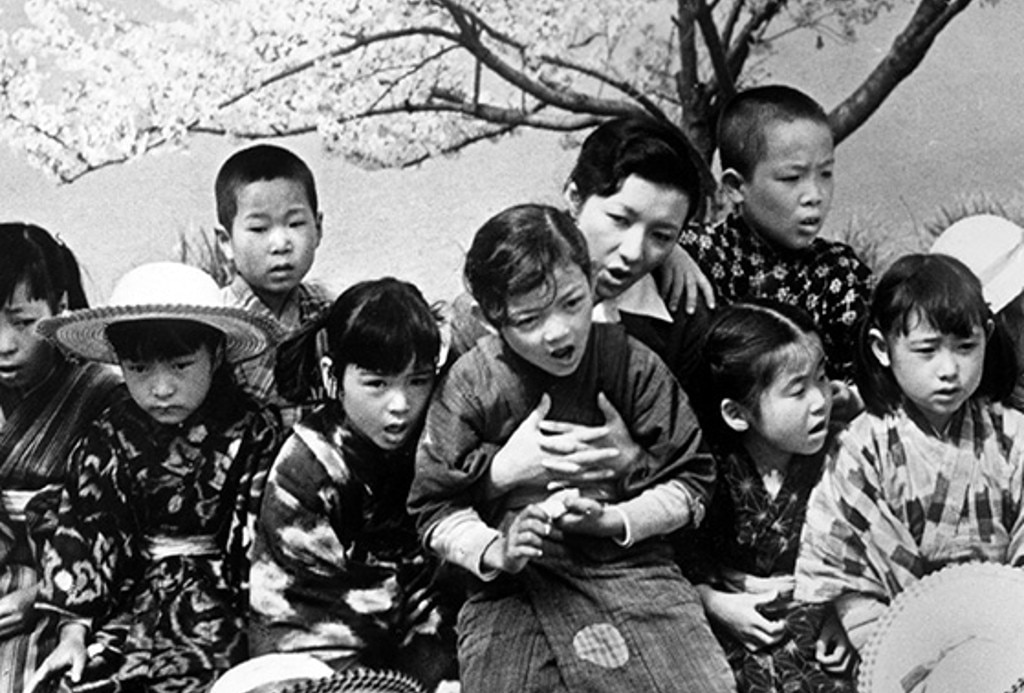
Japan's painful post-World War II reconstruction led to slow economic recovery and intense soul-searching on the part of the nation's artists. Japanese films during this period traded the rampant nationalism of the imperial epoch for heartfelt meditations on Japanese life in all of its facets, with equal sensitivity paid at the midpoint of the 20th century to both the country's aged and its young. By 1954, Japanese moviegoers were accustomed to a diversity of cinematic entertainment options, from the rousing high adventure of Akira Kurosawa's The Seven Samurai to the apocalyptic ruminations of Ishirô Honda's Gojira (aka Godzilla) to the minutely realized family drama of Yasujirô Ozu's Tokyo Story. Out that same year, and destined to become a national treasure, was Keisuke Kinoshita's Twenty-Four Eyes, a tale of island life spanning twenty years, from 1928 until just after the end of the end of the Second World War. The two dozen eyes alluded to by the film's title belong to a dozen first grade students, charges of first-time teacher Miss Oishi (Hideko Takamine), who has traveled from the mainland to a rural village on an island in Japan's inland sea. Like Frank Capra's It's a Wonderful Life (1946), Twenty-Four Eyes captures the conflicted conscience of its postwar populace and blends into the fabric of a seeming soap opera trenchant social commentary - most notably in its second half, as Takamine's aging "Miss Pebble" sees the terrible price of war and poverty on her now grown former students.
By Richard Harland Smith
Twenty-Four Eyes
by Richard Harland Smith | October 30, 2015
SIGN UP FOR OUR NEWSLETTERS

CONNECT WITH TCM