Philadelphia-born filmmaker Susan Seidelman was pointed to a career as a fashion designer when the notion of spending the rest of her life in front of a sewing machine prompted the 19 year-old to reassess her career goals and redirect her energies toward the study of cinema. Enrolling in a film appreciation class on a lark, Seidelman got her first look at the seminal titles of Jean-Luc Godard, Francois Truffaut, and Ingmar Bergman. Following her 1973 graduation from Drexel University's College of Arts and Sciences, Seidelman set her sights on New York City, underwriting the change of venue with work at a Philly UHF-TV station. She would find the competitive atmosphere of New York University's graduate film program (then housed in an East Village tenement also occupied by the rock venue The Fillmore East) daunting, to say the least. "I was intimidated," she told People magazine in 1985. "Everybody else had seen fifty billion German Expressionist movies, so I started going to five or six movies a week to catch up."
Upon her graduation in 1979, and emboldened by an award from the Chicago International Film Festival for her student film And You Look Like One Too (1976), Seidelman began plotting her first feature. Having traded the Pennsylvania suburbs for Manhattan's Lower East Side, Seidelman saw at first hand the burgeoning punk rock music movement, which formed the backdrop for Smithereens (1982). In an interview with Filmmaker magazine in 2009, Seidelman recalled: "I had stayed in touch with my friends from NYU and we decided that if we pooled our resources... we could make a low budget feature film, shot on 16mm, for about $20,000. My grandmother had recently died and left me some money which was set aside for my future wedding - but since that wasn't in the cards at that time, I decided to use it for camera equipment, film stock and lab expenses and make a feature film instead." Seidelman helped fund the venture by work as a freelance editor and production assistant on TV spots for Jordache jeans and through the sale of limited shares of stock.
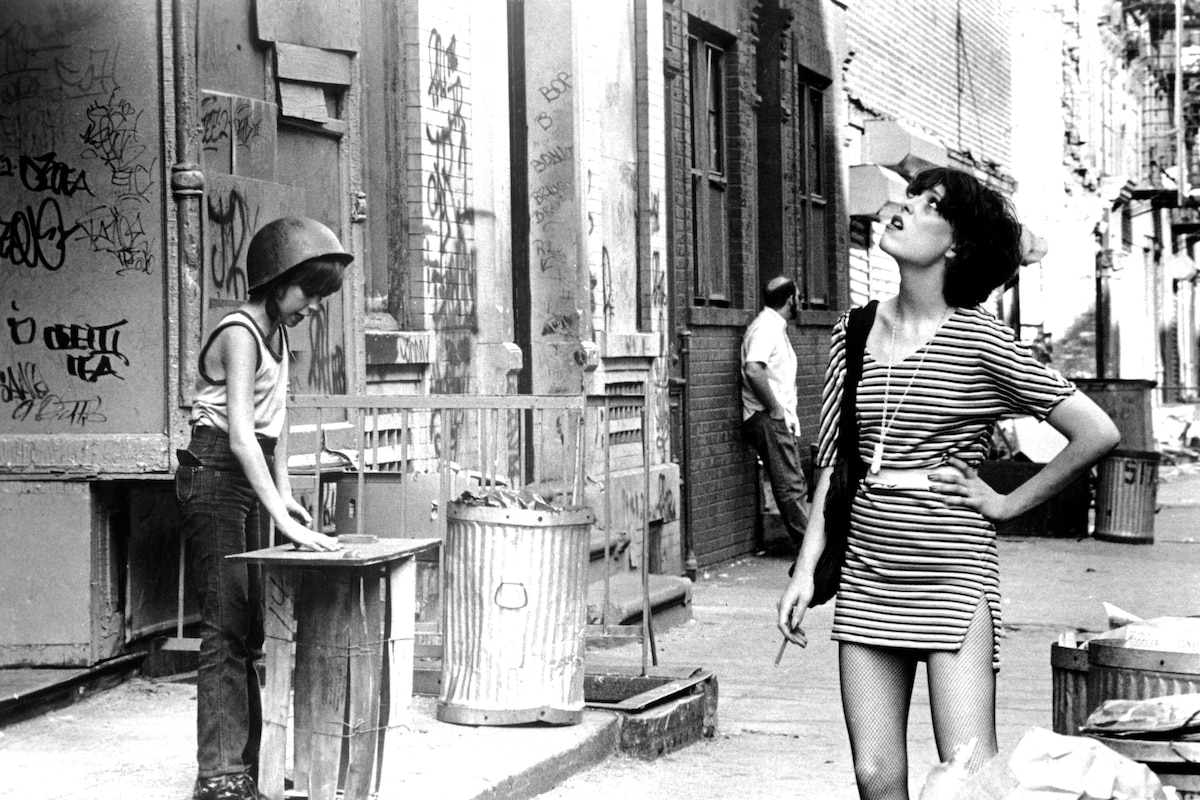
With a cast and crew of friends, classmates, local musicians, and starving artists, principal photography for Smithereens began in the spring of 1979, four years into New York's well-publicized financial crisis: a time of fear, uncertainty, destitution... and unparalleled artistic freedom. A downtown take on All About Eve (1950), the film focuses on the machinations of a talentless hanger-on who drifts from scene to scene and man to man as she follows the punk zeitgeist from New York to Los Angeles, only to be left nowhere and alone by the final fadeout. Due to the fits and starts of DIY film production (which included, among other calamities, leading lady Susan Berman falling from a fire escape and breaking her leg), production stretched out over a year and a half while Seidelman's budget quadrupled. Not all of the delays had an adverse effect; during a four month halt in filming, Seidelman replaced her original leading man with Richard Hell, a founding member of Tom Verlaine's influential American punk rock group Television and a fashion innovator whose preference for spikey hair and torn clothing is said to have had an immeasurable influence on the aesthetics of punk.
"Thinking back on it, there was something wonderfully naive about the way the film came together," Seidelman said in 2009. "We never thought about how - or if -- the film would get distributed, or how it would be marketed. This was just a film I wanted to make that attempted to capture the spirit of a certain time and place." To the surprise of all involved, Smithereens was accepted by the Cannes Film Festival and garnered recognition as a succès d'estime, winning a distribution deal from New Line Cinema. In her encouraging, but not uncritical review of Smithereens in The New York Times in November 1982, Janet Maslin drew a parallel between Susan Berman's plucky but purposeless punk protagonist Wren with "the French movie waifs of yesteryear," a sentiment that surely vindicated Seidelman's choice to become a filmmaker. Though not intended as an industry calling card, Smithereens got Hollywood's attention. Rejecting a pile of teenage girl scripts, Seidelman signed on to direct Desperately Seeking Susan (1985), the film that made a movie star of singer Madonna and a career move that brokered Susan Seidelman's transition from DIY to A-list.
By Richard Harland Smith
Sources:
"Sets and the City: The History of Smithereens" by Jason Guerrasio, Filmmaker, October 8, 2009
"Since Making Madonna a Movie Star, Director Susan Seidelman Is No Longer Desperately Seeking Success" by Michelle Green, People, April 29, 1985
"Susan Seidelman, Survivor" by Christie Lemire, RogerEbert.com, July 12, 2013
"Susan Seidelman's True Grit" by Amy Virshup, by New York, November 26, 1984
"Susan Seidelman's DIY Spirit," IndieWire.com, November 3, 2009
Smithereens
by Richard Harland Smith | October 30, 2015
SIGN UP FOR OUR NEWSLETTERS

CONNECT WITH TCM