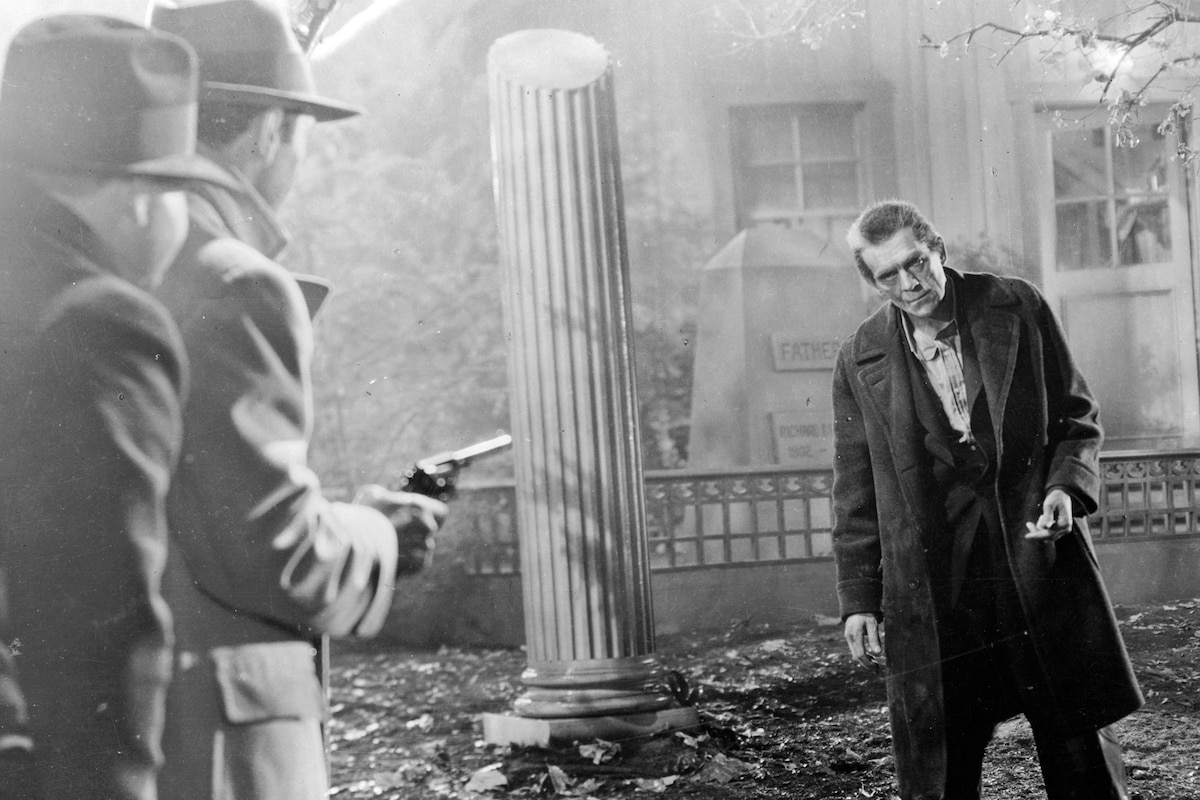
In 1936, Boris Karloff took a sabbatical from his longtime home base at Universal to make films for Warner Bros., 20th Century Fox, the short-lived Grand National, and Gaumont in Great Britain. At Warners, Karloff was teamed with director Michael Curtiz for The Walking Dead (1936), a tale of vengeance from beyond the grave that seems at once tailor-made for the star of Frankenstein (1931) and yet something completely different. In The Invisible Ray (1936), Karloff had played a mad scientist who kills his enemies by radioactive touch; in The Walking Dead, he is a wrongly condemned man who survives his execution as a shuffling, dead-eyed instrument of divine punishment - causing the deaths of the men who framed him for murder without laying a finger on them. However it may seem torn from the pages of Tales from the Crypt, The Walking Dead is a potent morality bordering on religious homily. Curtiz squeezes the maximum effect from his limited budget thanks to director of photography Hal Mohr's eerie use of shadows. Mohr had been the first Academy Award nominee ever to win by write-in vote (for A Midsummer Night's Dream [1935]) and picked up his second Oscar for Universal's the Phantom of the Opera (1943). Curtiz was at this point between collaborations with Errol Flynn, having completed Captain Blood (1935) and pointed towards The Adventures of Robin Hood (1938) and The Sea Hawk (1940) - with his most famous film, Casablanca (1942) six years down the road.
By Richard Harland Smith
The Walking Dead
by Richard Harland Smith | October 30, 2015
SIGN UP FOR OUR NEWSLETTERS

CONNECT WITH TCM