One of the biggest hits of the early 1970s had no established stars, no apparent high-concept appeal and was considered such a modest project that its studio backed off from paying its author outright for the script, offering him ten percent of the gross instead. What Summer of '42 did have going for it was the kind of nostalgia that American audiences responded to in the days of Vietna, and political and civil turmoil. If its entombed-in-amber approach to the past ultimately offered little in the way of sharp insight into love, sex, loss or coming of age, that didn't stop audiences from eating it up.
It's worth noting, however, that the project didn't have its start in the '70s but nearly twenty years before. Herman Raucher was working successfully as a writer for several television drama anthology series in the 1950s when he wrote the initial script. Failing to garner any interest in getting it produced, he shelved it for a decade until meeting director Robert Mulligan (To Kill a Mockingbird, 1962). Mulligan liked the story and took it to Warner Brothers, the studio that produced his Hollywood-set period piece Inside Daisy Clover (1965). Warners was tepid on the project at first, but Mulligan convinced them it could be produced for a relatively modest $1 million. After making the decision not to pay for the script but to offer Raucher a percentage instead, the studio approved it.
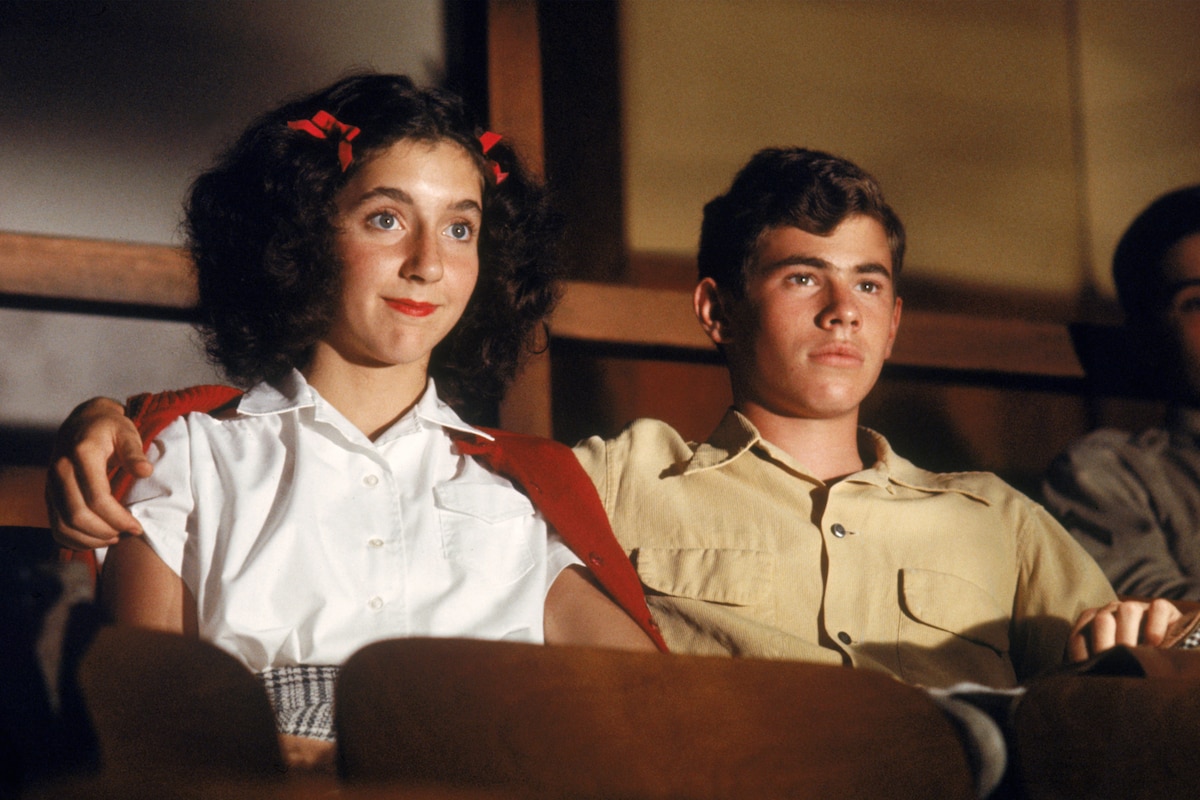
Mulligan brought in an appealing, if mostly unknown, cast. Gary Grimes, 15 at the time, was cast as Hermie (the character based on Raucher), who is spending his summer vacation on Nantucket Island off the coast of Massachusetts with his parents. Hermie has two good friends his age on the island, Oscy, played by Jerry Houser (at 20 a few years older than his character) and Benjie, played by Oliver Conant. (All three boys made their feature film debuts here.) While Oscy obsesses constantly about the illusive prospect of having sex for the first time, the sensitive and shy Hermie develops a crush on an older woman married to a pilot off fighting World War II. The young wife is amused and flattered by his attentions but never thinks of Hermie as anything but a sweet young kid. Then she gets the news that her husband has been killed in action, triggering a brief, tender moment of love that neither will ever forget, although they will never see each other again.
The woman is played by Jennifer O'Neill, a highly successful model since her teens with a handful of small movie roles to her credit. The studio didn't want to audition any actress under the age of 30. O'Neill was only 22 at the time, but her agent convinced producers to let her read for the part. During production, Mulligan kept her isolated from her three young co-stars, particularly Grimes, so that they would not develop a rapport too soon and hinder the sense of awkward tension he was aiming for.
The film was shot over a period of eight weeks mostly in Mendocino, California, substituting for Nantucket. Much of the praise for the movie went to the Oscar-nominated cinematography of Robert Surtees, who had been nominated nine times previously, winning for King Solomon's Mines (1950), The Bad and the Beautiful (1952) and Ben-Hur (1959). Surtees was also nominated this same year for his evocative black-and-white work on a decidedly different period piece, The Last Picture Show (1971). It's interesting to compare the two and their dissimilar visual and thematic approaches to the past--one a warm and cozy envelope for its sentimental memories, the other stark and minimal for a story laced with bitterness and regret.
Summer of '42 also earned Academy Award nominations for Raucher's script and Folmar Blangsted's film editing. It won for Michel Legrand's memorable score, which produced a hit song, "The Summer Knows," with lyrics by Marilyn and Alan Bergman. (The three previously won for the "The Windmills of Your Mind," the theme song from The Thomas Crowne Affair, 1968.) Legrand's score also won BAFTA's Anthony Asquith Award for Film Music. The picture earned mostly good reviews, although Roger Ebert said its taste and restraint left merely "some beautifully produced and photographed notes toward a movie." Nevertheless, it was a huge hit at the box office, the sixth highest-grossing film of the year and one of the all-time winners when judged by the ratio of cost to profit.
Despite production coming in on time and within the modest budget, Warners was still wary of its chances for success. To hedge their bets, they asked Raucher to adapt his script into a book to be released before the film in order to build some advance interest, as Paramount had done with Love Story (1970). Raucher completed the novelization in three weeks, and the book quickly became a best seller. Although the film had actually been completed first, Warners promoted it in trailers as being "based on the national bestseller."
Raucher's novel was reprinted 23 times between 1971 and 1974 to keep up with demand, but by the end of the decade it had slipped into obscurity (not before the author had reaped a fortune off the book's sales and his percentage of a blockbuster movie). After a well-received off-Broadway musical adaptation of the story in 2001, the book was brought back for a new generation. Raucher also wrote a film sequel, Class of '44 (1973), which was met with negative reviews and poor box office performance. The only cast members to return were Grimes, Houser and Conant, who appeared only briefly in his second and final film. Several other young actors in the cast may be more familiar to today's audiences, including William Atherton (Ghostbusters, 1984; Die Hard, 1988), Sam Bottoms (The Last Picture Show, 1971; Apocalypse Now, 1979), and a very young and slimmer John Candy (Spaceballs, 1987; Uncle Buck, 1989).
One interesting bit of trivia about Summer of '42: One of the teen girls to capture the boys' interest is played by Katherine Allentuck (in her only film appearance). Allentuck's mother, Oscar-Tony-Emmy winner Maureen Stapleton, appears in the film as the off-screen voice of Hermie's mother.
Director: Robert Mulligan
Producer: Richard A. Roth
Screenplay: Herman Raucher
Cinematography: Robert Surtees
Editing: Folmar Blangsted
Production Design: Albert Brenner
Music: Michel Legrand
Cast: Jennifer O'Neill (Dorothy), Gary Grimes (Hermie), Jerry Houser (Oscy), Oliver Conant (Benjie), Katherine Allentuck (Aggie), Christopher Norris (Miriam)
By Rob Nixon
Summer of '42
by Rob Nixon | September 16, 2015
SIGN UP FOR OUR NEWSLETTERS

CONNECT WITH TCM