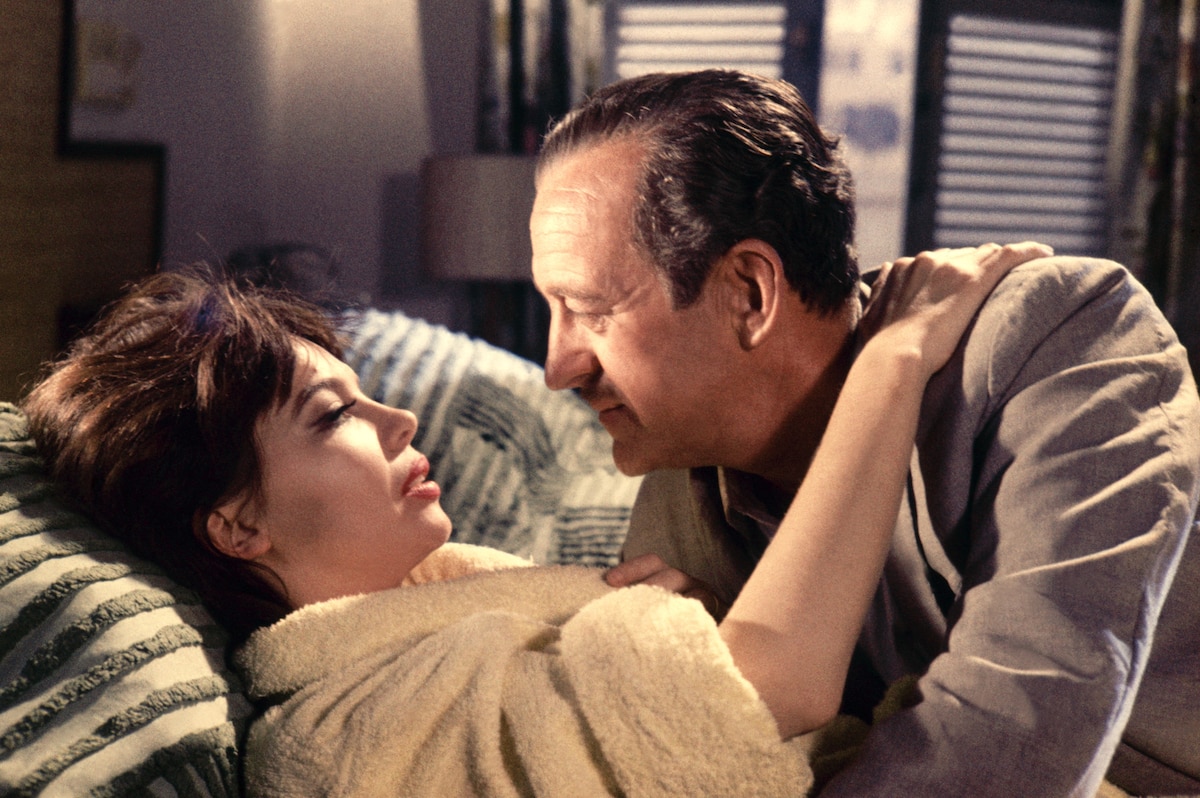
Veteran British director Anthony Asquith is noted for his expressive silent films, and prestige classics like Pygmalion (1938) and The Importance of Being Earnest (1952). In his later years, he made several films about modern violence. Asquith's Two Living, One Dead (1961) is a drama about a man who offers no resistance to a robbery. 1962's Guns of Darkness is from Francis Clifford's novel Act of Mercy, adapted by John Mortimer. Star David Niven is Tom Jordan, a public relations man for a British-owned plantation in the South American country of Tribulacíon. An 'idealist without convictions,' Tom's marriage to Claire (Leslie Caron) is on shaky ground due to his inability to hold onto his job. When a revolution breaks out, the deposed and wounded President Rivera (David Opatoshu) flees for his life, and Tom feels obligated to help him escape. Claire has little choice but to flee with them. They slip through roadblocks in a series of harrowing trials that include the loss of their car in a huge quicksand pit. They must hike to the frontier, where Tom finds himself forced to either use deadly violence or admit defeat. Reviewers found Asquith's suspenseful movie weakened by the choice of David Niven as the initially weak and indecisive husband. Unlike Grahame Green's tales of idealistic Brits away from home, Tom's problem is less spiritual than it is practical. The moral that 'the greater good sometimes requires violence' falls flat, as the stakes are quickly reduced to simple survival. It was also felt that the film reflected current politics both in front of and behind the camera. The Franco government granted Asquith permission to shoot in Malaga, with the firm demand that the film's locale be clearly established as someplace other than Spain. More than one reviewer noted that David Niven's main rebel nemesis is made to look like Fidel Castro, beard and all.
By Glenn Erickson
Guns of Darkness
by Glenn Erickson | September 16, 2015
SIGN UP FOR OUR NEWSLETTERS

CONNECT WITH TCM