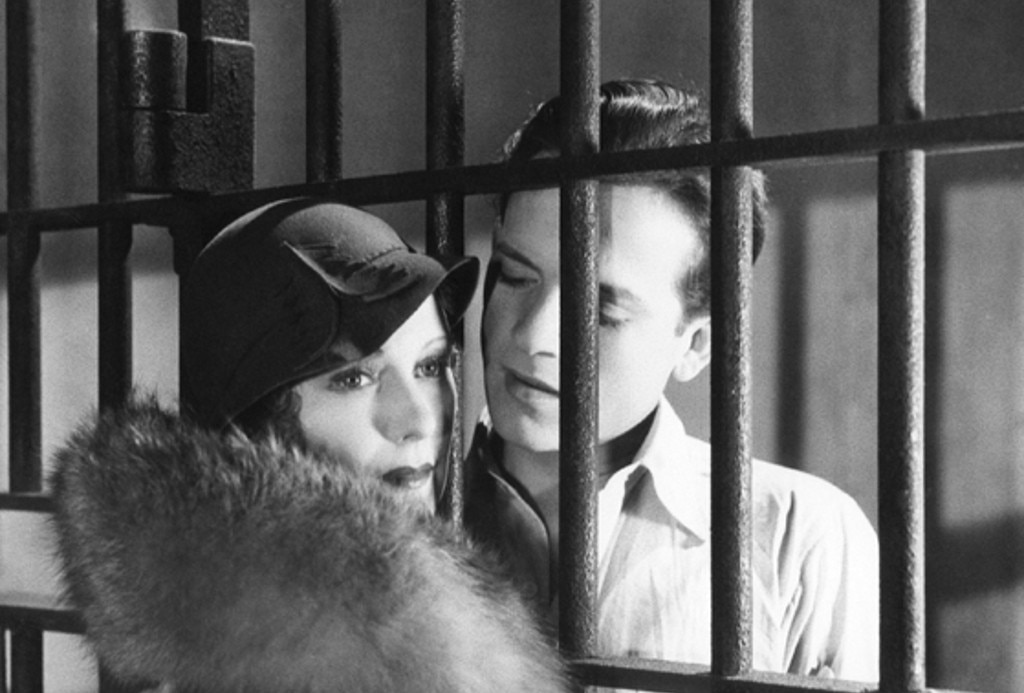
When David O. Selznick came to RKO the quality of the studio's output improved almost immediately. Extending his career into the talkie era, writer-director J. Walter Ruben scored with The Roadhouse Murder (1932), a murder tale with a clever twist. Reporter Chick Brian (Eric Linden) and his girlfriend Mary (Dorothy Jordan) are stuck overnight at a deserted roadhouse called The Lame Dog Inn. Witnessing a murder, they collect the evidence to incriminate the killer, but instead of calling the cops, Chick hatches a plan to advance his career. He frames himself as a suspect and then hides out, providing his editor with a hot front page circulation-builder called 'Diary of a Hunted Man.' The highly unethical ruse wins Chick his desired status as an instant celebrity but when he goes to trial, the real killer steals the evidence Mary has saved to exonerate him. The jury doesn't believe Mary's claim that it was all a hoax. What resembles an earlier version of Fritz Lang's Beyond a Reasonable Doubt (1956) is an escapist take on the theme of a reporter gaming the system, an idea that would later become searing social criticism in Cy Endfield's cynical The Underworld Story (1950) and Billy Wilder's caustic Ace in the Hole (1951). Star Eric Linden would mainly play handsome college boys, while leading lady Dorothy Jordan soon married RKO executive Merian C. Cooper. Making his credited film debut as the villain is Bruce Cabot, whose rugged good looks won him a leading role in the upcoming King Kong.
By Glenn Erickson
The Roadhouse Murder
by Glenn Erickson | September 16, 2015
SIGN UP FOR OUR NEWSLETTERS

CONNECT WITH TCM