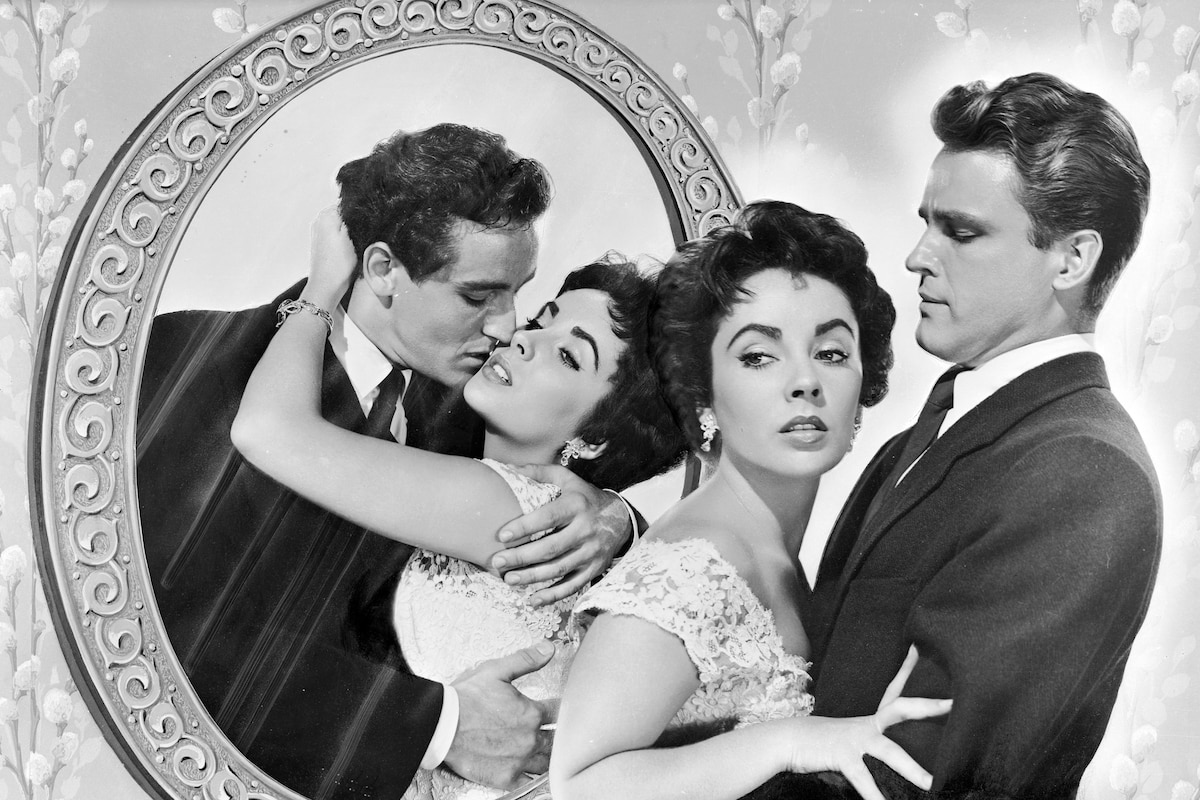
The massive film factory MGM was already falling apart in the early 1950s and its once-enormous roster of contract stars was the first casualty. But the studio remained associated with glamorous tales of the rich and privileged. Class producer Lawrence Weingarten's Rhapsody (1954) garnered heavy magazine coverage for the highly publicized Elizabeth Taylor, now established as an adult actress after several years spent breaking free of ingénue roles. Directed by Charles Vidor the Technicolor tale moves in the exclusive, high culture world of classical music; street scenes were filmed on location in Switzerland. Spoiled heiress Louise (Taylor) sets her sights on budding concert violinist Paul Bronte (Vittorio Gassman) but throws fits when he ignores her to concentrate on his artistic aspirations. Louise's emotional turmoil leads to a suicide attempt, after which she's looked after by James (John Ericson), a hopeful young American pianist who loves her as well. Liz Taylor is perfect as the shallow, selfish Louise. She demands that a great artist place her above his art, yet consents to marry one man while knowing she loves another. Louise's tempestuous romantic problems are bracketed by a series of lavish concert performances of masterpieces by Liszt, Debussy, Rachmaninoff and Tchaikovsky. Music director Johnny Green conducts, and virtuosos Michael Rabin and Claudio Arrau performed the actual violin and piano solos. Music critics thought the soapy story trivialized the very good concert segments, but fans of the breathlessly beautiful Elizabeth Taylor's didn't complain. The glossy show was a fresh start for young John Ericson, who hadn't made a feature since Fred Zinnemann's Teresa in 1951. Italian actor Vittorio Gassman was at the end of a brief American career that had begun when he followed starlet Shelley Winters to America. Their highly publicized marriage lasted two years.
By Glenn Erickson
Rhapsody
by Glenn Erickson | September 16, 2015
SIGN UP FOR OUR NEWSLETTERS

CONNECT WITH TCM