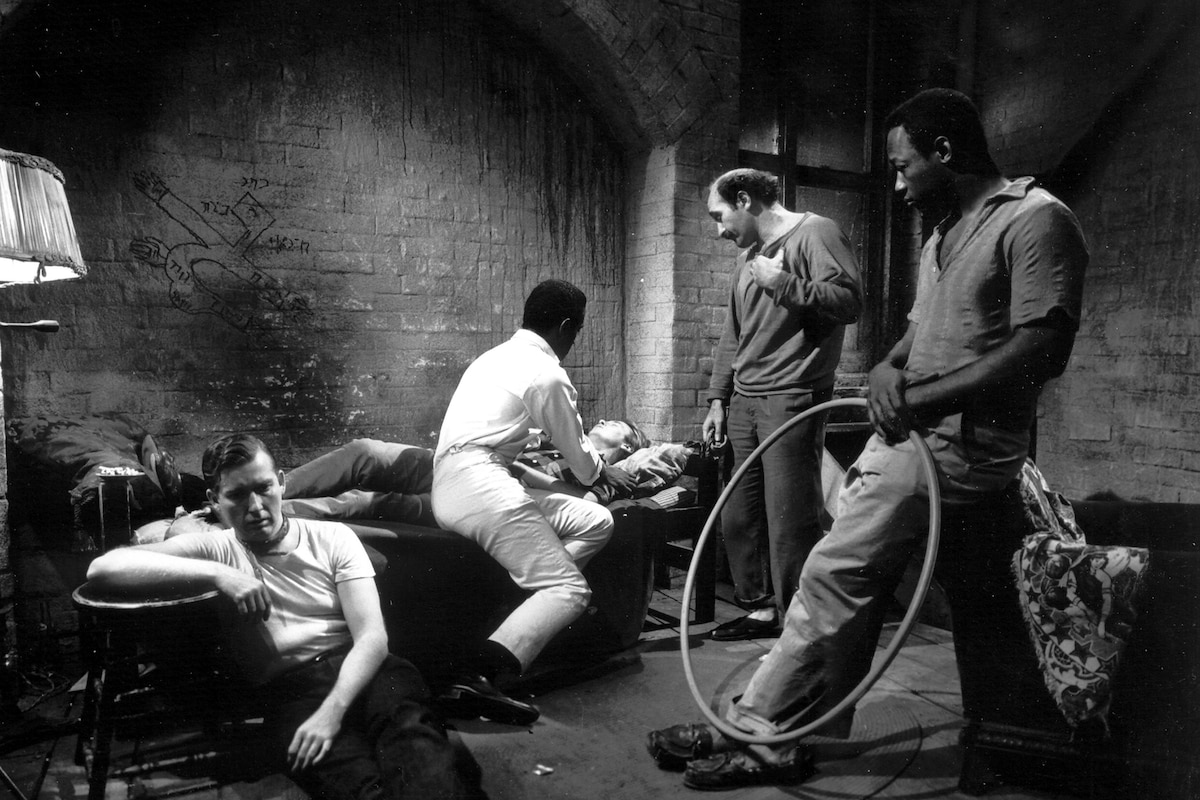
When her dance career failed to pan out, Shirley Clarke turned to experimental cinema as a means to depict modern dance on film. Her subsequent short subjects, which rejected Hollywood convention for the sake of avant-garde honesty, won critical acclaim and even Oscar attention, when Clarke's Skyscraper (1960) was nominated for Best Short Subject-Live Action. A key figure in the American independent filmmaking movement, and a colleague of Maya Deren, Stan Brakhage and Jonas Mekas, Clarke chose for her feature-length debut the Jack Gelber stage play The Connection, a controversial success for Julian Beck and Judith Malina's Living Theatre in the fall of 1959. As Gelber's play had polarized the critics with its raw depiction of the lives of heroin addicts, so Clarke intended for her film to challenge archaic New York obscenity laws. After winning a critic's prize at the 1961 Cannes Film Festival, Clarke and producer Lewis Allen were stymied in their bid to have The Connection (1962) exhibited in New York; when they showed the film without a license, the cinema was raided by the police and the film reels confiscated. After a protracted series of court rulings, Clarke and Allen succeeded in overturning the obscenity charge and The Connection remains over fifty years later a keynote in the American independent film movement. Clarke's next project, Robert Frost: A Lover's Quarrel with the Real World (1963), won the 1964 Academy Award for Best Documentary Feature.
By Richard Harland Smith
The Connection (1962)
by Richard Harland Smith | September 16, 2015
SIGN UP FOR OUR NEWSLETTERS

CONNECT WITH TCM