Efforts to bring British fantasy writer J. R. R. Tolkien's The Lord of the Rings to the big screen were in the long view, however scattershot and uncoordinated, nothing short of mythic. Various attempts to film the trilogy - an epic high fantasy written between 1937 and 1949 and spanning the The Fellowship of the Rings, The Two Towers, and The Return of the King - were broached between 1955 (the year the third and final book was published) and Tolkien's death in 1973. At one point, an adaptation was proposed by no less than the Beatles, who hoped to tap Stanley Kubrick to direct, but the author (not a fan of The Fab Four in particular or of rock and roll in general) withheld permission. Having breached the realm of fantasy with his Wizard of Oz-inspired Zardoz (1974), John Boorman declared that he would attempt an adaptation and that he would bring it in at under one hundred minutes - a boast that found no favor with Tolkien's fans, loathe as they were to part with even one battle, one betrayal, one revelation.
Boorman's abandonment of the project cleared the way for Ralph Bakshi, whose 1977 animated feature Wizards had been influenced by Tolkien's Middle Earth saga. It is more than likely that, had Tolkien been alive in 1977, he would not have given the American animator the time of day, given Bakshi's controversial stock-in-trade - among which was the first cartoon ever to merit an X-rating. A former Terrytoons staffer who paid his dues polishing animation cels, Bakshi maneuvered his way up the chain of command at Terrytoons, ultimately selling a concept to CBS Television and advancing to the post of head of Paramount Pictures' animation division - just before that office was shuttered. Rarely satisfied with his corporate assignments (which included TV spots for Coca Cola), Bakshi yearned to make animation his own way, geared for adults and inspired by a childhood that had been divided between the tenements of Brooklyn's Brownsville section and Washington D. C.'s largely black Foggy Bottom community.
Bakshi's feature film debut, Fritz the Cat (1972), was based on a comic strip character created by greeting card artist turned underground comic illustrator R. Crumb. Detailing the sex lives and drug habits of a number of anthropomorphized animals living and loving in New York's Harlem, the adults-only Fritz the Cat went on to become the most successful independently-produced animated feature of all time, made for $850,000 and grossing $90 million world-wide. (Distributor Cinemation's game plan had been to embrace the film's MPAA rating, boasting in press materials "He's X-rated and animated!") Uninterested in mounting a sequel (The Nine Lives of Fritz the Cat was produced without his participation and released in 1974), Bakshi returned to an inner city milieu with Heavy Traffic (1973), whose X-rating this time out served as a clarion call for the animator's growing fanbase. Coonskin (1975) was a bold statement about racial stereotyping while Hey, Good Lookin' (1976), a mix of live action and animation, was rejected by Warner Bros. and released only after extensive reworking in 1982.
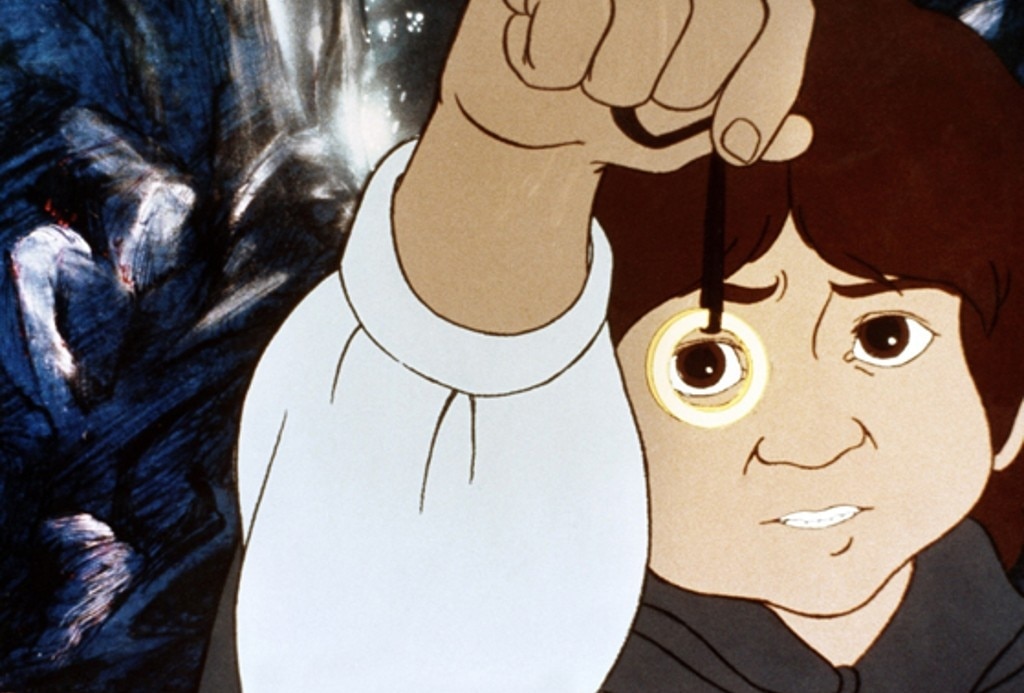
With Wizards, Bakshi shot off in another unexpected direction, a postapocalyptic parable enacted by fairytale characters whose common vocabulary was not safe for bedtime. Made for just over $1,000,000, the film earned back ten times its budget. (Bakshi's original title had been War Wizards, which was changed in light of the success that summer of George Lucas' Star Wars (1977); coincidentally, Star Wars lead Mark Hamill provided the voice of a character in Wizards.) Having been favorably impressed by Wizards, Tolkien's daughter Priscilla gave Bakshi her blessing to adapt The Lord of the Rings. Bakshi's plan for the project was to combine the first two novels into one film and to wrap up the trilogy with a sequel. Clocking in at two hours and twelve minutes, The Lord of the Rings was the first fully rotoscoped animated feature, shot live with actors in Spain, whose movements were painted over to strike an eerie balance between traditional animation and live action. (The process is credited to pioneer animator Max Fleischer.) Among Bakshi's cast were a pre-Alien (1979) John Hurt, Hammer horror actor André Morell (who died shortly after completing his scenes) and Anthony Daniels, who had played the android C3PO in Star Wars. Among Bakshi's crew of animators was a young (and uncredited) Tim Burton.
Though the $4 million The Lord of the Rings grossed over $30 million at the boxoffice, Bakshi's concluding chapter never materialized. (Distributor United Artists had vetoed Bakshi's plan to call the movie The Lord of the Rings: Part I, which led to audience dissatisfaction that they had not been given the full story.) Jules Bass and Arthur Rankin realized The Return of the King on a considerably lesser scale as a 1980 animated TV movie, a follow-up to their earlier The Hobbit (1977), based on the 1937 Tolkien book that started it all. Apart from a 1985 Russian language adaptation of The Hobbit and a 1993 miniseries from Finland, the Middle Earth saga lay fallow for twenty years before being realized on a grand scale by New Zealand filmmaker Peter Jackson with The Lord of the Rings: The Fellowship of the Rings (2001), The Lord of the Rings: The Two Towers (2002), and The Lord of the Rings: The Return of the King (2003), as well as a trilogy of films (2012-2014) based on The Hobbit. As an artistically-inclined teenager and Tolkien fan coming of age in Pukerua Bay, Jackson had been inspired by Bakshi's The Lord of the Rings and included in his own trilogy references to the earlier film.
By Richard Harland Smith
Sources:
Ralph Bakshi interview by Tasha Robinson, The Onion AV Club, December 6, 2000
Peter Jackson interview by Stephen Colbert, Entertainment Weekly, December 2014
The Animated Movie Guide by Jerry Beck, (Chicago Review Press, 2005)
The Lord of the Rings (1978)
by Richard Harland Smith | August 27, 2015
SIGN UP FOR OUR NEWSLETTERS

CONNECT WITH TCM