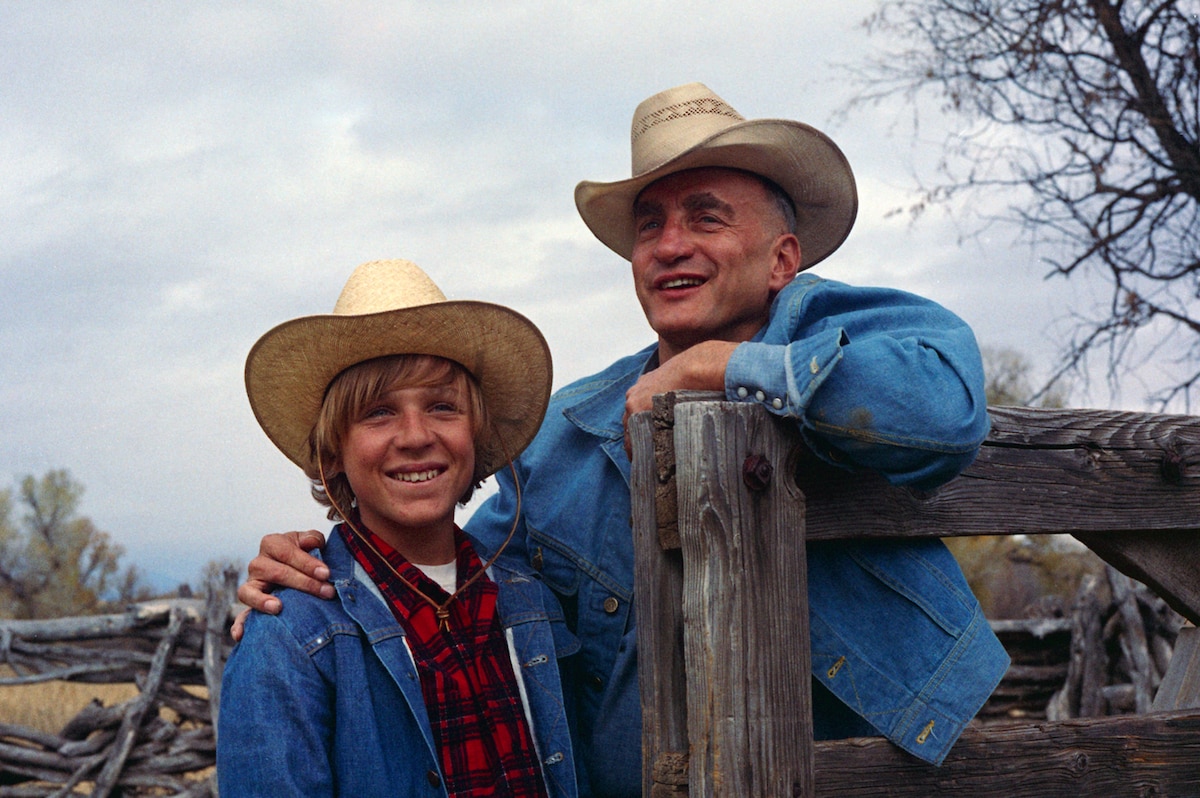
Riding high on his starring success in the epic war movie Patton (1970), actor George C. Scott turned film director for Rage, a grim 1972 thriller about chemical warfare. Scott also plays the leading role as Dan Logan, a Wyoming rancher. Camping with his young son Chris (Nicolas Beauvy), Dan wakes to find his sheep dead and Chris unconscious and bleeding from the nose. They seek the care of the army doctor Holliford (Martin Sheen), only to be victimized a second time. A valve on an Army helicopter malfunctioned, releasing a deadly chemical agent called MX3. Chris dies almost immediately and Dan will only last a couple of days. In the name of national security Dan is told lies and kept incommunicado, until he discovers the truth and goes on a murderous rampage. He breaks free and attacks the chemical plant with a rifle and some homemade bombs. Released a year before the Watergate debacle, Rage precedes the paranoid conspiracy thrillers about secret government agencies operating outside the law. The screenplay by Philip Friedman and Dan Kleinman also predicts the growing discontent in Middle America with a federal government perceived as unconcerned with the rights of its citizens. Dan is an innocent victim whose vigilante reaction amounts to justified domestic terrorism. The chemical weapons are outlawed by international law yet still being manufactured, and the military doctors choose to lie to the doomed Dan Logan, while using him to study the effect of their deadly chemical. Among the fine actors chosen by Scott to play the secretive, guilty medics and soldiers covering up the accident are Barnard Hughes, Paul Stevens and Richard Basehart, who seven years before had menaced the world as a villainous madman in The Satan Bug (1965), a germ warfare thriller about a doomsday virus stolen from a secret lab. Rage adds a bitter anti-government theme. The film is reportedly based on real incidents in Utah in 1968 and 1971 that killed thousands of sheep. Reviews praised George C. Scott's intentions but criticized its many lengthy position speeches, while deriding one of director Scott's visual choices: to remind us of the existence of the dreaded chemical agent MX3, the narrative flow is frequently interrupted by slow-motion observations of liquids - water from a hose, gasoline, coffee, even spittle. Variety called the show convincing but sluggish and overwhelmingly depressing. Our sympathy for Dan Logan comes to a halt as soon as he starts shooting people.
By Glenn Erickson
Rage (1972)
by Glenn Erickson | June 02, 2015
SIGN UP FOR OUR NEWSLETTERS

CONNECT WITH TCM