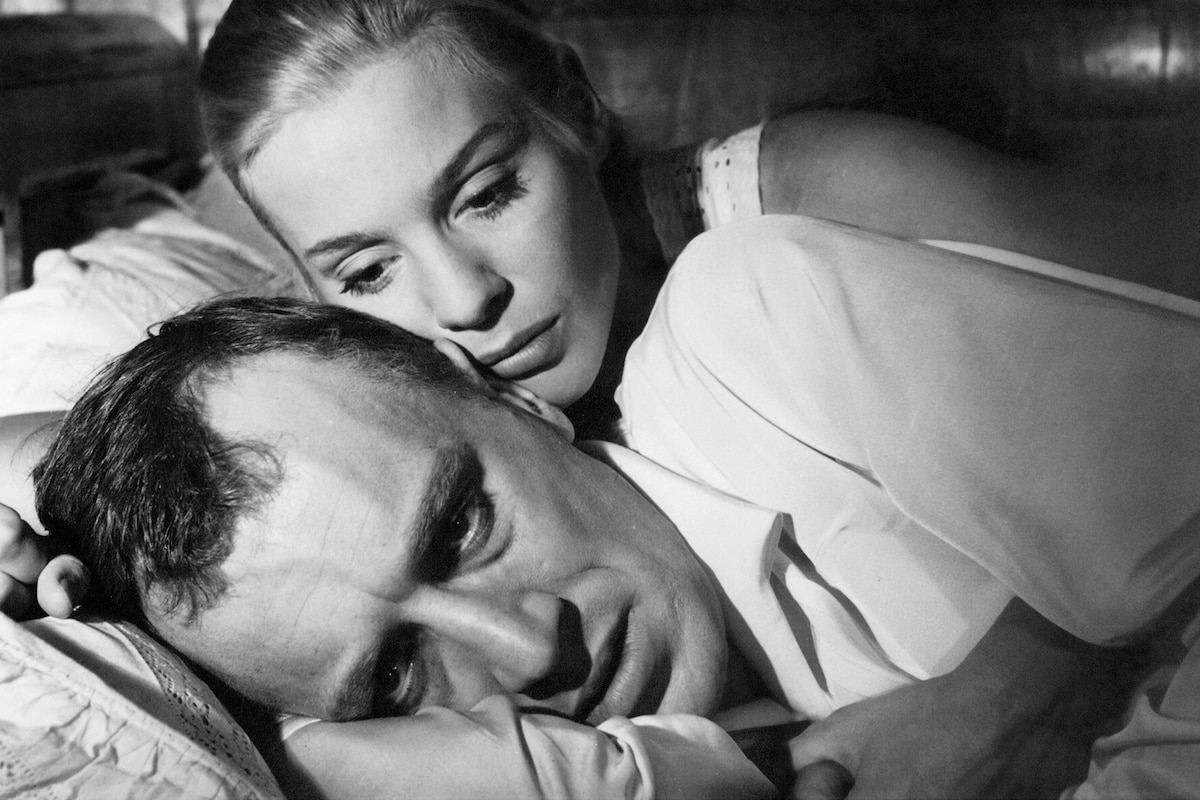
Released stateside as The Magician (1958), Ingmar Bergman's Anisktet (the British title, The Face, was a direct translation) matches the intelligence and artistry of The Seventh Seal (1957) and Wild Strawberries (1958) as a meditation on the schism between skepticism and faith, this time laced with black humor and informed by the tropes of Gothic horror. Bergman's screenplay was a reworking of the 1913 G. K. Chesterton play Magic, about an illusionist's interrogation by a scientist, a clergyman, and an aristocrat, which the Swedish maestro had in 1947 directed for the stage using cinematic rather than theatrical devices (such as dimming the lights between acts rather than lowering a curtain). Max von Sydow stars as an itinerant 19th Century conjurer working the provinces with a company of fellow mountebanks (among them his wife, played by Ingrid Thulin, who masquerades as a man), augmenting his exhibitions of mesmerism by selling useless potions to the gullible; arriving in their latest port of call, the troupe is apprehended by the authorities and put to the test by the local medical examiner (Gunnar Björnstrand) and a councilman (Erland Josephson) fascinated by spiritualism. For too long undervalued by film scholars who felt Bergman was spinning his creative wheels between more important films with what amounts to a cinematic shaggy dog story, The Magician asserts itself as an engrossing, eerie, and disarmingly personal project, with which the angst-filled auteur works through his own conflicted feelings about the nature of art and the manipulation inherent in make-believe.
By Richard Harland Smith
The Magician
by Richard Harland Smith | June 02, 2015
SIGN UP FOR OUR NEWSLETTERS

CONNECT WITH TCM