The Spanish Civil War in the 1930s and the dictatorship of General Francisco Franco that followed was a national trauma that divided the nation for more than 40 years. It also both defined and limited the work of several generations of filmmakers. Those whose work was critical of Franco's government faced censorship restrictions, and any criticism was necessarily indirect and cloaked in allegory. Director Carlos Saura, who had begun his career in the 1950s, came to the regime's attention when his first international success, The Hunt (1965), about a shooting party that turns violent, was correctly seen as a critique of the Franco regime, and was banned in Spain until after Franco's death a decade later.
By the time his film Cria Cuervos went into production in the summer of 1975, Saura's work had been praised by critics around the world, Franco was on his deathbed (he died that November), and government censorship had relaxed considerably. Although the film's dysfunctional family can be interpreted as representing Spain, this time there was no official interference in the film's script or production.
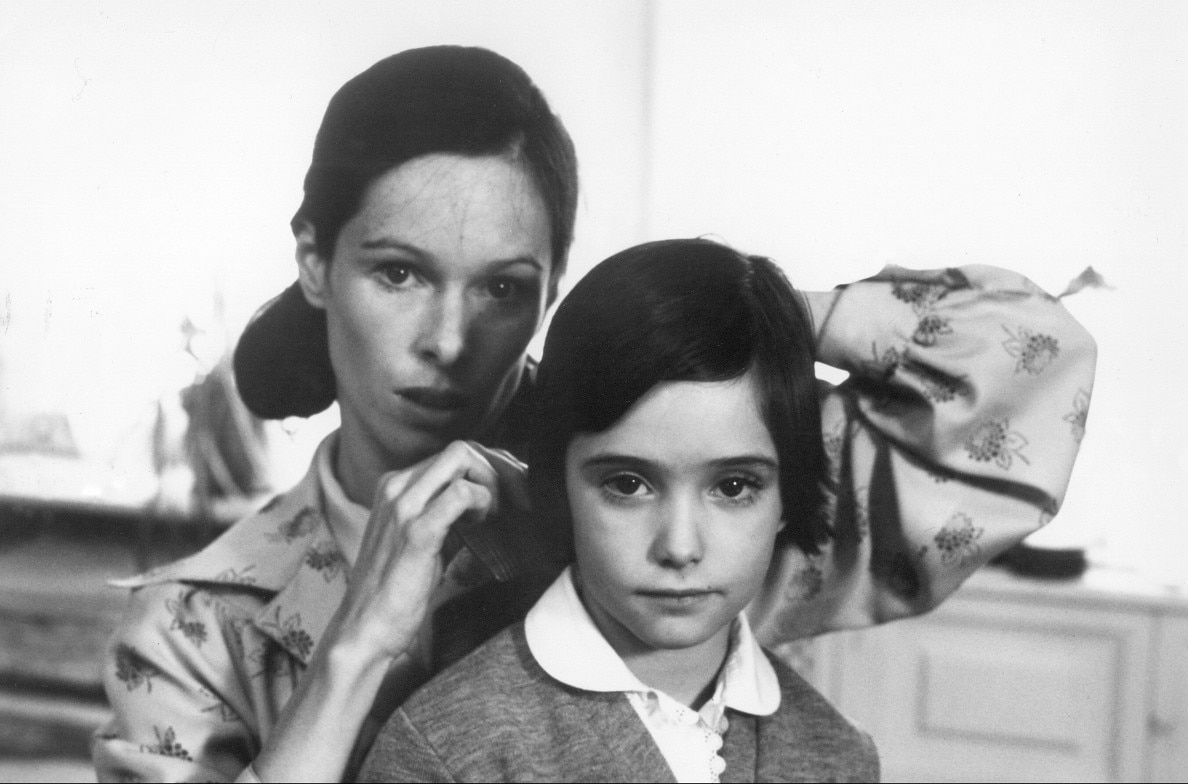
The title refers to a Spanish proverb, "Cria cuervos y te sacaran los ojos," which means "Raise crows and they'll pluck your eyes out," and the film focuses on a family steeped in sadness, guilt, and neglect. Nine-year-old Ana is the solemn, observant middle child of three daughters. Their mother has recently died. As the film begins, Ana spies on her military officer father and his married mistress, and witnesses his sudden death. Afterward, the children's aunt arrives to take care of them, but has no clue about what they need. Left to their own devices, the girls cope as best they can with their memories and sorrow.
Saura had worked with Cria Cuervos producer Elias Querejeta since The Hunt -- they made thirteen films together, most of them released to international acclaim. The third member of the partnership was actress Geraldine Chaplin, Saura's then-life partner, who starred in nine of them. In Cria Cuervos, she plays two roles, the children's mother, and Ana as an adult, looking back on her childhood. Saura cast young Ana Torrent as Ana after seeing her stunning performance in Victor Erice's Spirit of the Beehive (1973). She worked with Saura once more, again co-starring with Chaplin in Elisa Mi Vida (1977), and has continued to act into adulthood, playing Catherine of Aragon in The Other Boleyn Girl (2008), and in Spanish films and television.
Cria Cuervos opened in Madrid in early 1976. According to Saura, the first reviews in Spain (mostly by leftist critics, finally freed from censorship by Franco's death) were "catastrophic," but after the film won the special jury prize at the Cannes Film Festival, it became a hit worldwide, including in Spain, where it was the sixth-highest grossing film of 1976. Some international critics were confused by the film's intentionally ambiguous storytelling. Vincent Canby of the New York Times wrote, "One begins to wonder if the movie is much more than an outline for another movie. One wants more than mood and memory, though that may be asking for more than Mr. Saura ever intended." Yet Canby called it "a movie of marvelous moments and two superb performances, by Miss Torrent and by Miss Chaplin." Penelope Gilliat's review in the New Yorker was more enthusiastic: "Scene after scene is unforgettable, exact, and unexpectedly robust....the distress and comradeship spun between the Geraldine Chaplin and Ana Torrent characters at different stages is a fine web." Over the years, there has been much analysis about the meaning ofCria Cuervos. Thirty-five years after making it, Saura said in an interview that his conception the film was simply to explore the idea of a child who wanted to kill.
Director: Carlos Saura
Producer: Elias Querejeta
Screenplay: Carlos Saura
Cinematography: Teo Escamilla
Editor: Pablo G. Del Amo
Costume Design: Maiki Marin
Production Design: Rafael Palermo
Music: Federico Mompou, Jose Luis Perales
Principal Cast: Geraldine Chaplin (Ana's mother/ adult Ana), Ana Torrent (Ana), Monica Randall (Paulina, the aunt), Florinda Chico (Rosa), Hector Alterio (Anselmo, Ana's father ), German Cobos (Nicolas Garontes), Mirta Miller (Amelia Garontes), Josefina Dias (Grandmother), Conchita Peres (Irene), Maite Sanchez (Maite)
110 minutes
by Margarita Landazuri
Cria Cuervos
by Margarita Landazuri | June 02, 2015
SIGN UP FOR OUR NEWSLETTERS

CONNECT WITH TCM