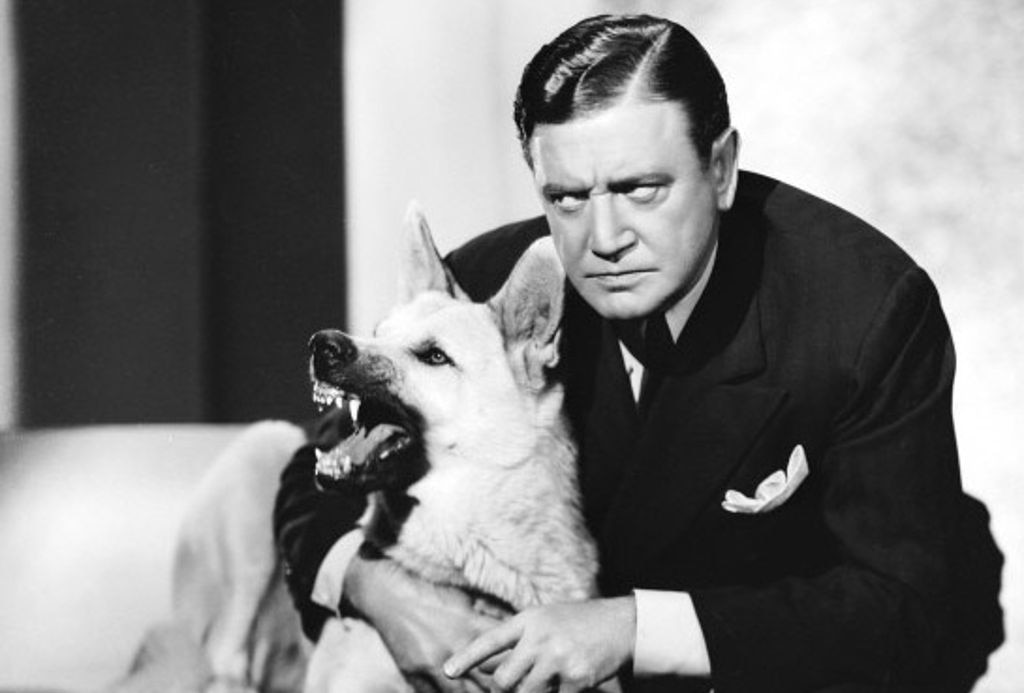
With Blind Alibi (1938), RKO Radio Pictures introduced its rival to Warner Bros.' canine superstar Rin Tin Tin in "Ace, the Wonder Dog," a German Shepherd who went on to appear in more than a dozen feature films between 1938 and 1946. Based on an unpublished story, "The Unseeing Eye," written by Kongo director William Cowan, Blind Alibi begins in France, where the American wife (Frances Mercer) of a prominent Parisian politician turns to her sculptor brother (Richard Dix) to retrieve a packet of incriminating love letters from her indiscreet past. When the letters wind up in a shipment of artwork bound for the United States, Paul follows, hitting on the retrieval tactic of posing as a blind man in order to gain entry to the Los Angeles museum where the letters have landed. Paul's acquisition of a seeing-eye dog, a budding love interest in a comely museum curator (Whitney Bourne), and the added complication of a local gangster (Eduardo Ciannelli) who will stop at nothing to grab the letters for his own profit make Blind Alibi a highly improbable, though highly entertaining, shaggy dog story that culminates in the familiar near-tragedy of Ace taking a bullet for the team. Ace would next appear for RKO as a police dog opposite Tim Holt in The Rookie Cop (1939) but he proved no real threat to Rinty and was soon hiring on with such Poverty Row studios as Republic and Monogram. For Columbia Pictures, Ace played Devil, the four-legged best friend of Tom Tyler's The Phantom (1943), a 15-part serial adaptation of the popular comic strip by Lee Falk.
By Richard Harland Smith
Blind Alibi
by Richard Harland Smith | April 03, 2015
SIGN UP FOR OUR NEWSLETTERS

CONNECT WITH TCM