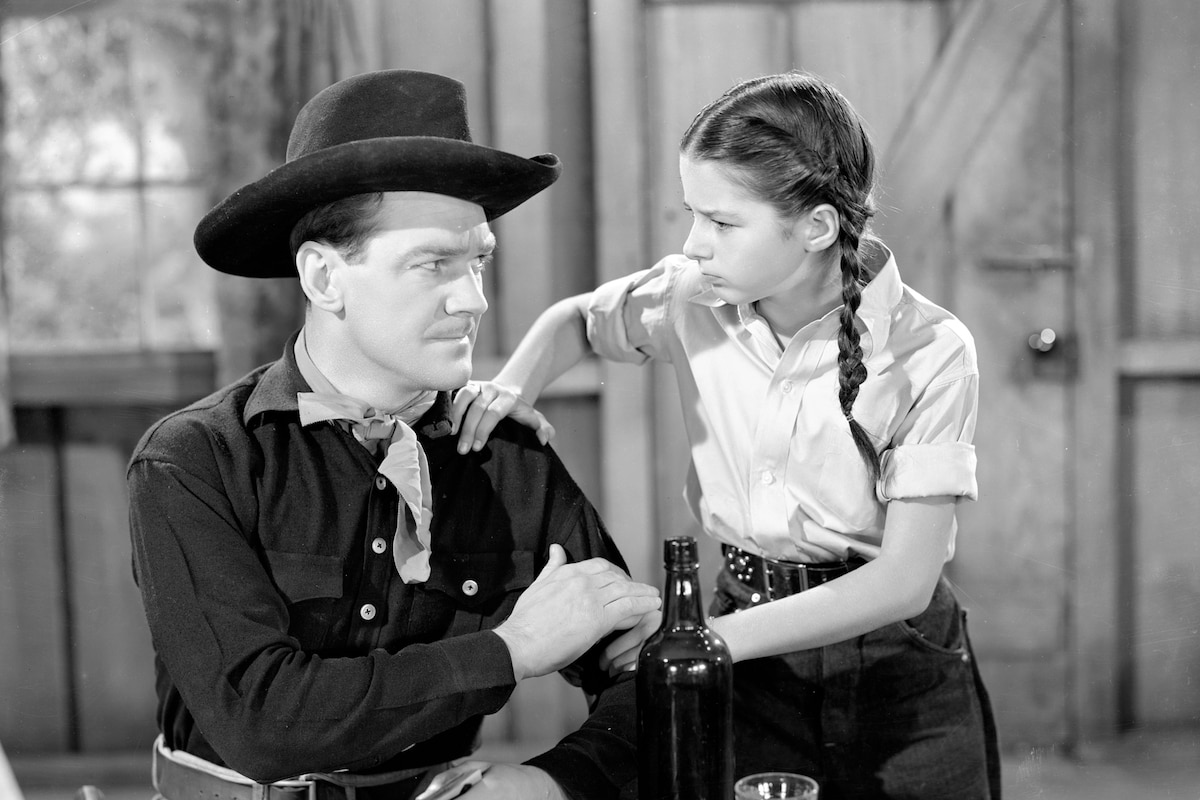
Hired by Metro-Goldwyn-Mayer to work on the adaptation of The Wizard of Oz (1939), novelist and playwright Florence Ryerson helped create the character of sideshow illusionist Professor Marvel, partly to give more onscreen business to actor Frank Morgan. That same year, Ryerson shared screenplay credit for the MGM second feature Henry Goes Arizona (1939), in which Morgan was again cast as a blustery showman, a fainthearted vaudevillian who inherits a ranch in Arizona after his half-brother is gunned down under mysterious circumstances. Directed by Edward L. Marin (who had graduated from Poverty Row programmers to helming installments of MGM's Philo Vance whodunits and Ann Sothern's Maisie comedies), Henry Goes Arizona is classic fish-out-of-water comedy, with the cowardly Morgan being targeted for murder by villains (led by Douglas Fowley and Porter Hall) who want to grab his land at any cost. Amping up the comedy wattage are supporting players Guy Kibbee (as a dipsomaniacal judge), juvenile actor Virginia Weidler (who appeared in The Philadelphia Story the next year), and Slim Summerville (as a pushover of a small town sheriff) with Owen Davis, Jr. (in a role that had been marked first for Dennis O'Keefe) playing the young cowboy who stands accused of murdering Morgan's half-brother but who ultimately proves himself a hero. Popping up in an unbilled, nonspeaking bit is Native American athlete Jim Thorpe, a hero of the 1912 Summer Olympics in Stockholm, whose life story was told in Jim Thorpe - All American (1951), starring Burt Lancaster.
By Richard Harland Smith
Henry Goes Arizona
by Richard Harland Smith | April 03, 2015
SIGN UP FOR OUR NEWSLETTERS

CONNECT WITH TCM