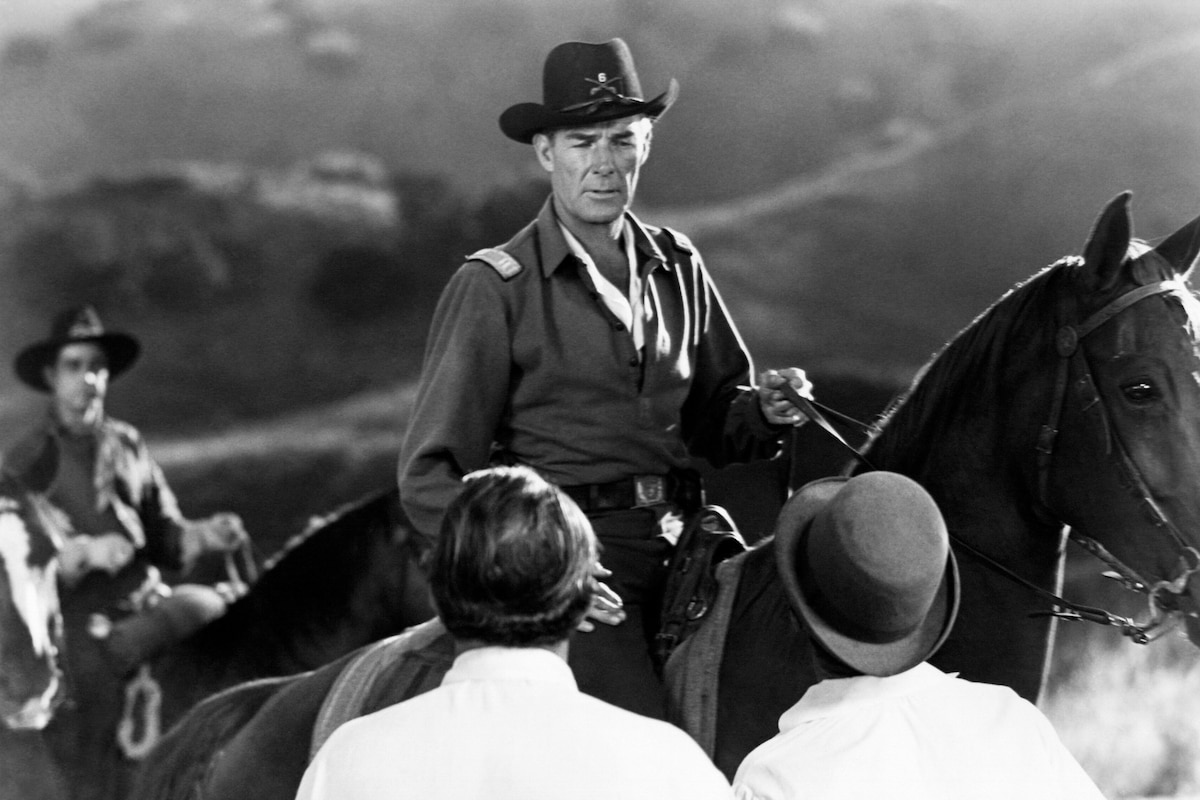
Handsome leading man Randolph Scott enjoyed a varied career but after WW2 appeared almost exclusively in westerns, playing more or less the same laconic, moral character in as many as four 'A' attractions per year. The less he changed, the more popular he became. A full six features between 1951 and 1954 were directed by André de Toth, a talented Hungarian émigré known for tense dramas with strong character conflicts. Thunder Over the Plains (1953) sends Scott's Union Captain on a peacekeeping mission to Texas, where he finds dishonest carpetbaggers Elisha Cook Jr. and Hugh Sanders taking advantage of hard times after the Confederate defeat. Sympathizing with the 'occupied' Texans, Scott refuses to compound the injustice by arresting the Robin Hood-like Texan resistance leader, Charles McGraw. But Scott's trigger-happy fellow officer Lex Barker goes on the offensive, framing McGraw for a murder and making moves on Scott's pretty wife, Phyllis Kirk. Scott is compelled to defy his orders, reach for his guns and save McGraw from a hanging. Critics thought the show was better than average, although none noted its marked anti- Washington political stance. In an unexpectedly refreshing casting switch, handsome former Tarzan Lex Barker is the treacherous wife-stealer, while the coarse-voiced tough guy Charles McGraw gets to play a noble rebel patriot. Randolph Scott's straight-arrow western persona eventually earned him a classic joke in Mel Brooks' Blazing Saddles (1973), where just the mention of the star's name inspires an admiring, worshipful response from a crowd of townspeople: "Oooooh... Randolph Scott!
By Glenn Erickson
Thunder Over the Plains
by Glenn Erickson | February 28, 2015
SIGN UP FOR OUR NEWSLETTERS

CONNECT WITH TCM