Synopsis: In the prologue, the German poet and
tale-spinner E. T. A. Hoffmann (Robert Rounseville) is enamored
with the ballerina Stella (Moira Shearer), but Councillor
Lindorff (Robert Helpmann) also has designs on her. Hoffmann,
accompanied by his faithful friend Niklaus (Pamela Brown),
drinks in a tavern and recounts three tales of ill-fated
romances that reflect aspects of his beloved Stella. In the
first tale, set in Paris, Hoffmann falls in love with the
mechanical doll Olympia after viewing her through magic
spectacles. In the second tale, set in Venice, Hoffmann falls in
love with the courtesan Giulietta, who schemes with the demonic
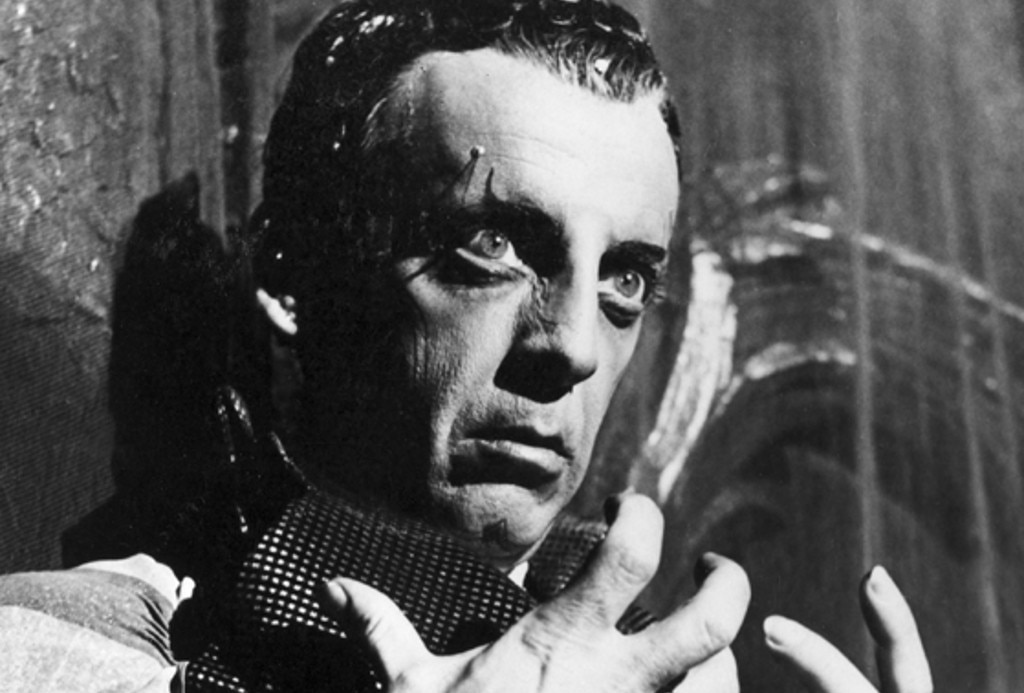
Dapertutto to rob Hoffmann of his shadow. In the third tale, set
in Greece, Hoffmann's beloved is the gifted but frail singer
Antonia, whom the untrustworthy Dr. Miracle wants to return to
singing, even at the cost of her life.
Review: The Tales of Hoffmann (1951) is the
arguable peak of a certain Technicolor aesthetic that flourished
in the late Forties and early Fifties. In Hollywood, directors
such as Vincente Minnelli, Gene Kelly and Stanley Donen combined
color, dance, music, camerawork and editing in remarkably
sophisticated ways in musicals such as An American in
Paris (1951), The Band Wagon (1953) and Singin' in
the Rain (1952). On the opposite shore of the Atlantic, the
directing and screenwriting team Michael Powell and Emeric
Pressburger were pursuing a parallel path with their notion of
the "composed" film in Black Narcissus (1947), The Red
Shoes (1948) and The Tales of Hoffmann.
While the Hollywood musicals drew mainly upon American popular
music and dance and the Powell-Pressburger films were inspired
more by the European cultural tradition, they nonetheless share
some striking similarities in their great set-pieces. This is
not surprising, since Michael Powell was a devotee of Walt
Disney and of Fantasia (1940) in particular, and since
Gene Kelly reportedly screened The Red Shoes for studio
executives while trying to get approval for An American in
Paris. We even find both Singin' in the Rain and
The Tales of Hoffmann incorporating rather obvious
allusions to Surrealist painting in the visual designs of the
"Broadway Melody" number and the "Olympia" sequence,
respectively. For me, The Tales of Hoffmann deserves a
special mention due to its sheer creative boldness. With its
remarkable art direction by Hein Reckroth and photography by
Christopher Challis, it is surely among the most beautifully
designed color films ever made.
The first time I watched The Tales of Hoffmann, I have to
admit that I found the whole thing a little overbearing and
"arty." Still, I felt compelled to watch the entire film again a
few days later just to savor its eye-popping details, such as
Moira Shearer's mechanical dance as Olympia, or the vivid red
sculptures of bodies writing in infernal torment, on which the
courtesan Giulietta treads in the Venetian sequence. After
several such viewings in the space of a couple weeks, I have to
say that few films are as rewarding on a repeat basis.
Offenbach's memorable music helps. It may not wind up as one of
my favorite films of all time, but I can understand why it might
be for directors such as George Romero and Martin Scorsese.
The film is heavily laden with trick effects, including slow and
reverse motion, flash frames and jump cuts, and there are many
self-conscious stylistic choices such as obviously painted
trompe-l'oeil sets and the alternation of puppets with live
dancers in the Olympia episode. For the most part, such devices
fit perfectly with the fantastic atmosphere that the film
conjures up. Robert Rounseville may have a somewhat stiff screen
presence compared to the dancers Robert Helpmann, Leonid
Massine, Moira Shearer and Ludmilla Tcherina, but he works well
enough considering the function of the Hoffmann character within
the narrative as a whole. Rounseville is above all an
accomplished tenor, and the role of Hoffmann as conceived in the
film demands someone who can really sing. The multiple visions
of the Villain and the Beloved, on the other hand, are more
flexible and benefit from the visually striking personas
embodied by the aforementioned dancers. I've never been a great
fan of ballet per se, but I came away with unqualified
admiration for Helpmann, Massine, Shearer and Tcherina not just
as dancers, but as actors. Their incredible control and
expressiveness, especially in terms of their facial expressions,
make them ideal collaborators within the film's artistic vision.
Tcherina is especially memorable as Giulietta, the ultimate
sleek seductress.
However, it must be said up front that the Powell and
Pressburger film is not for opera purists. The "Enchanted
Dragonfly" ballet is not part of Jacques Offenbach's original
opera, but rather is a reworking of themes by Offenbach. The
libretto has been translated into English, a practice that most
opera companies would avoid today. Also, in Offenbach's original
conception, Hoffmann's three loves--Olympia, Antonia and
Giulietta--must be played by the same singer, strengthening the
opera's underlying unity. Lastly, Offenbach originally had
Hoffmann's companion Niklaus (who is traditionally sung by a
female like many operatic roles depicting young men) double for
the Muse, who appears at the end of the opera to console the
poet. It's a shame that this element wasn't retained in the
final version of the film, because it gives the story a crucial
dramatic payoff and provides stronger motivation for the
presence of Niklaus. Still, the basic appeal of the opera, with
its famous set-pieces such as Olympia's "doll song" and the
languid Barcarolle, shines through.
To be fair, the opera itself has had a complex history.
Offenbach died before the opera's premiere in 1881 and the score
was not yet completely orchestrated. Ernest Guiraud and other
editors made a number of changes in the score over the years,
among them altering the order of the acts--the Antonia act
originally came before the Giulietta section. Thus many
of the seeming peculiarities of the film reflect the opera's
performing traditions up to that time. One should also keep in
mind that the conductor, Sir Thomas Beecham, in fact worked
closely with Powell and Pressburger from the start , and that
his primary concern was to shape the film into a viable
cinematic work. If you approach The Tales of Hoffmann
with an open mind, then it remains one of the few truly
successful filmed operas from a cinematic standpoint.
Considering the sheer exhilaration that emanates from the
screen, it makes one a little sad to think that a project like
this probably can never be duplicated. It would be difficult to
imagine studios today investing in such massive and stylized
sets for an "opera film," to say nothing of cultivating the
talent required to execute such a vision both in front of and
behind the camera. Admittedly, Baz Lurhmann's recent musical
Moulin Rouge (2001) comes very close, but one film
doesn't signal a renaissance.
The Disc: Criterion's DVD has gorgeous color and detail,
as we should rightfully expect with a film like this. Without
having seen a 35mm print previously, I suspect that they put a
great deal of care into conveying accurately how it looks on
film. There are a few minor problems with the alignment of the
three color layers as often happens with Technicolor prints, but
nothing to detract seriously from one's appreciation of the film
as a whole. Mostly, it looks dazzling. The mono sound is very
clear, which is critical considering the nature of the film, and
the disc helpfully includes English subtitles for those who want
to understand every word of the libretto.
The special features include an essay by the noted film scholar
Ian Christie, a video introduction by George Romero, a
collection of production design sketches by Reckroth, and a
full-length commentary track by Martin Scorsese and Bruce Eder.
Scorsese demonstrates his obvious affection for the film as he
points out all sorts of interesting details. Eder offers a great
deal of well-researched and useful information on the
production's history. The disc also includes the rare Michael
Powell short The Sorcerer's Apprentice (1956). It uses
much of the same technical crew as The Tales of Hoffmann, but
with vastly diminishing returns. Ultimately, that film is the
sort of straightforward ballet film that I was initially afraid
The Tales of Hoffmann might turn out to be. The Tales
of Hoffmann, which has been seen relatively little in the
U.S. up to now, is a great discovery.
For more information about The Tales of Hoffman, visit The Criterion
Collection. To order The Tales of Hoffman, go to
TCM
Shopping.
by James Steffen
The Tales of Hoffman - Jacques Offenbach's Operatic Fantasy Interpreted by Michael Powell & Emeric Pressburger - THE TALES OF HOFFMAN on DVD
by James Steffen | September 29, 2005
SIGN UP FOR OUR NEWSLETTERS

CONNECT WITH TCM