After a major silent career and a lengthy and fairly productive contract with RKO from the beginning of sound through the early 40s, Richard Dix found himself a comfortable niche at Columbia with a string of films based on the popular radio thriller "The Whistler." From 1944 through 1947, Dix worked only in this film series, starring in seven Whistler movies in all. He retired from the screen after the seventh installment, The Thirteenth Hour (1947), leaving the studio to find another actor for the final picture, The Return of the Whistler (1948). The radio mystery drama, which ran from 1942 until 1955 (almost exclusively on the west coast regional CBS network), followed a formula in which a crime is committed and the criminal is caught by overlooking an important detail or stupidly blundering in some way.
Contrary to what one might assume, Dix did not play the title character in any of the seven Whistler pictures. In fact, no such character really exists, except as narrator and a kind of Greek chorus, commenting on the action and frequently taunting the characters from his omniscient perspective. The Whistler was voiced in all eight films by Otto Forrest, a bit player who later appeared in Sabrina (1954) and Around the World in 80 Days (1956). He was never given screen credit for any of the 13 pictures he made.
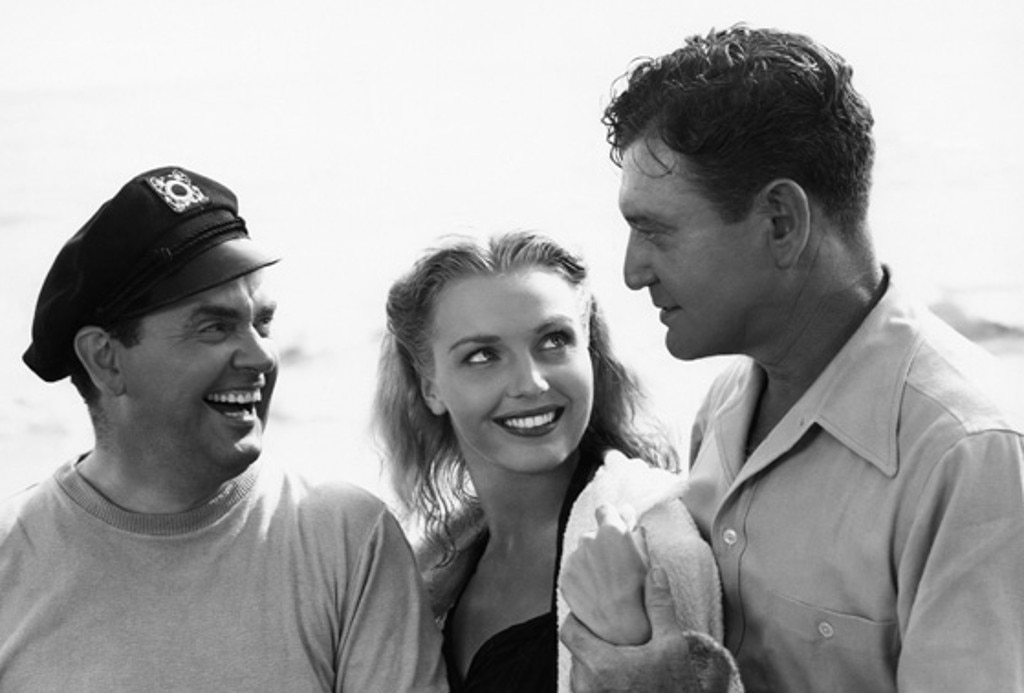
The series gave Dix an opportunity to play a wide variety of characters. In this one, he gets to play a ruthlessly driven wealthy industrialist who, on his doctor's orders to take a long rest, assumes a different identity and goes to live in a remote seaside spot in Maine with his nurse in tow. Revealing his true identity to her, he offers to leave her everything in her will if she will marry him and stay with him for what he believes are the final months of his life. Complications ensue when Dix falls for his beautiful caretaker, returning to health thanks to his new life, and devises a plan to murder her intern boyfriend, who expects to marry her after the rich man's death. As with most of the other tight little B pictures in the series, each running scarcely more than an hour, the mystery is less important. The end, after all, is revealed at the film's start. What audiences enjoyed were the clever plot twists by which the criminal is tripped up and the human drama played out by the characters.
Voice of the Whistler was directed by William Castle (1914-1977), later famous as the king of horror and exploitation in the 1950s and early 1960s. Castle began his directing career at the age of 18 with a stage production of Dracula and worked briefly in radio with Orson Welles. He directed his first short subject in 1939 and first feature in 1943. Columbia assigned him the initial film in this series, titled simply The Whistler (1944), and he would do four in all. The shock and horror movies he later produced and directed were known for their marketing gimmicks and his flamboyant presence, often making cameos in his movies and trailers a la Hitchcock. His most famous works include House on Haunted Hill (1959), The Tingler (1959), 13 Ghosts (1960), and several Grand Guignol suspense pictures with late-career stars like Joan Crawford (Strait-Jacket, 1964; I Saw What You Did, 1965) and Barbara Stanwyck and her ex-husband Robert Taylor (The Night Walker, 1964). John Goodman played a fictionalized version of Castle in Matinee (1993).
Fans of Hollywood's great character actors will no doubt recognize Rhys Williams, whose screen debut was as a coal miner in John Ford's How Green Was My Valley (1941), for which the Welsh-born actor also served as a language consultant. In addition to countless B movies, he appeared in such major productions as Mrs. Miniver (1942), The Spiral Staircase (1945), Johnny Guitar (1954), and Raintree County (1957). He made numerous TV appearances from the 50s through 1969, when he died at age 71. Here he plays the kindly ex-boxer who tries to help Dix find a new way of life.
If Dix saw any possibility for a career revival after leaving the Whistler series, he never got the chance to carry it out. He suffered a serious heart attack on board a cross-country train in September 1949 and died a week later at the age of 56. Unknown now to all but the most ardent classic film buffs, he was nominated for an Academy Award for his role in the western Cimarron (1931) and was remembered with a star on the Hollywood Walk of Fame in 1960.
The working title of the production was "Checkmate for Murder." While a couple of pictures in the series had titles that did not include the Whistler name, it was decided before release that this one would. As with all of them, however, it opens with the shadowy figure of the title character, who whistles a haunting tune and declares, "I am The Whistler, I know many strange tales." He "appears" at the end again to reveal the final outcome of the tale.
Director: William Castle
Producer: Rudolph C. Flothow
Screenplay: Wilfred H. Pettitt, William Castle; story by Allan Radar
Cinematography: George Meehan
Editing: Dwight Caldwell
Original Music: Mario Castelnuovo-Tedesco (uncredited)
Cast: Richard Dix (John Sinclair/John Carter), Lynn Merrick (Joan Martin Sinclair), Rhys Williams (Ernie Sparrow), James Cardwell (Fred Graham), Tom Kennedy (Ferdinand/Hammerlock)
By Rob Nixon
Voice of the Whistler
by Rob Nixon | October 10, 2014
SIGN UP FOR OUR NEWSLETTERS

CONNECT WITH TCM