When a promised A-list assignment failed to materialize at Columbia Pictures, where he had slaved for nearly a decade making programmers for the studio's B-unit under the vulture eye of Harry Cohn, writer-director William Castle asked to be released from his contract. Hiring on at Universal-International for a three-year separation from Cohn (who later hired him back and got him working in Technicolor), Castle also pitched projects to independent Eagle-Lion Films, the American distribution arm of England's J. Arthur Rank Organization. Founded in 1946, the company had absorbed the bankrupt Poverty Row outfit Producers Releasing Corporation and was by 1948 producing B-pictures to accompany into the cinemas such lofty British imports as Powell and Pressburger's The Red Shoes (1948) and Laurence Olivier's Hamlet (1948). Seeing the cinematic possibilities in Robert Heinlein's 1947 science fiction novel Rocket Ship Gibraltar, Castle proposed a space exploration film to be titled Destination Moon but Eagle-Lion chief Arthur Krim turned him down, declaring the concept too fantastic. (Producer George Pal latched onto the discarded title and won a 1951 Academy Award for his Destination Moon.) Undaunted, and with no shortage of big ideas, Castle took his sales pitch in another direction entirely.
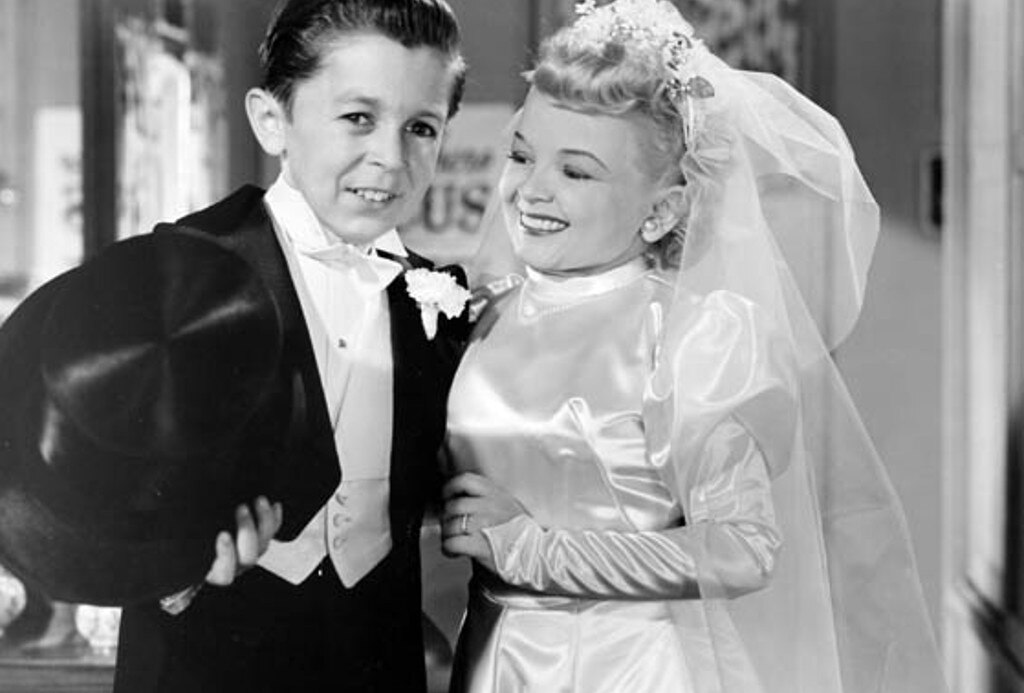
It's a Small World (1950) was released at a time when Hollywood, its ranks soundly decimated by anti-Communist paranoia and the McCarthy witch hunts, was arguing for greater social tolerance in American society. Films such as Crossfire (1947), Gentleman's Agreement (1947), The Snake Pit (1948), and Home of the Brave (1949) chronicled the lives of "outsider" protagonists and stumped for the acceptance of people of different races and faiths, as well as for those suffering from the stigma of mental illness. Seemingly taking his cue (at least in part) from Tod Browning's notorious pre-Code sideshow shocker Freaks (1932), Castle (and cowriter Otto Schreiber - a possible pseudonym and, tellingly, also the name of a German anarchist who died in a British prison in 1917) tells the tale of a midget (Paul Dale) who, having been raised in isolation by a well-meaning but unenlightened father (blacklisted actor Will Geer), strikes out on his own - only to be seduced by the seeming affections of a woman of conventional size (Lorraine Miller) and inducted into a gang of pickpockets (captained by Steve Brodie). Its narrative arc drama structured in three distinct theatrical acts, It's a Small World allows its protagonist by the final frames to slip the bonds of indentured servitude and find happiness, perhaps surprisingly, as the employee of a traveling circus.
Despite the high concept of its logline, It's a Small World is streets away from the exploitable fare that Castle would be making by the end of the decade. Conspicuous in its absence is the ballyhoo of Macabre (1958), The Tingler (1959), and House on Haunted Hill (1959), the only gimmick being the film's sincerity. Aiding in the cause is the cinematography of Karl Struss, an Academy Award winner in 1929 for F. W. Murnau's Sunrise (1927) and later nominated for his work on Dr. Jekyll and Mr. Hyde (1931), The Sign of the Cross (1932), and Aloma of the South Seas (1941). (Though not remembered exclusively for his work in genre, Struss would also lens the horror/sci-fi classics Island of Lost Souls [1932] and The Fly [1958], as well as two films for Charlie Chaplin.) Shot in the fall of 1949, It's a Small World was the last credit for composer Karl Hajos (The Story of Temple Drake [1933], Werewolf of London [1935]), who died in February 1950, four months before the film's premiere.
By Richard Harland Smith
Sources:
Step Right Up! I'm Gonna Scare the Pants Off America: Memoirs of a B-Movie Mogul by William Castle (Putnam Publishing Group, 1976)
It's a Small World (1950)
by Richard Harland Smith | October 03, 2014
SIGN UP FOR OUR NEWSLETTERS

CONNECT WITH TCM