Writer-director Lucrecia Martel is one of a group of Argentinian filmmakers who emerged in the 1990s after the overthrow of the military government that had suppressed free expression in the country for decades. This group, which became known as the New Argentine Cinema, was able to make films that were openly critical of Argentine society, and often dealt with personal, economic, cultural, and family issues in contemporary Argentine life. Martel began making short films in 1988, and her 1995 award-winning short, Rey Muerto (Dead King)was part of the anthology Historias Breves, considered a seminal film of the New Argentine Cinema. In 2001, Martel released her first feature, La Cienaga (The Swamp).
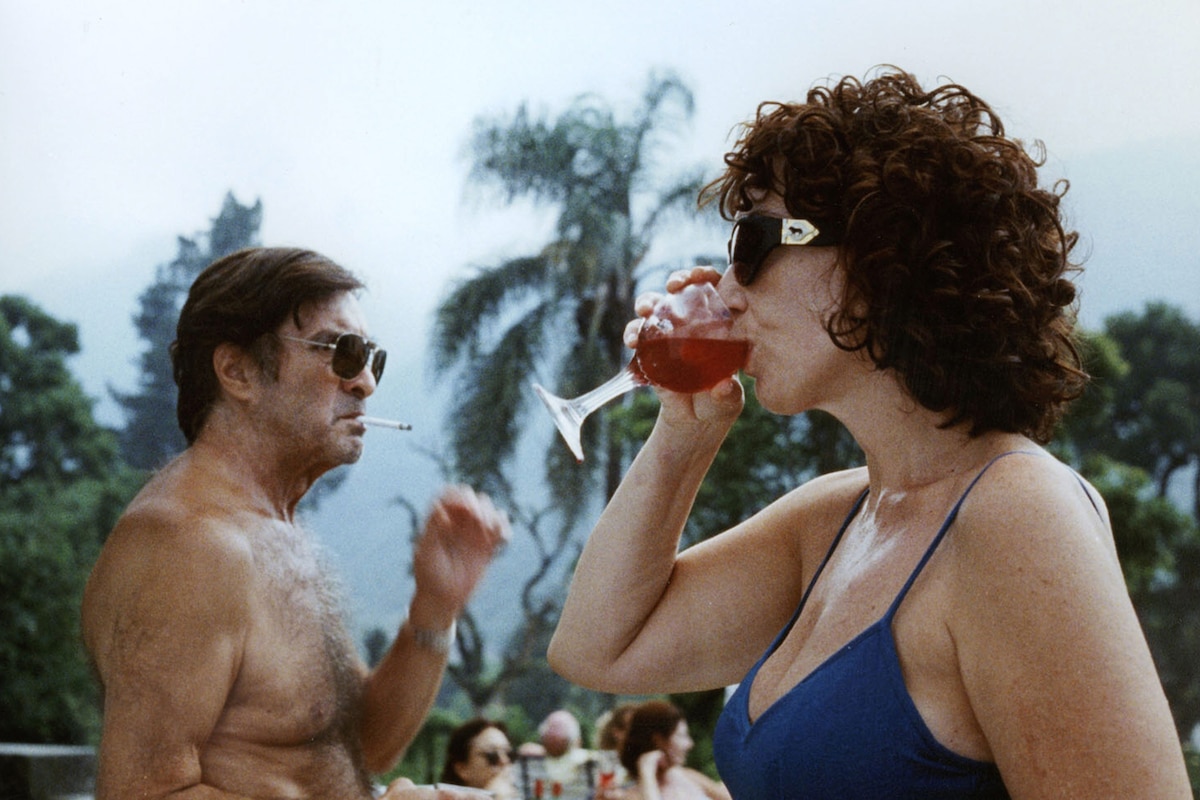
Shot in Martel's own home province of Salta, in northwest Argentina, La Cienaga opens with members of an extended family drinking and listlessly lounging around a filthy swimming pool at the country home of Mecha and her husband Gregorio. Mecha's cousin Tali and her family are visiting. Suddenly Mecha, tipsy and picking up half empty wine glasses, trips and falls. Glasses shatter and she is badly cut on her chest and hands. The others watch but make no move to help her. It soon becomes clear that their lives as stagnant as the nearby swamp. Martel has commented, "All the characters in La Cienaga feel extremely uneasy in the presence of nature. I wanted to film landscapes that had no picturesque qualities. The natural surroundings are neither pleasant nor welcoming."
The children either run wild, hunting animals in the swamp and telling scary stories about a phantom dog which is actually a rat, terrifying the youngest child, Tali's son Luciano. Or they lie around bickering, watching television, and playing teasing sex games. Gregorio is having an affair with a business associate who calls the house constantly. Mecha and Tali make desultory plans to drive across the border to Bolivia to buy cheap school supplies for the children, but never get around to it. As Martel describes the film's mood, "La Cienaga is permeated by a feeling of constant unease. The film depicts a society that has lost its traditions but which cannot afford the security that could make up for it."
Made during a period of economic upheaval, La Cienaga is a focused, precise, and pitiless commentary on provincial bourgeois decadence. By her own admission, Martel based the family on her own, and in his study of Martel's work, film scholar Oscar Jubis has described La Cienaga as "an attempt on the part of its maker to transcend her family history and heal the damage done by the traumas of provincial rearing." The film was too bleak for some critics, such as Entertainment Weekly's Owen Gleiberman. "It's a chronicle of torpor and malaise and back-biting misery in which a single den of domestic indolence is meant to reflect the rotting infrastructure of the society around it," he wrote. "But there's hardly a moment when the director, Lucrecia Martel, isn't rubbing our faces in the blowsy corrupt entropy of it all."
Other critics found La Cienaga difficult to watch, but worth the effort. Roger Ebert of the Chicago Sun-Times commented that "it's like attending a family reunion when it's not your family and your hosts are too drunk to introduce you around." But he concluded, "La Cienaga is a dank, humid meditation on rotting families. By its end we are glad to see the last of most of its characters, but we will not quickly forget them." Stephen Holden of the New York Times agreed: "As La Cienaga perspires from the screen, it creates a vision of social malaise that feels paradoxically familiar and new." And the Village Voice's Amy Taubin called the film "A veritable Chekov tragicomedy of provincial life....a debut feature that's assured in every aspect."
La Cienaga won awards at film festivals around the world, including Berlin and Havana, and from the Argentine Film Critics Association. Martel has since made two more feature films, The Holy Girl (2004), and The Headless Woman (2008), both set in Salta. She says that her films are meant to shake up her home town. "I make my movies fundamentally for them to be watched in my own city. In Salta, repeating the lives of others is a goal....But tradition is one thing and conservatism is another. You conserve something that is not alive, something that no longer functions, that is rotten."
Director: Lucrecia Martel
Producer: Lita Stantic
Screenplay: Lucrecia Martel
Cinematography: Hugo Colace
Editor: Santiago Ricci
Art Direction: Graciela Oderigo
Principal Cast: Gabriela Borges (Mecha), Martin Adjemian (Gregorio), Mercedes Moran (Tali), Daniel Valenzuela (Rafael), Leonora Balcarce (Veronica), Sylvia Bayle (Mercedes), Sofia Bertolotto (Momi), Juan Cruz Bordeu (Jose), Noelia Bravo Herrera (Agustina), Maria Micol Ellero (Mariana), Andrea Lopez (Isabel), Sebastian Montagna (Luciano)
103 minutes
by Margarita Landazuri
La Cienaga
by Margarita Landazuri | October 03, 2014
SIGN UP FOR OUR NEWSLETTERS

CONNECT WITH TCM