The concept of something being "not quite right" with boys coming back from war certainly preceded the Vietnam War, but no conflict brought it into relief for the general population quite like that controversial period in history. Young men coming back from fighting abroad often found themselves fighting a tremendous shift in public opinion, with media coverage painting them in a less-than-flattering light. The truth of this complex knot of politics and emotions has yet to be fully sorted out, but many attempts have been made to deal with both the immediate and long-lasting legacy of Vietnam and later, similar conflicts.
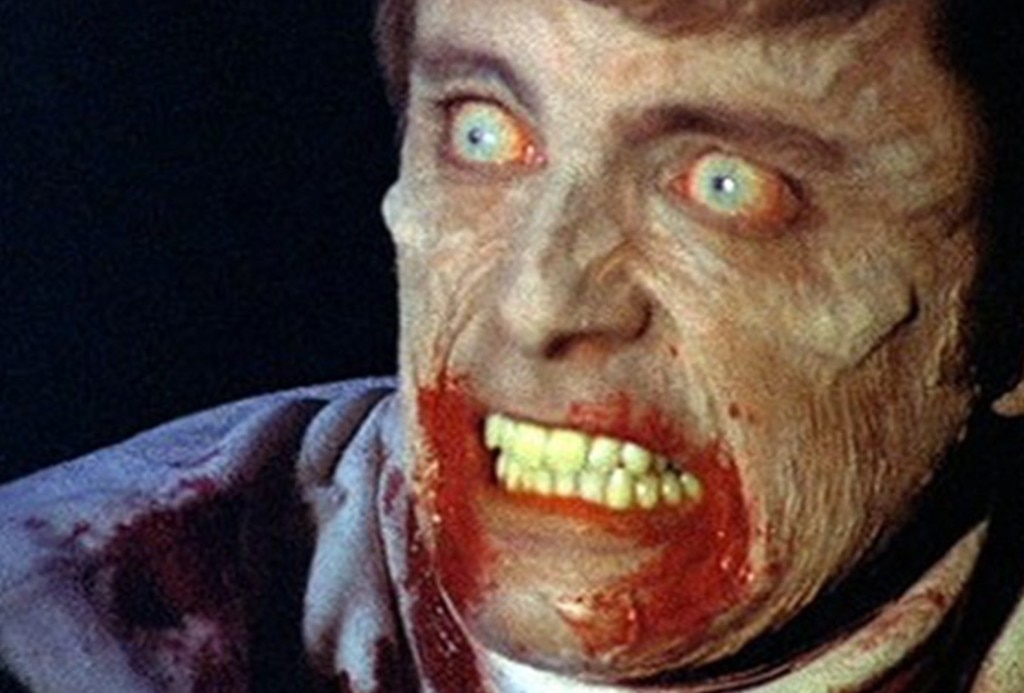
It was inevitable that Vietnam would serve as the backdrop for a horror film, and easily the best possible presentation of this is the 1972 Canadian-funded film Deathdream. Also released under the titles Dead of Night and The Night Andy Came Home, this modernized spin on the short story "The Monkey's Paw" charts the fallout when soldier Andy Brooks (Richard Backus) returns home to his parents, Charles (John Marley) and Christine (Lynn Carlin), and sister Cathy (Anya Ormsby). The problem is Andy's already listed as being killed in combat, with Christine adamantly wishing him back alive again. Now the Andy they have in their home seems to be very different indeed, with an antagonistic and even violent relationship with the family dog and an increasingly remote, antisocial attitude. On top of that, he also appears to be physically deteriorating, and when one of the locals is murdered and a blind date goes very wrong, it seems there may indeed be something terribly wrong with this seemingly normal family.
Deathdream marked the first horror collaboration between director/producer Bob Clark and writer/actor Alan Ormsby (both of whom can be seen acting in the film itself); they followed this project (with some variations in duties) with Children Shouldn't Play with Dead Things (1973) and Deranged (1974) before Clark went solo for the classic Black Christmas (1974). All of these films are characterized by their relentlessly thick, oppressive, and creepy atmosphere, achieved here by shooting in humid, foggy Florida locations that seem to exist right on the edge of the underworld.
What really sets this film apart among the Clark/Ormsby pack is its acting caliber, with Marley and Carlin reuniting from their powerful roles in John Cassavetes' Faces (1968). Bizarrely, they also appeared together the same year in an episode of the TV series Medical Center directed by Canadian filmmaker Harvey Hart. Before Deathdream, Carlin had also made a name for herself as an unorthodox, impressive lead in films like Milos Forman's Taking Off and Blake Edwards' Wild Rovers (both 1971), though most of the remainder of the decade found her in TV roles. Fresh off of his Oscar-nominated turn in Love Story (1970), Marley is perhaps best known today for waking up with a horse's head in The Godfather (1972), and he remained in demand as a character actor until his death in 1984.
For horror fans, one name in particular from Deathdream has particular significance. This was the first screen credit for Pittsburgh-born makeup artist Tom Savini, who created the increasingly uncanny look for Andy as he transforms through the film (not to mention a handful of brief bloody effects). Savini stayed with the crew to go to Canada for Deranged, but it was his third job that would truly determine his future as both makeup artist and actor in George A. Romero's Martin (1976). By the turn of the decade he would become the genre's most famous modern makeup pioneer with credits like Dawn of the Dead (1978), Friday the 13th, Maniac (both 1980), and Creepshow (1982).
By Nathaniel Thompson
Deathdream
by Nathaniel Thompson | October 03, 2014
SIGN UP FOR OUR NEWSLETTERS

CONNECT WITH TCM