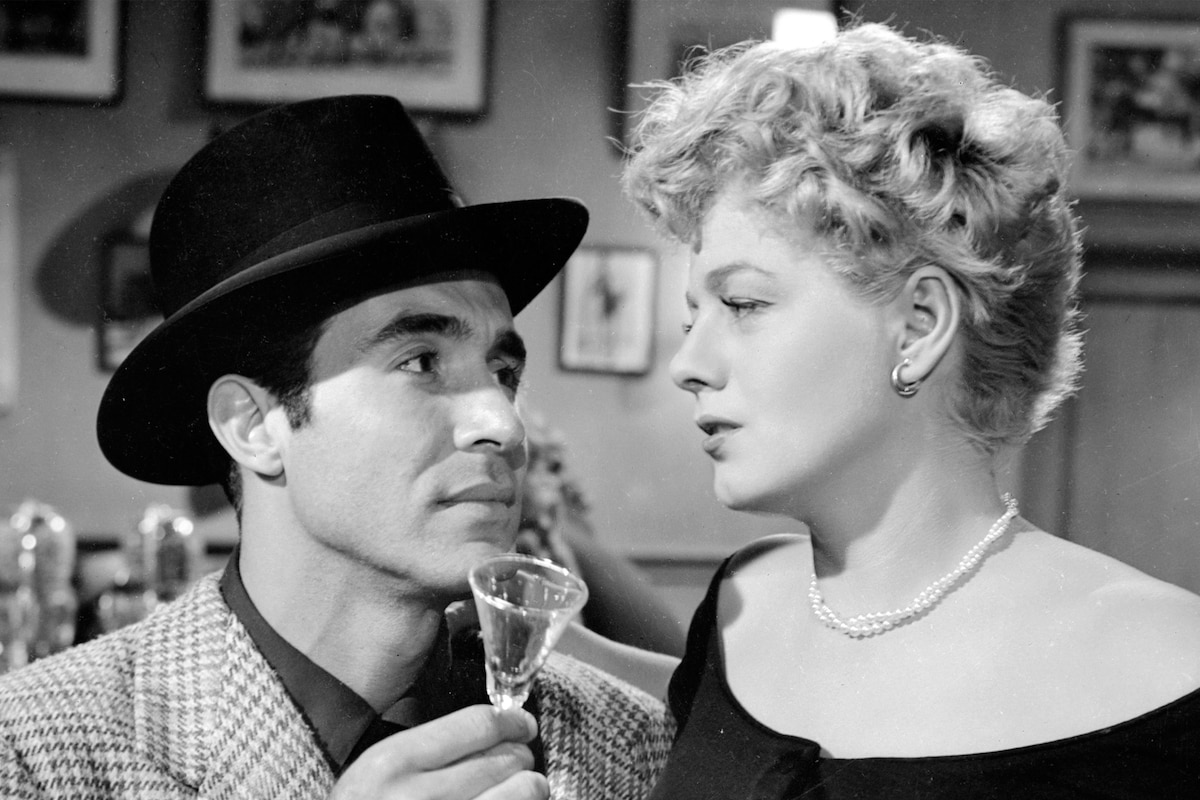
Simplicity and patriotism were the keynotes of My Man and I, a 1952 melodrama about Mexican-American laborer Ricardo Montalban's fight for dignity in the Southwest. Very much an expression of MGM production chief Dore Schary's liberal politics, the picture captures the American dream through the eyes of one of the nation's newest citizens. The same year My Man and I came out, MGM and Schary scored a hit with a similar project, Go for Broke! (1952), about the contributions of Japanese-American soldiers stationed in Europe during World War II. Lacking that film's military action scenes and the presence of box-office favorite Van Johnson, however, My Man and I failed. Yet it remains a surprisingly nuanced celebration of the working man.
One reason for the film's success was the presence of quality talent at almost every level of production. After directing Schary's first big hit at MGM, Battleground (1949), director William A. Wellman had remained with the studio despite a string of disappointing projects. With the studio scaling back to more modest productions in the '50s, Wellman was often asked to take on low-budget films designed to fill out double-bill bookings. Biographers have wondered that he even accepted the assignment to direct My Man and I, but clearly there was something in the script that appealed to his humanitarianism and his interest in tales of survival, two elements prevalent in most of his films.
Originally titled A Letter From the President, the script had several soap opera elements in its tale of an immigrant who treasures the letter from the U.S. president that came with his citizenship papers. In particular, it featured a plot device as old as the book of Genesis, with Montalban being propositioned by the boss' wife (Claire Trevor), who creates legal problems for him when he rejects her. But by focusing on Montalban's dreams and the strong relationships among his fellow workers, Wellman brought the picture to life.
Montalban's performance was another plus. An award-winning screen star in his native Mexico, he had signed with MGM in the late '40s hoping to translate his success to the States. But instead he was consigned to mostly thankless roles taking advantage of his good looks, strong singing voice and dancing abilities. Wellman had helped him break the mold by casting him as the Mexican-American GI who had never seen snow before in Battleground, but aside from that, he seemed to get his best roles in low-budget films like Border Incident (1949), Right Cross (1950) and this picture. It would take a move into character roles later in the decade, particularly as the Kabuki star in Sayonara (1957) to reveal his full talents to a wider audience. Yet, Montalban would go on to win an even greater following with his over-the-top performance as interstellar criminal Khan Noonien Singh on the TV series Star Trek and in the film Star Trek: The Wrath of Khan (1982).
For Montalban's leading ladies, MGM borrowed two actresses who had enjoyed recent brushes with Oscar®. Trevor was already a winner, for her performance as Edward G. Robinson's alcoholic moll in Key Largo (1948), while Shelley Winters, cast as the love interest, had just won her first nomination for the acclaimed drama A Place in the Sun (1951), whose Oscar®-winning cinematographer, William C. Mellor, was shooting this film as well. Among the supporting cast were perennial Western villain Jack Elam, also on screen that year as one of the gunmen in High Noon (1952), in a rare role as a Mexican, and George Chandler, a personal favorite of Wellman's.
For all the quality he brought to the film, however, Wellman was far from happy with the assignment. After handing the studio box office winners with Battleground and the low-budget fantasy The Next Voice You Hear (1950), he resented being consigned to lesser films while studio favorites like Vincente Minnelli, George Cukor, Charles Walters and Richard Thorpe got the top assignments. Moreover, he had been angered at the studio's recutting of his earlier Across the Wide Missouri and the bungled release of Westward the Women (both 1951). My Man and I finished his MGM contract, and though Schary offered him an impressive raise to re-sign, he decided to sign with John Wayne's production company instead. He brought with him a script he had already developed and originally planned to pitch at MGM, the aviation drama Island in the Sky (1953). It became their first hit together, followed by the even more successful The High and the Mighty (1954), which brought him a reunion with Trevor.
Producer: Stephen Ames
Director: William A. Wellman
Screenplay: John Fante, Jack Leonard
Cinematography: William C. Mellor
Music: David Buttolph
Art Direction: Cedric Gibbons, James Basevi
Cast: Shelley Winters (Nancy), Ricardo Montalban (Chu Chu Ramirez), Wendell Corey (Ansel Ames), Claire Trevor (Mrs. Ansel Ames), Jack Elam (Celestino Garcia), George Chandler (Frankie).
BW-100m. Closed captioning.
by Frank Miller
My Man and I
by Frank Miller | August 17, 2005
SIGN UP FOR OUR NEWSLETTERS

CONNECT WITH TCM