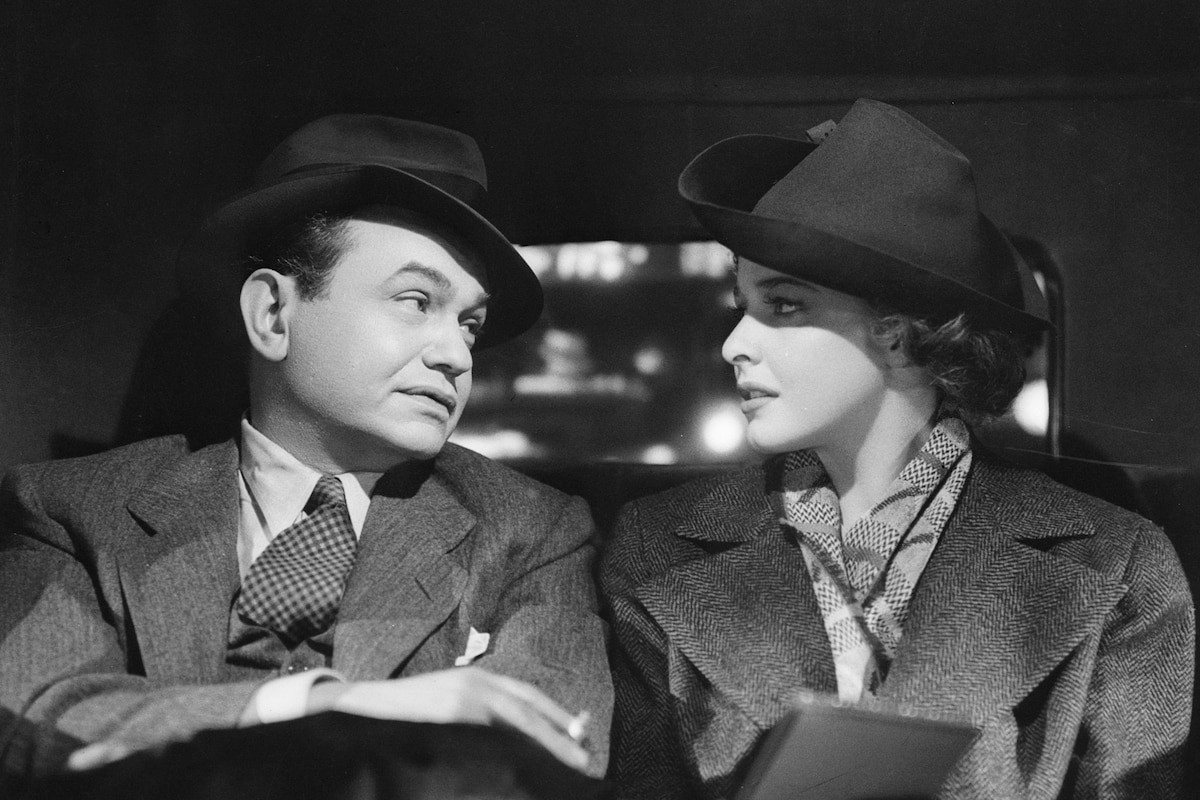
Long-standing Warner Brothers star Edward G. Robinson agreed to take the lead in this Metro-Goldwyn-Mayer production as a favor to director Mervyn LeRoy, who had put him on the road to stardom a decade earlier in the gangster classic Little Caesar (1931). Unholy Partners went into production in the summer of 1941 as The New York Story, a working title that anticipates such post-Kefauver Commission exposés as The Miami Story (1954), The Phenix City Story (1955), and Chicago Confidential (1957). Scripted by three men with solid roots in two-fisted tales of criminals and journalists - Earl Baldwin (Brother Orchid [1940]), Bartlett Cormack (a former playwright whose 1927 Broadway hit, The Racket, had given Robinson his first gangster role and pointed him towards Little Caesar), and Lesser Samuels (a former reporter who later contributed to Billy Wilder's Ace in the Hole [1951]) - Unholy Partners casts Robinson as a World War I veteran who goes into the newspaper business with gambler Edward Arnold only to realize, all too late that, a condition of the tabloid's funding requires him to turn a blind eye to his silent partner's underworld activities. Robinson thought little of this MGM loan-out or even of his subsequent work back at Warners. More interested in rapidly-developing global events that would by the end of the year push America into World War II, the actor donated $100,000 from his paycheck for his next film, Larceny, Inc. (1942), to the U.S.O.
By Richard Harland Smith
Unholy Partners
by Richard Harland Smith | July 07, 2014
SIGN UP FOR OUR NEWSLETTERS

CONNECT WITH TCM