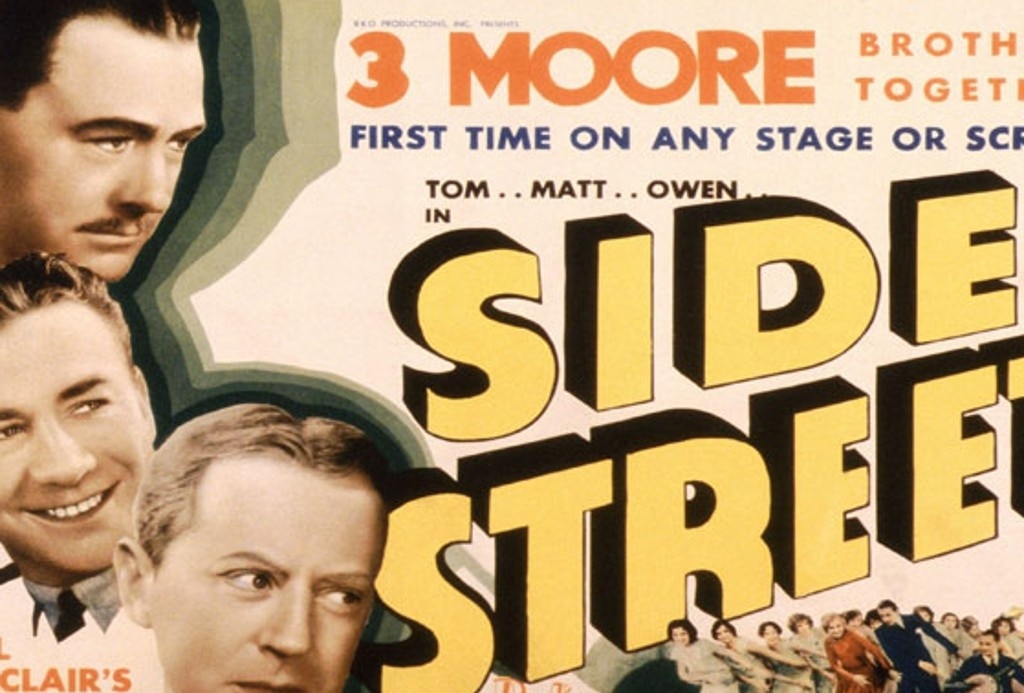
This early talkie from RKO Radio Pictures has a fascinating pedigree, being the only feature to bring together silent film actor siblings Tom Moore, Matt Moore, and Owen Moore in the same film. (The family acting dynasty also included a sister, Mary Moore, who enjoyed a few roles in Hollywood silents before the onset of World War I, which led to her tragic death in 1919 while serving as a Red Cross nurse in France.) Anticipating a plot point key to such crime classics as Angels with Dirty Faces (1938) and Cry of the City (1948), in which childhood friends grow up on opposite sides of the law and order question, Side Street (1929) finds one Irish-American family sundered by Prohibition, with one brother becoming a policeman and another a bootlegger (with the middle child caught in the literal crossfire between them in his capacity as as an emergency surgeon). Scenes set in a gangster's penthouse include songs penned by composer Oscar Levant, later an esteemed interpreter of the music of George Gershwin and a comic presence in such films as An American in Paris (1951) and The Band Wagon (1953). Though the popularity of the Moore brothers waned with the standardization of sound films, one of Side Street's bit players was himself poised for super stardom: George Raft. Making his living as a specialty dancer, Raft hoofs elastically in the production number "Take a Look at Her Now," performed by June Clyde.
By Richard Harland Smith
Side Street (1929)
by Richard Harland Smith | July 07, 2014
SIGN UP FOR OUR NEWSLETTERS

CONNECT WITH TCM