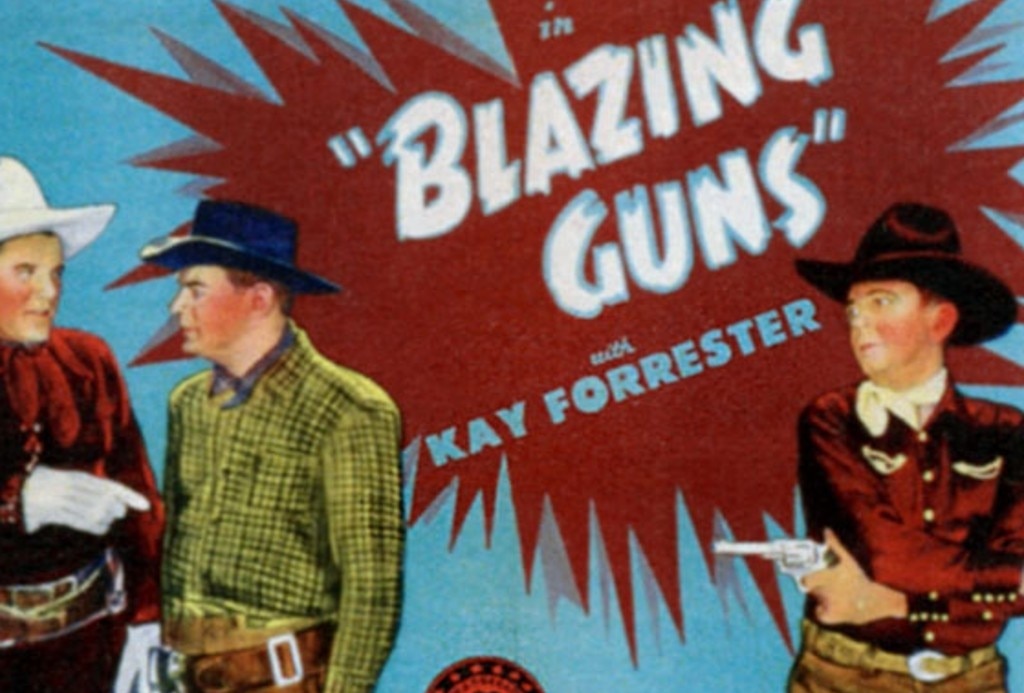
A western hero of silent films who made the transition to talkies as a singing cowboy, Ken Maynard had fallen on hard times by the 1940s, a victim as much of his own tempestuous personality as of encroaching age and a decline in the demand for big studio shoot-em-ups. Maynard had been away from Hollywood for a few years, touring as a traveling circus act, when the Poverty Row outfit Monogram Pictures lured him back into the saddle for a run of B-westerns costarring his old Universal Pictures compadre Hoot Gibson. (Conspicuous in his absence from the Monogram westerns was Maynard's palomino "Tarzan, the Wonder Horse," who had died in 1940.) Despite the dimming of their star wattage, Monogram banked on the name value of its headliners by casting Maynard and Gibson as themselves, albeit time-warped back to the Old West. Playing aging lawmen righting wrongs on the trail, the pair first rode together in Wild Horse Stampede, which they followed with The Law Rides Again and Blazing Guns (all 1943). The third film in the franchise finds marshals Maynard and Gibson accepting a gubernatorial commission to ankle an outlaw gang that has been tearing up cattle country. The script for Blazing Guns was the work of Frances Kavanaugh, a one-time drama student of theatrical impresario Max Reinhardt, who went on to become one of the few women writing Hollywood B-westerns, an accomplishment that earned her the nickname The Cowgirl of the Typewriter.
By Richard Harland Smith
Blazing Guns (1943)
by Richard Harland Smith | June 18, 2014
SIGN UP FOR OUR NEWSLETTERS

CONNECT WITH TCM