In the first decade of talkies, there was the electric sense of talking itself being an outrageous novelty, to be indulged in like whiskey by teenagers, as fast as possible and as enriched with American ethnic vernacular as a screenplay could stand. This was the birth of a whole shelf of classic icon characters: the jabbermouthed newspaper reporter, the bulldozingly eloquent (and corrupt) politician, the babbling ditz, the couple who fire Gatling-gun zingers at each other with half-lidded eyes, the double-talking goldbricker, the carny-style salesman, and so on. Compared to silents, it was almost like getting two movies in one--the dialogue, what it says and what it actually means under the surface, tipped the medium into a third dimension, coopting the last trump card of theater and daring the audience to keep up. With certain performers and directors, the use and abuse of hailstorm speech was almost like an Olympic event, one they were determined to win.
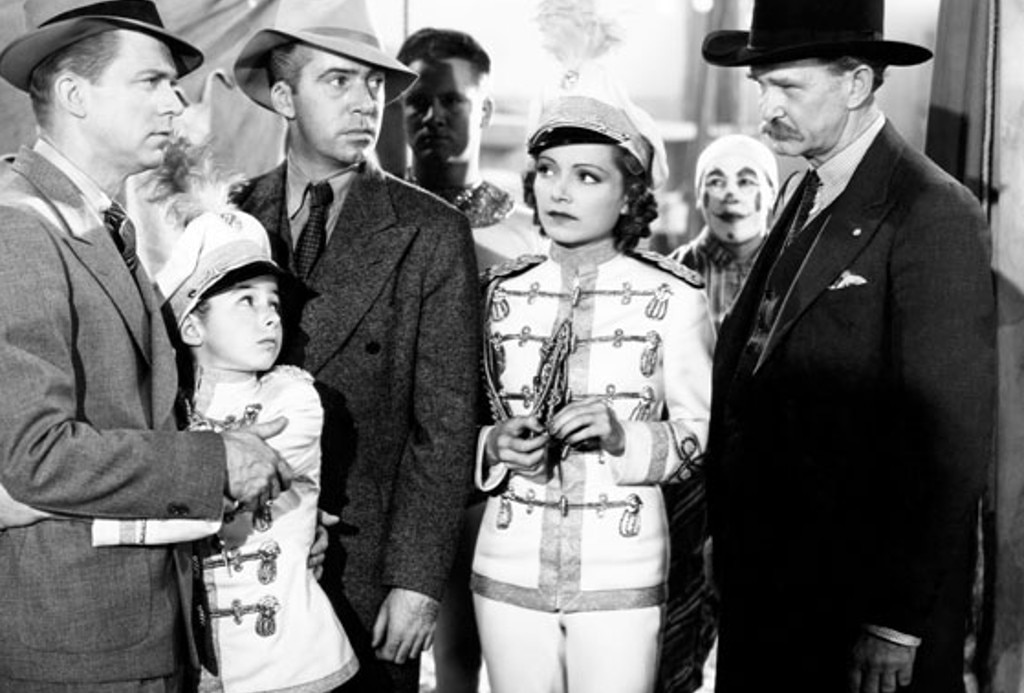
Lee Tracy might've been the most conspicuous of the lot--he was a slight, rubber-faced squirt of a man, nothing to look at it until he opened his crooked mouth, which was the size of the great outdoors. Tracy's inimitable way with streaming banter favored raw velocity over nuance, and his approach to a series of wisecracking had a rebellious, youthful esprit, particularly during the pre-Code years. Except Tracy wasn't young--just a few years older than the century, he had the manic drive of a self-destructive alcoholic. In fact, his unlikely stardom in the '30s came under fire when during the making of Viva Villa! in 1933, he supposedly drunkenly peed off his Mexican hotel balcony onto the heads of military cadets. Few Hollywood scandal stories match their subject's persona so beautifully, and while director Howard Hawks saw nothing particularly amiss with this episode, if it in fact happened exactly that way, MGM mogul Louis Mayer had Tracy kicked off the film anyway. (Hawks was also relieved of employment.) From there, Tracy's roles became fewer and slower, and after WWII his career meandered into guest parts in episodic television before landing a plumb role in Gore Vidal's The Best Man (1964), which netted him a valedictory Best Supporting Oscar nomination. Fixer Dugan (1939) is past-prime Tracy; the comic fire of pre-Code chatterboxing is gone, and if he ever seemed an odd choice for a leading man in the early part of the decade, by 1939 his squinty visage and door-hinge voice made for very strange romantic fodder. Or, perhaps, more realistic than Hollywood normally dared, then or now--in the film, Tracy is the manager of a travelling circus, a master at talking anyone out of anything, and so the character's social force and confidence could conceivably make him the object of desire of both bitchy high-wire artist Rita La Roy and sassy lion tamer Peggy Shannon. In any case, the film (adapted from a play by director H.C. Potter, his only writing credit) focuses not on romance but on a vintage mismatch scenario, probably pioneered by Charles Chaplin with The Kid (1921)--La Roy's acrobat falls to her death and leaves her circus-born 11-year-old daughter (Virginia Weidler) an orphan, and the kid becomes the impromptu charge of Tracy and Shannon's semi-couple. The law intervenes, of course, as does a rival circus out to Shanghai Shannon's lions.
Immediately you can sense the attraction of Fixer Dugan--Tracy is fine in a custom-built role, if a little drink-worn by now, but the real gen is the busy, densely inhabited narrative all set within a perfectly believable old-school circus milieu. Movies about circuses, even when they're crummy, can be fantastically seductive, especially in the early century, when the gist of low-rent circus life was still a living memory for many people, and the films could have fun with it without romanticizing it into a myth. Director Lew Landers (who made B movies in the '30s and '40s at the clip of seven or eight a year) is no stylist, but his game is tight here, and the busy, bustling circus milieu is addictive and full of implicit details about circus life--the capacity for the fairway to attract freelance grifters at its fringes; the economic stake made in unruly megafauna; the capacity for the circus to uproot and disappear across state lines in a few hours if conditions are not favorable; the necessity of a "fixer" to constantly adjust, connive and ameliorate disasters; the edge-of-the-law nature of the entire enterprise, etc. It's a fairly elaborate production, with deft trick photography work that puts Shannon in close to the lions, and a backstage mood that feels thriving with life.
Tracy, for his part, handles his title role with well-I-don't-know-'bout-that duplicity, placating every other character in every conversation with lies and half-truths, even the rival outfit's sociopathic henchmen. Against all odds, the irascible-bachelor-&-orphan melodrama works, too, thanks to the witty dialogue that smiles through sniffles, and Weidler's authenticity as a fearless tomboy who loves nothing so much as circus life. Tracy is the star, however, on the brink of war (he fought in WWI, but he reenlisted) and of the demise of his ersatz stardom. He'd go on to make only six films in the '40s--he'd made 30 during the '30s--before toiling in bit roles from there on. He was then a pure product of Depression Hollywood--a branded star, not a comedian, popular exclusively for his articulate sass and verbal speed. Those were the days.
By Michael Atkinson
Fixer Dugan
by Michael Atkinson | June 17, 2014
SIGN UP FOR OUR NEWSLETTERS

CONNECT WITH TCM