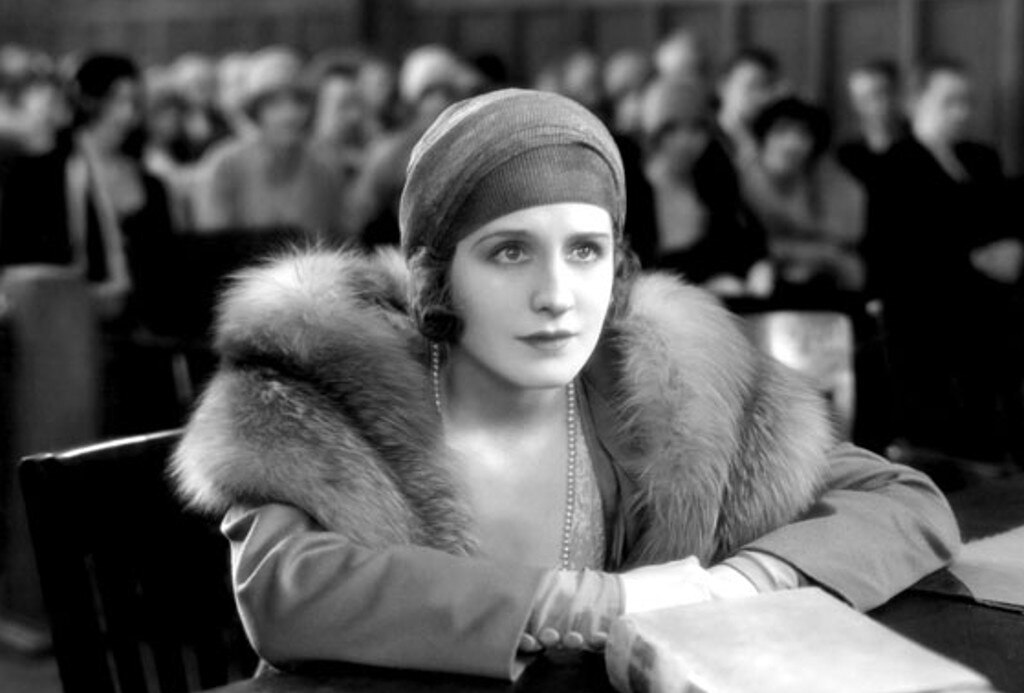
The stories of silent actors who couldn't weather the change to sound are legion. Some lost out because their nasal, tremulous, or heavily-accented voices were lacking, but some lovely-voiced actors were tripped up only by their own insecurities. Norma Shearer might have been one of them, were she not married to legendary producer Irving Thalberg. The 27-year old actress was wary of the transition to sound because she had no stage experience, and was intimidated by the huge, booth-encased sound cameras. (Once, distracted by her own reflection in the dark pane of glass in front of the lens, she paused in mid-dialogue because she expected "the reflection to go on acting for me.") But Thalberg's methodical process in making this very early sound film included performing key scenes before an audience in the studio before giving the go-ahead to shoot on film, helped the actress gain confidence in this courtroom drama about a woman (Shearer) on trial for the murder of one of her numerous lovers. Thalberg got his movie, but the trouble wasn't over for sound pictures: a Chicago priest, appalled by this story line, started drumming up the grass roots campaign for decency in motion pictures that would eventually become the Hays Code.
By Violet LeVoit
The Trial of Mary Dugan (1929)
by Violet LeVoit | June 11, 2014
SIGN UP FOR OUR NEWSLETTERS

CONNECT WITH TCM