The only thing they can stick to is each other.
Tag line for Wild Rovers
Blake Edwards returned to his roots for Wild Rovers (1971), a tale about two would-be bank robbers; one, an aging cowboy, the other, a naive tenderfoot. Edwards had started
his acting career with a role in the 1942 Western Ten Gentlemen From West
Point, then broke into writing and producing at Allied Artists in 1948
and 1949 with a pair of low-budget oaters, Panhandle and
Stampede. In addition, Wild Rovers gave him the chance to
work with William Holden, something he had wanted to do for years. The two
had met in the '40s, when both were working at Columbia Pictures, but had
not become friends until 1964, when they were briefly attached to The
Americanization of Emily (both would drop out before filming).
Edwards was coming off the biggest failure of his career, the expensive
musical flop Darling Lili (1970), when he went to MGM for this picture
about dealing with age and changing times. He was so personally involved
in the film that it marked the first time in his career that he wrote an
original screenplay without a collaborator. Following the success of Butch Cassidy and the Sundance Kid in 1969, buddy pictures
and westerns were considered surefire box office. With Holden's recent
success in The Wild Bunch (1969), the film seemed like a solid investment.
But Edwards wasn't interested in directing a conventional western. His
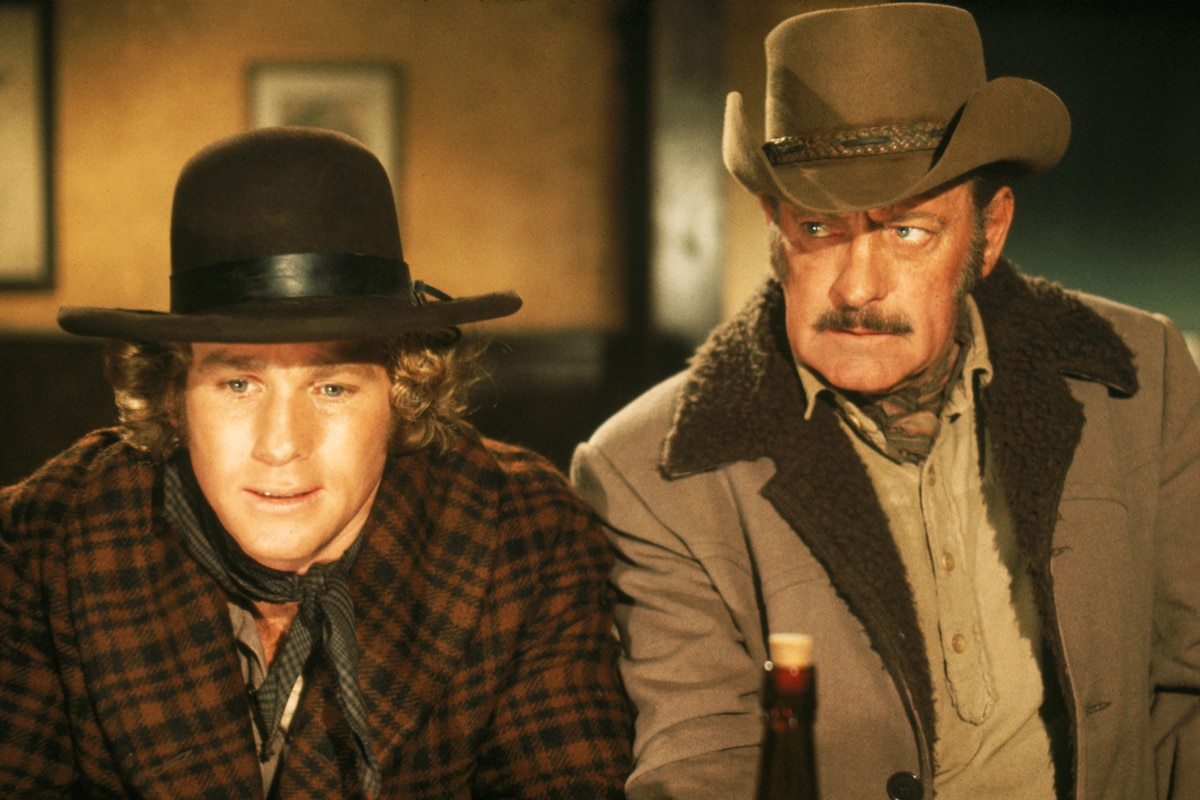
film focused more on the friendship between Holden's aging cowhand, Ross
Bodine, and a young innocent, Frank Post, played by rising star Ryan
O'Neal, who had just finished Love Story (1970). Feeling they've
accomplished little with their lives, the two decide to rob a bank, then
have to escape a posse relentlessly led by the sons (Tom Skerritt and Joe
Don Baker) of their former boss (Karl Malden). Their voyage takes them
through scenes of changing times in the West as they fall prey to a series
of accidents that had critics calling the picture the first existentialist
Western.
During production, the two stars forged a close relationship, particularly
after they decided to drive together from Arizona to Utah during location
shooting. O'Neal was fascinated with the older actor and begged for
stories about his career, his working methods and his life. For his part,
Holden took a liking to the young actor and, according to Edwards' wife,
Julie Andrews, "held out his hand and gave the picture to Ryan." When
O'Neal won an Oscar® nomination for Love Story during shooting,
Holden even convinced him to attend the Academy Awards® as a show of
respect for the actors who had voted for him.
Unfortunately, Edwards' thoughtful, slow-moving film wasn't quite what
studio executives had expected. Although he considered it his best work
ever, the studio cut 24 minutes out of the film before its release, a move
that left him understandably bitter. And though Holden got strong notices, most of the reviewers complained that the film departed too much from genre formulas. As a result, Wild Rovers was one of the year's biggest
box-office disappointments, contributing further to Edwards' career slump.
He wouldn't bounce back until the mid-'70s, when he re-united with Peter
Sellers for a series of sequels to their original The Pink Panther.
Yet the very characteristics that alienated critics and audiences
initially, led to the birth of a Wild Rovers cult. In more recent
years, fans have come to treasure the film for its thoughtful pace and
focus on the growing relationship between Holden and O'Neal, elements that
were strengthened when Edwards produced a 136-minute directors cut years
later (TCM will be showing this version). Surprisingly, the film also developed a core of gay fans who read a
romantic subtext into the relationship and even used one of the film's
strongest images -- O'Neal with his arms around Holden's waist as they
share a horse -- on posters for gay rights rallies.
Producer: Blake Edwards, Ken Wales
Director: Blake Edwards
Screenplay: Blake Edwards
Cinematography: Philip Lathrop
Art Direction: George W. Davis, Addison Hehr
Music: Jerry Goldsmith
Principal Cast: William Holden (Ross Bodine), Ryan O'Neal (Frank Post),
Karl Malden (Walter Buckman), Tom Skerritt (John Buckman), Joe Don Baker (Paul
Buckman), James Olson (Joe Billings), Leora Dana (Nell Buckman), Moses Gunn
(Ben), Victor French (Sheriff), Rachel Roberts (Maybell).
C-136m. Letterboxed. Closed captioning.
by Frank Miller
Wild Rovers
by Frank Miller | October 30, 2002
SIGN UP FOR OUR NEWSLETTERS

CONNECT WITH TCM