This article was originally written about programming for the TCM Now Playing newsletter in August 2025.
On Thursday, September 25, TCM kicks off a 24-hour programming block celebrating the 60th anniversary of the UCLA Film & Television Archive. The Archive contain more than 350,000 motion picture holdings and more than 176,000 television holdings, making it the largest university-held collection of moving images. Film preservation is a team sport that depends on collaborations and partnerships that raise awareness (and badly needed funding) to rescue films from oblivion. TCM and the UCLA Archive have a kindred mission to honor and share America’s rich, more-than-a-century-old film heritage.
“TCM works closely with all the film archives,” notes Todd Wiener, the UCLA Archive’s Motion Picture Curator, who curated the 18-film and television program tribute with TCM's Senior Vice President of programming Charles Tabesh. “Every year when we attend the TCM Film Festival and see other archivists in attendance, you understand the sense of community, how we all work together for the same mission. We really appreciate TCM bringing us all together.”
The films and television programs in the tribute were chosen to represent a cross-section of the genres the UCLA Archive preserves, from silent films and animation to independent and student films.
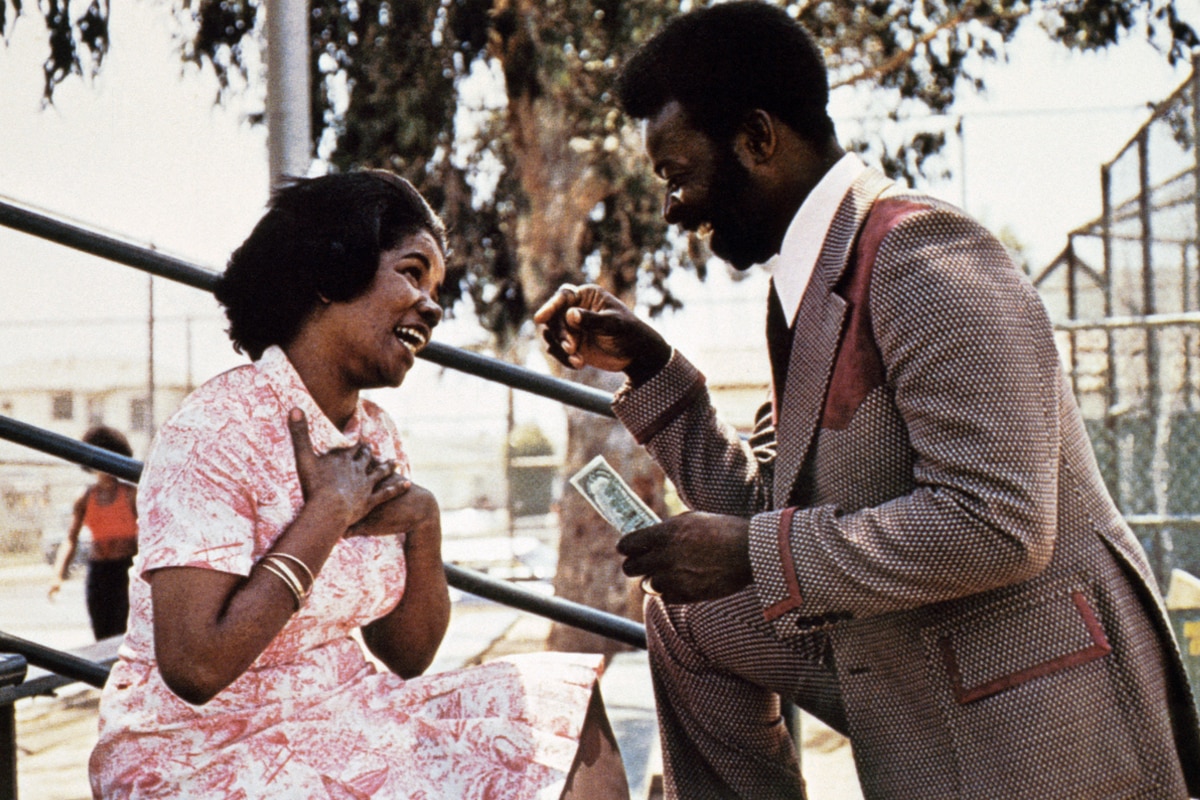
A highlight of the tribute is the restoration premiere of Ossie Davis’s Black Girl (1972), one of several films in this tribute that the Archive and its partners rescued from near-oblivion. “Twenty years ago, the industry was switching to digital (for preservation efforts), and many photo-chemical labs were forced to shut down,” Wiener said. “Black Girl was a film from Cinema Releasing Corporation that went out of business. The original picture negative was abandoned at the lab. We got a call from this lab informing us that if we didn’t come and rescue this and other films, they would be disposed of.”
Black Girl had long been on the UCLA Archive’s radar, Wiener said, because it was one of the few films that Davis directed and would be a compelling inclusion in any Davis retrospective the Archive mounted. “We pitched it to the Film Foundation (a nonprofit film education and preservation organization) as they have supported the Archive for more than 30 years, and they agreed to fund it with assistance from the Hobson/Lucas Family Foundation. It’s a film ripe for rediscovery.”
“Every single film is a cultural artifact,” Wiener said, but the case for preservation of orphan, or abandoned, films is especially compelling as they capture stories of underrepresented people. In his review of Black Girl, Roger Ebert praised, “‘We see a black family with more depth and complexity than the movies usually permit.”
“Orphan films tend to fall through the cracks because of their independent origin,” Wiener said. “They are not an asset for a studio conglomerate. These are the types of films the UCLA Archive excel in finding, preserving and conserving in our vaults. They are the ones that need restoration funding the most.”
Another such film airing in the tribute is Barbara Loden’s Wanda (1970), the only film she directed and also wrote and stars in as an increasingly desperate housewife who divorces her husband, abandons her children and experiences increasingly dangerous encounters on the road.
The UCLA Archive rescued Wanda in 2007 after locating film elements in the Hollywood Film and Video Laboratory, which was also closing. The film has attained a cult reputation after it was re-released theatrically in 2018, then added to the Criterion Collection a year later. “It is the dream of every neglected artist that their work will be redeemed by posterity,” NPR reported at the time. “Wanda is now reckoned a cinematic landmark. It boasts a legion of champions, including Yoko Ono, Isabelle Huppert, John Waters and Rachel Kushner.”
Donna Deitch’s Desert Hearts (1985), a groundbreaking love-affirming lesbian love story set in 1959, is part of the Outfest UCLA Legacy Project for LGBTQ Moving Image Preservation, the largest and first-of-its-kind publicly accessible collection of LGBTQ+ films in the world. It comprises more than 41,000 holdings. “This is a good example of partnerships,” Wiener noted. “We preserved this film in collaboration with the Criterion Collection, as well as the Sundance Film Festival and Outfest. As restorations get so expensive, we rely on our partners to help with costs.”
Another restoration premiere airing as part of the UCLA Archive tribute is Budd Boetticher’s The Magnificent Matador (1955), a widescreen gem filmed in Mexico and starring Anthony Quinn and Maureen O’Hara. All restorations can be considered races against time. In this case, the clock was ticking double time as the early safety stock was in danger of complete disintegration due to vinegar syndrome. “Though we didn’t have formal restoration funding, we realized we’re going to lose the audio track,” Wiener said. “We captured it and continued to pitch the restoration, again, to the Film Foundation until they were able to locate funding for this specific project.”
Wiener and Tabesh have included in the tribute intriguing and delightful non-feature content, including William Hearst newsreels, which will be screened following the tribute’s opening film, John Ford’s My Darling Clementine (1946). One newsreel chronicles the 60th anniversary celebration of the Statue of Liberty.
Two other “small gems that show off the wide variety of preservation projects we do,” Wiener said, are Dave Fleischer’s “Greedy Humpty Dumpty” (1936), one of the Archive’s recent Fleischer cartoon restorations, and Flora Mock’s Paper Moon (1949), a UCLA student film which Wiener describes as “a real treasure.” It is a mixed-media animated West Side Story-esque romance set to Nat King Cole’s rendition of the American standard.
This being TCM, the tribute to the UCLA Archive also includes a couple of noir restorations funded by Noir Alley host Eddie Muller’s Film Noir Foundation: Cy Endfield’s The Argyle Secrets (1948) and Norman Foster’s Woman on the Run (1950). The latter, too, was a film thought lost; the print Muller used to book for his noir festivals from Universal Studios perished in the tragic 2008 studio fire. Muller gives the lowdown here.
Closing out the tribute is Clyde Bruckman and Leo McCarey’s “The Battle of the Century” (1927), one of film restoration’s most joyous success stories. This essential Laurel & Hardy short, with its epic climactic pie-fight-to-end-all-pie-fights (a reported 3,000 were used) was long thought lost. The UCLA Archive received a surviving reel of the film as part of the Hal Roach Nitrate Collection. In 2015, film collector Jon Mirsalis found the missing reel on 16mm. The UCLA Archive restored the short in collaboration with film archivist Jeff Joseph.
For six decades, the UCLA Film & Television Archive has worked, in essence, to save our cultural history and identity. “Films capture societal values and norms,” Wiener said. “They also preserve society as it existed, the cars, the clothing. Film preservation is so important.”
