This article was originally written for the Summer Under the Stars programming in the TCM Now Playing newsletter in August 2025.
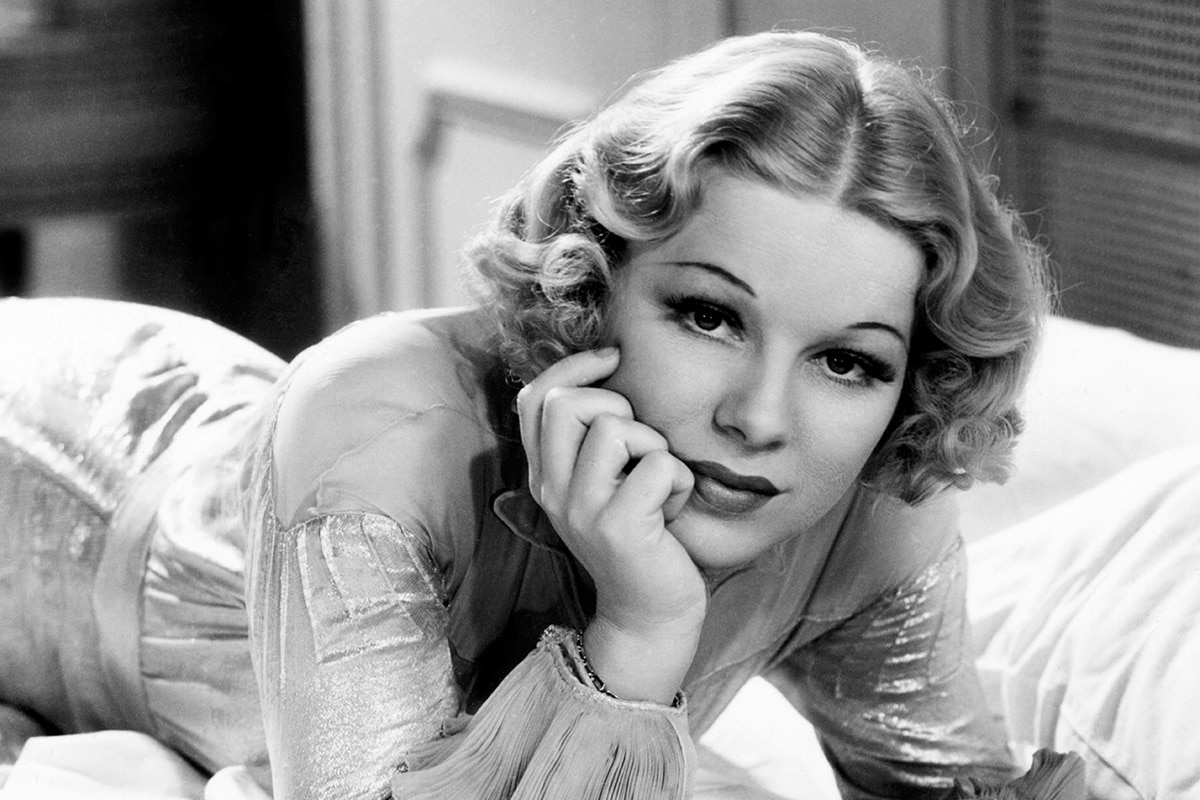
This summer, audiences will once again be dazzled by Lois Lane, the sharp-witted, no-nonsense reporter who’s an essential element in any “Superman” story. While Emmy-winner Rachel Brosnahan takes on the role in James Gunn’s “Superman” (2025), the character of Lois Lane owes a debt to Torchy Blane and her luminary performer Glenda Farrell, who gets an entire day’s celebration for this year’s Summer Under the Stars. In the 1930s, Hollywood was attempting to crank out as many doe-eyed ingenues as possible, but the performers who stood out were the ones who knew how to add tartness and verve to their characters. Whether playing the heroic Torchy or a less-scrupulous figure, Farrell imbued her characters with a wry, knowing attitude that made her pop on screen.
Born in Enid, Oklahoma, near the turn of the century, Farrell began acting at a young age, starting with a theatrical company in Wichita, Kansas, before making the move to motion pictures in her late 20s, although she continued to appear in plays ahead of landing a seven-year contract with Warner Bros. in 1932. The studio clearly warmed to her after she played the female lead in Mervyn LeRoy’s Little Caesar (1931). However, for Farrell, Olga represents a bit of an outlier in her 1930s work, a clear supporting female lead meant to draw Douglas Fairbanks Jr.’s Joe away from the criminal machinations of his lifelong friend Rico (Edward G. Robinson).
For most of the 1930s, Warner Bros. would try to slot Farrell into a variety of pictures. In just five years with WB, Farrell appeared in over 30 movies. Sometimes she would land a musical like Go Into Your Dance (1935) or a drama like The Match King (1932), or she would be paired with her close friend Joan Blondell in movies such as We’re in the Money (1935) and Gold Diggers of 1937 (1936).
However, her small supporting role in the Oscar-nominated I Am a Fugitive from a Chain Gang (1932) gives a strong hint at the unique fire Farrell could bring to a role when given the opportunity. In Mervyn LeRoy’s social-issue drama, Paul Muni plays James Allen, a sergeant returning home from World War I with the goal of working as an engineer. Unable to find work, James inadvertently gets caught up in a robbery, apprehended by the police and sentenced to hard labor on a chain gang. He manages to escape and forge a new identity, but his landlady Marie, played by Farrell, discovers his past. She blackmails him into marriage, and he reluctantly agrees.
I Am a Fugitive from a Chain Gang is about a man trying to escape the bounds of a factory job only to become ensnared in both literal and figurative prisons. What makes Farrell’s performance crackle is that she becomes the warden of a domestic prison, openly cheating on James and seeing him as a meal ticket as he becomes a successful engineer in Chicago. Farrell makes a meal of the role, clearly enjoying the power she has over Muni’s hapless James. Moreover, it shows Farrell as particularly adept at playing a woman who knows what she wants and knows how to get it, which would serve her well in her breakthrough character later that decade.
The Torchy Blane character came out of an adaptation of Frederick Nebel’s “MacBride and Kennedy” stories. In these pulp yarns, MacBride was a detective who would team up with ace reporter Kennedy, but for the movie, the studio decided to change Kennedy to a woman, “Torchy” Blane, who is also in love with MacBride. Director Frank McDonald knew he wanted Farrell for Torchy in the adaptation Smart Blonde (1936). Barton MacLane was cast opposite in the role of Steve McBride.
Smart Blonde is a movie where you can get a sense of everyone slowly gathering the rhythm of what works and what doesn’t for this dynamic. The set-up here is that the investor in a new nightclub is murdered while trying to get into a cab to do an interview with Torchy, and her boyfriend McBride goes to investigate the case. The film aims to try and find the right balance of how much should be a standard mystery yarn and how much should be a screwball romantic comedy between Torchy and McBride. While this dynamic of investigation/screwball-affair would be perfected a few years later with His Girl Friday (1940), the Torchy Blane movies helped clear a path while also relegating the McBride role to more of a straight man for Torchy’s antics.
The movie was a surprise hit, and running at only an hour, was a successful second feature in double bills. The next movie in the series, Fly Away Baby (1937), cemented the stronger aspects of the Torchy character and her relationship with McBride. While the two are on their way to get married, McBride gets called into investigate the murder of a jeweler. Watching Torchy cleverly work her way into the crime scene, not by depending on McBride’s affection (he’s typically exasperated and frustrated with his romantic partner butting in on his job) but with a quick understanding of those around her makes for an electric viewing experience. Once you see Farrell as Torchy in a movie like Fly Away Baby, it’s not difficult to see why she served as an inspiration for Lois Lane, who would debut in “Action Comics #1” the following year.
Speaking about her iconic role, Farrell told “Time” magazine in 1969, “So before I undertook to do the first Torchy, I determined to create a real human being—and not an exaggerated comedy type. I met those [newswomen] who visited Hollywood and watched them work on visits to New York City. They were generally young, intelligent, refined, and attractive. By making Torchy true to life, I tried to create a character practically unique in movies.” Farrell understood that while social mores and studio attitudes needed Torchy to be McBride’s girlfriend, the core of the character was a woman fueled by ambition and a search for the truth. MacLane isn’t bad as McBride, but there’s a reason that Torchy stands out as opposed to a two-hander like Nick and Nora Charles.
Warner Bros. would crank out seven Torchy Blane movies between 1937 and 1939, with Farrell starring opposite MacLane, and all seven are a part of her Summer Under the Stars lineup. They’re quick little features, typically running between 60 and 75 minutes, and while they tower over Farrell’s legacy, they were far from the end of her career.
She left Warner Bros. in 1939 when her contract expired. Farrell felt like the studio was shortchanging her on her value, pigeonholing her into Torchy-like characters, and she had a desire to return to the stage. For the next several decades, Farrell would move between the stage, movies and television, finding success in all three realms. On stage, she appeared on Broadway in “The Overtons” in 1945 and in “Home is the Hero” in 1954. She would reteam with Mervyn LeRoy for the film noir Johnny Eager (1941) and star alongside Fredric March and Kim Novak in the 1959 film adaptation of the teleplay and Broadway production Middle of the Night. On television, she would go on to win a Primetime Emmy Award in 1963 for Outstanding Performance in a Supporting Role by an Actress for her turn in the two-part episode “A Cardinal Act of Mercy” in the medical drama “Ben Casey.”
Despite a long and successful career, Torchy Blane towered over Farrell’s career, and perhaps best exemplified her legacy. As writer-director Garson Kanin wrote in “The New York Times” for Farrell’s obituary in 1971, “She invented and developed that made‐tough, uncompromising, knowing, wisecracking, undefeatable blonde. Whether she was the Girl Friend of the star, a cynical secretary, a salesgirl, a world-weary wife, a madam, homesteader, or schoolteacher she was always, relentlessly The Type… She was widely imitated, [sic] and lived long enough to see her imitators imitated.”
Some stars we revere because of the multitude of roles they play over the course of their careers. We can only see the star because there’s so much variety in the roles they played or the director they worked with or the kinds of pictures they took on. But we shouldn’t overlook those like Farrell, who found her place in a relatively young industry and had such a clear vision of what a character could be that she authored its identity for decades to come.
