This article was originally written for the Summer Under the Stars programming in the TCM Now Playing newsletter in August 2025.
This year, Turner Classic Movies adds eight new actors to our annual Summer Under the Stars programming line-up. During the month of August, you’ll see films featuring Christopher Plummer, Ruby Dee, Pedro Armendáriz, Charles Bronson, James Gleason, Gina Lollobrigida, Tom Courtenay and a special tribute to Donald O’Connor, in honor of the 100th anniversary of his birth.
Christopher Plummer takes the spotlight on August 2nd with some old favorites, like The Sound of Music (1965), which is making its debut on TCM this month. The Canadian-born Plummer, who was both the second cousin of actor Nigel Bruce and the great-grandson of Prime Minister Sir John Abbott, studied acting at the Montreal Repertory Theatre with William Shatner. After success on the stage, Plummer made his film debut in Stage Struck in 1958, followed by Wind Across the Everglades (1958). He mostly appeared on television for a few years afterwards before his breakout performance as Captain von Trapp in Robert Wise’s epic musical The Sound of Music alongside Julie Andrews.
Plummer would often admit that he did not enjoy the role of Captain von Trapp, feeling that his untrained singing voice was upstaged by Andrews, whom he personally liked. Ironically, it was the part that would make Plummer a star and led to a long career that included roles such as Rudyard Kipling in The Man Who Would Be King (1975), a World War I pilot in Aces High (1976), Leo Tolstoy in The Last Station (2009) and the film that earned him the distinction of being the then oldest actor nominated for a Best Supporting Actor for playing J. Paul Getty in All the Money in the World (2017).
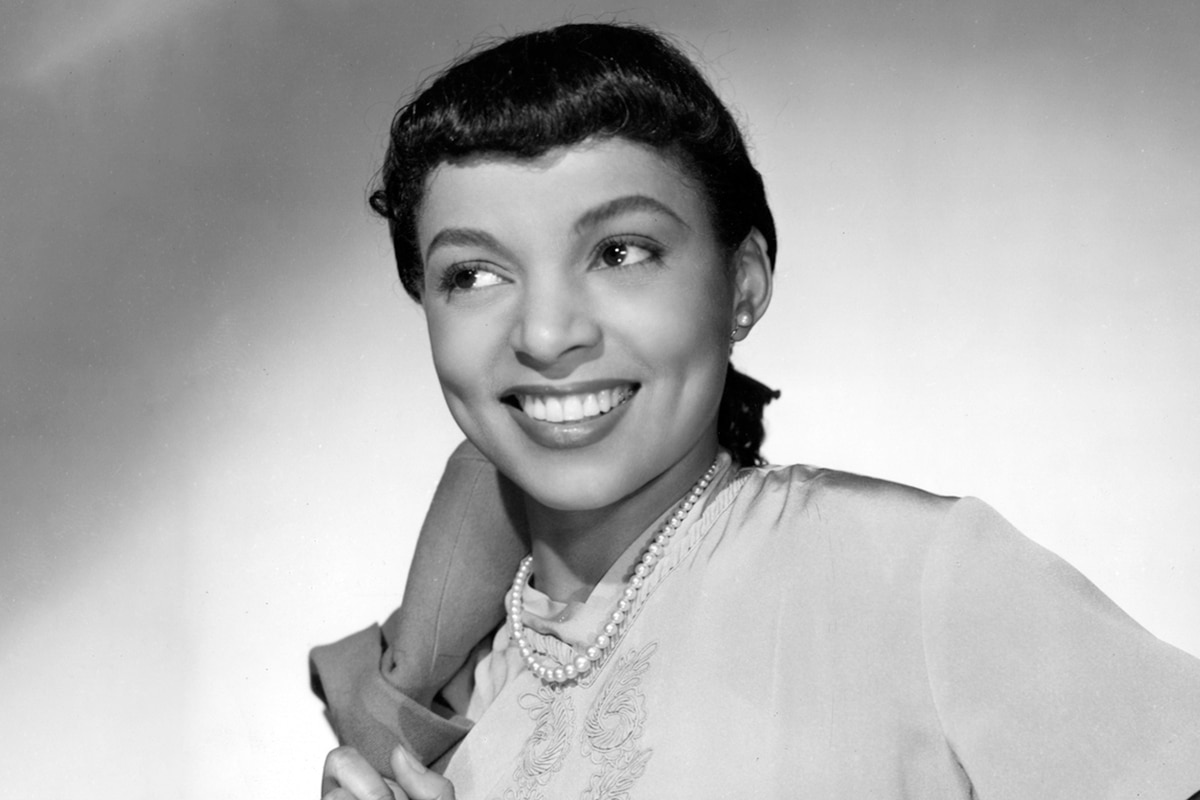
Ruby Dee is the focus of our August 7th programming slate. A civil rights activist and writer, she was one of the finest and most respected actresses of her time, winning several awards and earning numerous nominations, including Emmys, Grammys and a Best Supporting Actress Academy Award nomination for her role in American Gangster (2007). She began her career at the American Negro Theatre alongside Sidney Poitier and Harry Belafonte and was soon on Broadway in “South Pacific” in 1943. Her first notable performance in film was in 1950, when she co-starred as Jackie Robinson’s wife, Rae Robinson, in The Jackie Robinson Story, in which the groundbreaking baseball player played himself. Dee would later appear as Robinson’s mother in the 1990 TNT drama The Court-Martial of Jackie Robinson, which is making its debut on TCM this month.
Dee worked with Sidney Poitier several times, including in Edge of the City (1957), A Raisin in the Sun (1961)—in which she also appeared with Poitier on Broadway in 1959—and Buck and the Preacher (1972), directed by Poitier. Dee starred in and co-wrote Uptight (1968) with director Jules Dassin and Julian Mayfield, who co-starred. Based on Liam O’Flaherty’s “The Informer,” which had been filmed by John Ford in 1935, the film is set in Cleveland, Ohio in the days just after the assassination of Dr. Martin Luther King Jr. The film was beset with racial tensions in Cleveland as well as attempts by the FBI to disrupt production. Uptight is presented in a TCM premiere.
Pedro Armendáriz is our focus on August 12th. Born in Mexico, he worked as a journalist and a tour guide before being discovered by a film director who overheard him reciting a passage from “Hamlet” for an American tourist. Within a few years, Armendáriz was a full-fledged film star and one half of the most famous Mexican screen couple with former Hollywood star Dolores Del Río. He worked with her in many films, including the Cannes Film Festival’s Palme d’Or-winner Maria Candelaria (1944).
Hollywood soon called, and Armendáriz would be one of its biggest character actors, occasionally working in films directed by John Ford and co-starring John Wayne, like Fort Apache (1948) and 3 Godfathers (1948), and even playing the King of France in Diane (1956). Although he had become a fixture in Hollywood, Armendáriz would also return to Mexico to work in films like La rebelión de los colgados (The Rebellion of the Hanged, 1954) and the TCM premiere of the Mexican Western El rebozo de Soledad (Soledad's Shawl, 1952). He also continued working in television.
Charles Bronson, one of the biggest stars of the 1970s and 1980s, takes the spotlight on August 16th with some of his biggest films, like The Magnificent Seven (1960), The Great Escape (1963), The Dirty Dozen (1967) and the revenge/action hit Death Wish (1974), a TCM premiere. Born Charles Buchinsky to a Lithuanian family in Pennsylvania, he worked in the mines before joining the Air Force in World War II. Determined to escape the mines, he returned to the States after the war, working as a set designer until he found acting more his style. Bronson appeared in small roles in many films and on television in programs like “Have Gun - Will Travel” before landing his first leading man role in Machine-Gun Kelly (1958).
Our August 18th spotlight belongs to James Gleason, one of the most beloved character actors of Hollywood’s Golden Age, whose face is familiar if his name isn’t. Although he started on the stage as an actor, Gleason first worked in motion pictures writing dialogue for comedies before branching out as a playwright on Broadway. In films, he co-wrote The Broadway Melody (1929), the second film to win Best Picture at the Academy Awards and MGM’s first all-talking musical. As an actor in Hollywood, Gleason was often typecast in policeman parts, as in The Penguin Pool Murder (1932) and Murder on the Blackboard (1934), part of the Hildegard Withers series with Edna May Oliver. He was nominated for an Academy Award for Best Supporting Actor for Here Comes Mr. Jordan (1941) and played against type in Charles Laughton’s only directorial film, The Night of the Hunter (1955).
On August 23rd, actress, model and photographer Gina Lollobrigida shines bright. In her time, she was called “the most beautiful woman in the world,” and her films more than prove that point. They also prove that she could act. While she had become popular in Italy, her first international hit was the French swashbuckler, Fanfan la Tulipe (1952), starring Gérard Philipe.
Lollobrigida worked with some of the top directors and stars of the era, like Carol Reed in Trapeze (1956), costarring Tony Curtis and Burt Lancaster; King Vidor in Solomon and Sheba (1959) alongside Yul Brynner; John Huston in Beat the Devil (1953), co-starring Humphrey Bogart; and appearing opposite Anthony Quinn in The Hunchback of Notre Dame (1956). Two films she made with Rock Hudson, Strange Bedfellows (1965)—a TCM premiere this month—and Come September (1961) are also featured in our tribute.
One of the most acclaimed actors of the “angry young man” era of the early 1960s, who has gone on to a storied career, was the Royal Academy of Dramatic Arts-trained Tom Courtenay. On August 26th, we’ll display his prodigious talent in films like The Loneliness of the Long Distance Runner (1962), which earned him the “Most Promising Newcomer to Leading Film Roles” Award by the British Academy of Film and Television Arts. He also earned the BAFTA Best British Actor nomination for Billy Liar (1963) and his role in Doctor Zhivago (1965) earned Courtenay a Best Supporting Actor Academy Award nomination. He co-starred with Omar Sharif again in The Night of the Generals (1967). In 1984, he was nominated for Best Actor in a Leading Role for his performance in The Dresser (1983), for which his co-star Albert Finney was also nominated in the same category. Courtenay was knighted by Queen Elizabeth in 2001 for his services to drama.
On August 28th, we’ll be paying a special tribute to one of the most athletic dancers to appear in Hollywood, Donald O’Connor, on what would have been his 100th birthday. Best remembered for his jaw-dropping performance in the “Make ‘Em Laugh” dance routine in Singin’ in the Rain (1952; a routine so strenuous it reportedly landed him in the hospital for exhaustion), O’Connor spent his entire life in show business, beginning in vaudeville and entering films as a child star in the 1930s. He appeared in Sing, You Sinners (1938), On Your Toes and Beau Geste (both 1939), continuing as a young adult in the 1950s with the popular comedy, Francis (1950), about a talking mule. He also stars in the TCM premiere of The Milkman (1950), There’s No Business Like Show Business (1954) with Marilyn Monroe and That Funny Feeling (1965) alongside Sandra Dee and Bobby Darin.
