This article was originally written for the Two for One programming in the TCM Now Playing newsletter in June 2025.
TCM’s Two for One series continues this June with four acclaimed actors programming terrific double features. The series kicks off on June 7th with Paul Giamatti selecting Carnival of Souls (1962) and Rosemary’s Baby (1968). Giamatti has long been one of Hollywood’s best character actors, receiving Oscar nominations for his work in Cinderella Man (2005) and The Holdovers (2023). However, he’s never shied away from genre work, and when he learned that Tim Burton was remaking Planet of the Apes (2001), he lobbied to play an ape rather than a human.
His selections for Two for One also lean towards genre, beginning with Herk Harvey’s delightfully twisted Carnival of Souls. The film follows Mary (Candace Hilligoss), the sole survivor of a car wreck, one she can’t recall how she survived. When she tries to pick up her life again, she starts experiencing unnerving visions and losing her grip on reality. Although some have described it as in the vein of “The Twilight Zone,” it’s much easier to see it as an influence on the work of David Lynch with its surreal, psychological horror relying heavily on tone and visuals rather than narrative. Speaking to The Criterion Closet, Giamatti recalled seeing the movie when he was only four years old, and it “scared the crap out of me. I think I didn’t sleep for maybe a year? It was probably only a few days, but it felt like a year.”
Giamatti only makes things spookier by following his choice up with Rosemary’s Baby, Roman Polanski’s classic adaptation of Ira Levin’s novel. Mia Farrow stars as Rosemary, a young woman who moves into the Bramford, a large apartment building in Manhattan, with her husband Guy (John Cassavetes). Her nosy neighbors turn out not only to be a nuisance but literally in league with the devil as they seek to use Rosemary’s body for the delivery of the Antichrist. Polanski perfectly nails the sense of paranoia and panic, taking the unnerving mood of his previous movie Repulsion (1965) and channeling it into a mainstream thriller that has scarred moviegoers for generations.
The following Saturday belongs to Brian Tyree Henry, who rocketed to stardom with his breakthrough role in the acclaimed FX series “Atlanta.” After his memorable turn as Paper Boi, Henry has been a staple of not only major franchises like Spider-Man: Into the Spider-Verse (2018), the Marvel Cinematic Universe’s Eternals (2021) and Godzilla vs. Kong (2021), but he’s continued to earn plaudits for his dramatic work, such as his turn in Causeway (2022), which earned him an Oscar nomination for Best Supporting Actor. With his own career demonstrating how movies can be reinvented and reinterpreted, it’s fitting that his first selection is Imitation of Life (1959), Douglas Sirk’s readaptation of Fannie Hurst’s 1933 novel about race, desire and colorism in America.
Although John M. Stahl’s 1934 version is worth watching, Sirk’s full-color melodrama adds richer textures and tones to the story of single mothers Lora (Lana Turner) and Annie (Juanita Moore) struggling to raise their young daughters. The 1934 version was socially ahead of its time but still had to work within the bounds of the Production Code in addressing the racially sensitive text of the work, particularly in how it relates to the colorism of Annie’s daughter who can pass for white and resents having a Black mother. With the Production Code starting to crack in the late ‘50s, Sirk’s version plays as more raw and emotionally honest, featuring great performances from the whole cast coupled with lush visuals.
Henry follows up with The Learning Tree (1969), a semi-autobiographical feature from writer-director Gordon Parks. While Parks is probably best known for the seminal action film Shaft (1971), The Learning Tree is no less powerful and insightful about Black life in America. Set in 1920s Kansas, the story follows the adolescent Newt (Kyle Johnson) as he encounters racism and violence in his small town while also recognizing the ways young Black men are funneled into various systems of oppression, like with his friend Marcus (Alex Clarke). Rather than a simple morality play, the earnestness at the core of The Learning Tree carries the movie through a nuanced coming-of-age tale that always feels tactile and immediate within its richly detailed period setting.
The next Saturday night we get a double feature showcasing a couple of 1970s performances from Al Pacino courtesy of Steve Buscemi. A staple in ‘90s independent cinema with memorable turns in such films as Reservoir Dogs (1992) and Living in Oblivion (1995), Buscemi also made a splash in major blockbusters with notable supporting roles in Con Air (1997) and Armageddon (1998). A performer who effortlessly moves between comedy and drama, Buscemi earned acclaim for his starring role in the HBO drama series “Boardwalk Empire” before co-starring in the anthology comedy series “Miracle Workers.” He’s also directed feature films since the mid-90s including Trees Lounge (1996) and most recently the drama The Listener (2022) starring Tessa Thompson.
Buscemi starts TCM viewers off with a deeper cut from Pacino’s filmography, Scarecrow (1973). In their only feature together, Pacino stars opposite Gene Hackman as a couple of vagabonds on the road from California to Pittsburgh. It’s a remarkable pairing when you consider that both actors were certified A-listers with Hackman winning the Oscar for Best Actor for The French Connection (1971) and Pacino coming off the massive success of The Godfather (1972). The film reteamed Pacino with his The Panic in Needle Park (1971) director Jerry Schatzberg and won the Palme d'Or at the 1973 Cannes Film Festival. While Scarecrow has been mostly overlooked in the luminous filmographies of its leading actors, it still demands to be seen, and credit to Buscemi for shining a light on it for audiences.
We then get a film that’s more well-known but always demands to be seen: Dog Day Afternoon (1975). The second film Pacino and director Sidney Lumet made after the success of Serpico (1973), the film is based on the true story of a 1972 bank robbery and hostage situation with Pacino in the lead role as rookie crook Sonny Wortzik. Although it exists within the framework of a crime thriller, Lumet and Pacino never lose sight of the character stakes, especially when it comes to the relationship between Sonny and his trans partner Leon (Chris Sarandon). Fifty years later, Dog Day Afternoon has lost none of its relevancy or its impact.
Star of stage and screen Nathan Lane closes out June with two giants of the noir genre. Lane, a three-time Tony winner and a three-time Emmy winner, is a comic genius with an unforgettable voice and also an acting powerhouse who is just as memorable playing Roy Cohn in a revival of “Angels in America” as singing “Hakuna Matata” in The Lion King (1994).
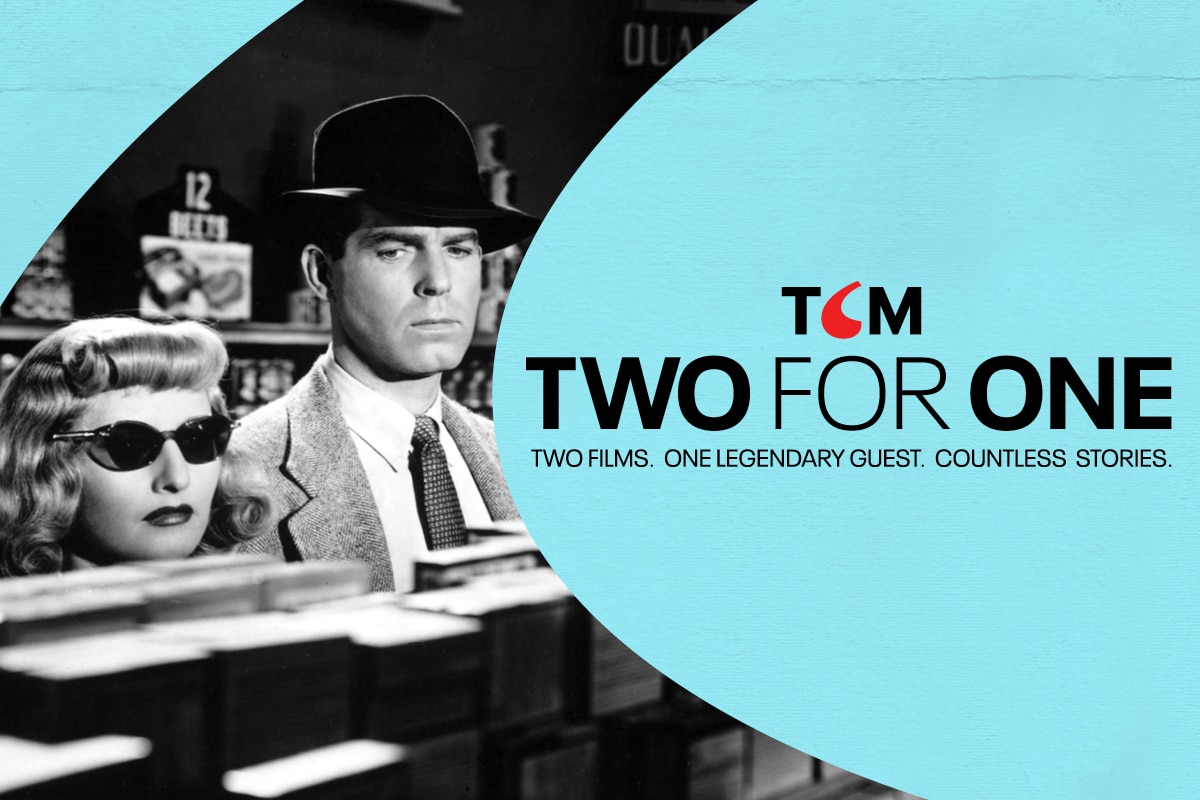
For TCM, he treats us to Billy Wilder’s unforgettable noir Double Indemnity (1944). Based on the book by James M. Cain, Fred MacMurray plays an insurance agent who falls for a married woman, played by Barbara Stanwyck at arguably her sexiest and most seductive. The two plan to bump off her husband and collect the insurance money only to discover their ruthlessness doesn’t end after a single murder. A film that’s always worth revisiting, Double Indemnity is noir perfection and one of the best movies in Wilder’s legendary career.
Lane wisely pairs this movie with a noir from New Hollywood by selecting Roman Polanski’s Chinatown (1974). With the Production Code having fallen away and a new generation of filmmakers taking a bleak, new look at America, Polanski’s movie has lost none of its punch in the past five decades. Jack Nicholson stars as private detective Jake Gittes, whose investigation turns into an extra-marital affair that leads him to discover a vast conspiracy involving the theft of Los Angeles’ water to further enrich wealthy land barons. The film marries Old and New Hollywood beautifully, not only with its pre-war setting but in casting John Huston, who kicked off his incredible directing career with the classic noir The Maltese Falcon (1941) playing the villainous and terrifying Noah Cross.
All eight of these movies are classics for a reason, and these programmers not only grace us with their amazing performances but also reveal their personal taste in cinema. Each of these double features pairs perfectly together, and we can only hope these stars one day return to TCM to share more of their favorite films.
JUNE FEATURED FILMS & SPECIAL GUESTS
6/7 Paul Giamatti
Carnival of Souls (1962)
Rosemary’s Baby (1968)
6/14 Brian Tyree Henry
Imitation of Life (1959)
The Learning Tree (1969)
6/21 Steve Buscemi
Scarecrow (1973)
Dog Day Afternoon (1975)
6/28 Nathan Lane
Double Indemnity (1944)
Chinatown (1974)
