This article was originally written about programming in the TCM Now Playing newsletter in February 2024.
February 2-4 | 33 Films
A landmark TV movie, biopics about legendary black jazz performers and the film debut of an influential actor/singer/activist are among the films featured in TCM’s Black History Month Weekend Marathon unspooling Feb. 2 and continuing through Feb. 4.
TCM host Jacqueline Stewart and Secretary of the Smithsonian Institution Lonnie Bunch III will present the eclectic films in the marathon including The Autobiography of Miss Jane Pittman (1974), which celebrates its 50th anniversary this year. There was a lot of advanced press on Jane Pittman, so by the time it aired Jan. 31, 1974 on CBS, the historical drama was appointment television.
And it didn’t disappoint.
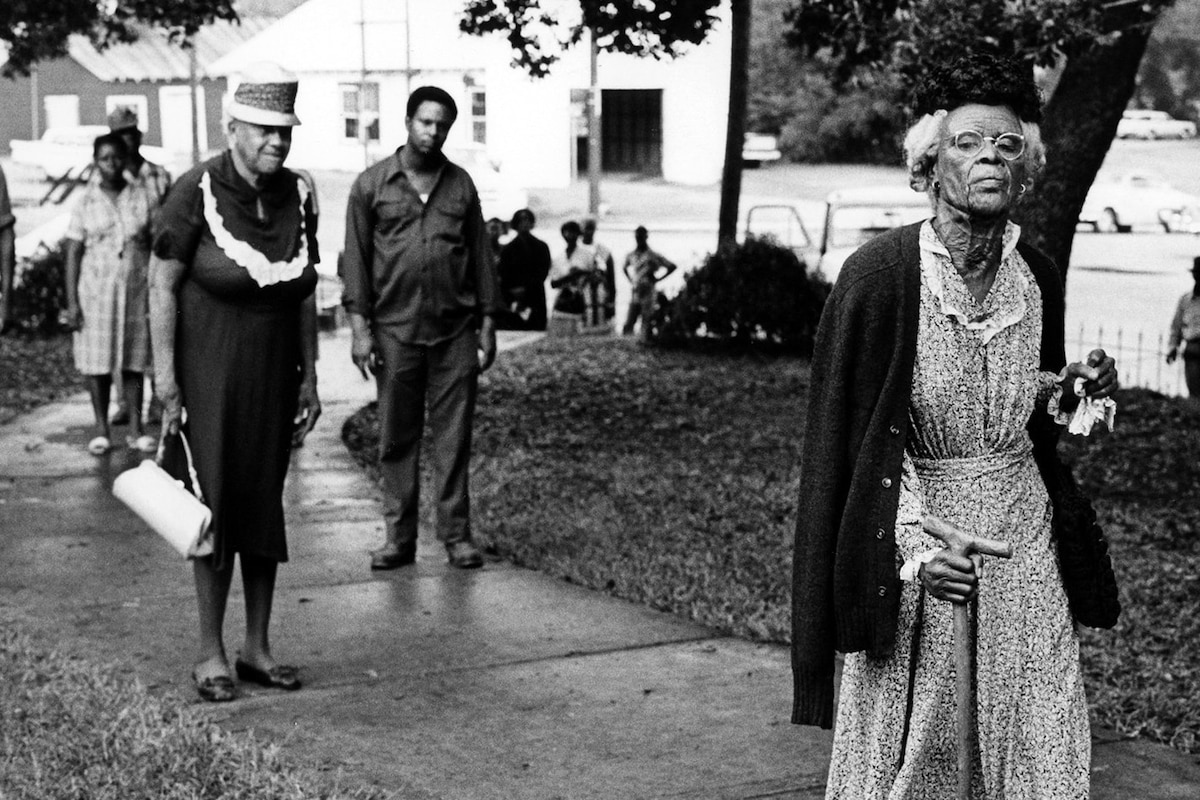
Jane Pittman was based on the 1971 novel by Ernest J. Gaines, who grew up on a Louisiana plantation. The book and the novel revolve around the resilient 110-year-old Jane Pittman who tells an interviewer her life story from being born into slavery in the 1850s to the Civil Rights movement, including when she risks her life drinking from whites only water fountain. It’s known for being one of the first TV movies to present African Americans with respect and dignity. Jane Pittman aired three years before ABC’s landmark miniseries Roots.
Cicely Tyson, who won two Emmys for Lead Actress in a Drama and Actress of the Year as Miss Jane, was one of the greatest actresses of the past seven decades. And much like Miss Jane, Tyson was strong, gifted and refused to compromise. She would turn down any role she believed presented African American women in demeaning stereotypes.
She told the L.A. Times in 2012 that when she walked away from such a role which was well-paying, Tyson was told “it was a foolish thing to do. I said I have never-and never will-just work for the money because I would end up on the psychiatrist’s couch and all the money would go to him. I would rather have my peace of mind.”
Though she had been acting since the 1950s, the former model really came into her own in the 1970s. Both Tyson and Diana Ross were the first black women to earn Best Actress Oscar nominations since Dorothy Dandridge became the first African American actress to do so for 1954’s Carmen Jones. Tyson was nominated for 1972’s Sounder and Ross for Lady Sings the Blues, also from 1972.
Jane Pittman won a staggering nine Emmy Awards. Besides Tyson, Tracy Keenan Wynn won for Adapted Screenplay, John Korty won Best Director and Stan Winston and Rick Baker won for their extraordinary old-age make-up created for Tyson.
One thing you do notice with movies such as Jane Pittman and others in the marathon is though they highlight some of the greatest Black talent on screen, Black filmmakers and writers weren’t given the opportunity to tell these stories.
Tyson, who died three years ago at 96, would receive 16 Emmy nominations, winning a total of three Emmy Awards. Tyson also won an Honorary Oscar, a Screen Actors Guild Award, a Peabody and a Tony Award. And she never compromised.
Before her dazzling Oscar-nominated turn as Billie Holiday in Lady Sings the Blues, Diana Ross was best known as the lead singer of The Supremes. As far as acting experience, Ross had played a nun on a 1968 episode of NBC’s Tarzan and a 1971 turn on the NBC sitcom Make Room for Granddaddy with Danny Thomas.
Holiday’s autobiography was published in 1956 and the jazz singer died at age 44 in 1959. Holiday’s life was something of a Greek tragedy marked by poverty, childhood rape, prostitution and the drug addiction that would kill her. There had been many attempts to bring her story to the big screen and finally, Berry Gordy of Motown signed on as executive producer and brought this story to life.
According to TCM.com the screenwriters “were instructed to combine and invent characters so as to capture the spirit of Holiday’s career rather than exact details. Her three husbands were combined into one character who was named after the third, Louis McKay.” Thankfully, Ross and Billy Dee Williams as McKay made beautiful music together.
Ross received glowing reviews, the movie less so. Vincent Canby of the New York Times noted “How is it possible for a movie that is otherwise so dreadful to contain such a singularly attractive performance in the title role?”
Billie Holliday isn’t the only jazz legend who lost their battle with drug addiction. Renowned and influential saxophonist Charlie Parker, aka Bird or Yardbird, was one of the major contributors to the creation of bebop. When he died in 1955 at the age of 34, he was physically in such bad shape that the coroner thought he was in his 60s.
One of Parker’s biggest fans is Clint Eastwood and his passion and admiration for the musician fueled his well-received 1988 biopic Bird, starring a then 26-year-old Forest Whitaker. It’s a dark, sad film that doesn’t fall into sentimental traps. And it’s filled with Parker’s glorious solos. Whitaker won Best Actor at the Cannes Film Festival and Eastwood received a nomination for the Palme d’Or.
Roger Ebert gave the film a thumbs up. “Eastwood might seem like an unlikely choice to direct this film, but not if you consider his origins as a West Coast kid, growing up in the 1940s and buying into the Parker legend…If we are to judge by Forest Whitaker’s substantial performance, Parker was a large, warm, gentle man who was comfortable with himself and loved his work”
Eastwood won the Golden Globe for Best Director and Diane Venora won the New York Film Critics Circle honor for Supporting Actress for her powerful turn as Bird’s common-law wife Chan Parker. Despite those successes, Bird only won an Oscar for Best Sound. Of course, Eastwood would win two Best Director Oscars for 1992’s Unforgiven and 2004’s Million Dollar Baby. And Whitaker won the Oscar and countless critics honors for 2006’s The Last King of Scotland
Robeson made a strong feature debut in pioneering black filmmaker Oscar Micheaux’s best known film, 1925’s Body and Soul. He excels in the dual role as an ex-con who is pretending to be a righteous minister who the women in the town adore and as his upstanding brother. Body and Soul is melodramatic and caused controversy as the “minister” is quite the sexual beast.
Robeson was a true Renaissance man. The son of an escaped slave, he received a scholarship to Rutgers University where he excelled in several sports including football. He received his law degree from Columbia. Even before the release of Body and Soul, he had already appeared in four Broadway productions. He’s best known for his role as Joe in 1936’s Show Boat where he sang “Ol’ Man River.” He made several films in England and scored a big hit on Broadway in the 1940s playing Othello.
A liberal activist, he was backlisted during the HUAC hearings and had to surrender his passport. A mentor to several black performers in the era, he finally had his passport returned in 1958, travelling to Europe to appear in concert and even resurrect “Othello.” But he was beset with health problems and returned to New York and eventually went into seclusion until his death in 1976 at the ag of 77.
