This article was originally written about programming in the TCM Now Playing newsletter in February 2024.
Tuesday February 6, 2024 | 3 Films
Director-producer-writer-and co-founder of Gracie Films, James L. Brooks, has a film and television career that spans nearly six decades, described by the Chicago Sun-Times as “a non-stop crescendo.” His work, known for its intelligent and pithy comedy as well as its undaunted engagement with social issues, includes but is certainly not limited to: Starting Over (1979), Terms of Endearment (1983), Broadcast News (1987), As Good as It Gets (1997), Spanglish (2004), The Mary Tyler Moore Show (1970-77), Taxi (1978-83), and The Simpsons (1980-today, remaining the longest-running American animated series, longest-running American sitcom and longest-running scripted primetime television series both in seasons and individual episodes). He has been nominated for several accolades. He won three Academy Awards for Terms of Endearment, which was also the second highest grossing film of 1983 in the U.S., just behind Return of the Jedi (1983). Brooks has also received 53 Emmy nominations, winning 21 of them. Most recently, he produced the film adaptation of Judy Blume’s beloved coming-of-age novel, Are You There God? It’s Me, Margaret (2023).
Brooks, who was born in Brooklyn, New York and raised in North Bergen, New Jersey, has described his childhood as “tough,” “poor,” and “lonely.” His father left his mother when he found out she was pregnant with him. He’s said that he was often alone in the apartment while his mother was working. As a result, he spent his time cultivating his now signature humor by reading comedic works and writing his own. After ushering Brooks into adulthood, his mother passed away when he was 22. It is, perhaps, during these difficult early years that Brooks learned to cut through tragedy with comedy.
This month, Brooks has chosen to screen three comedy-dramas that have influenced his own: Annie Hall (1977), Adam’s Rib (1949), and Modern Times (1936). He fondly recalls seeing Woody Allen’s Annie Hall for the first time with a group of people working in comedy and television: “We were all stunned. Stunned. It was like watching a spaceship land. That something that funny could also be beautiful.” Originally titled Anhedonia, a term for the inability to experience pleasure, Annie Hall tells the story of neurotic but endearing comedian Alvy Singer (Allen) who is trying to come to terms with his breakup from the eponymous female lead (Diane Keaton) a year ago. In a series of flashbacks, the film reminisces about their quirky romance and tries to make sense of its end. Known for its creative risks – Singer’s direct address, split screens, mental subtitles, animation and long shots (averaging 14.5 seconds) – Annie Hall is cited by both filmmakers and critics alike as a turning point in the overall aesthetic of comedic productions. Indeed, the film did the unexpected by successfully forging odd pairings; it brought on both The Godfather’s (1972) cinematographer Gordan Willis (known as “the prince of darkness”) and its rather tragic female lead for the offbeat comedy. The film ranks among the best films ever made by the American Film Institute’s List of the Greatest Films in American Cinema and Bravo’s 100 Funniest Movies. The screenplay, written by Allen and Marshall Brickman, was named the funniest ever written by the Writers Guild of America in its list of the 101 Funniest Screenplays. Annie Hall won four of the “Big Five” Academy Awards: Best Picture, Best Director, Best Original Screenplay, and Best Actress.
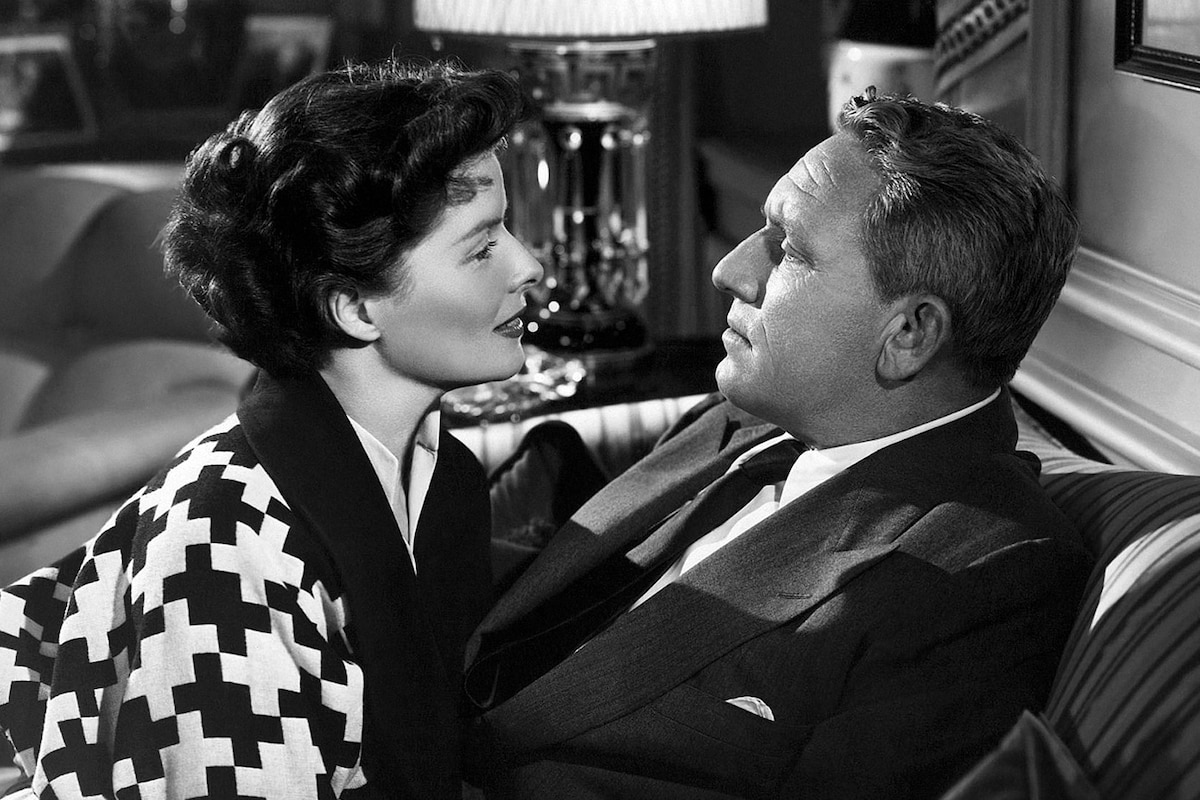
Brooks has also chosen George Cukor’s Adam’s Rib, a comedic battle of the sexes film featuring Spencer Tracy and Katharine Hepburn in their sixth Metro teaming. The film opens with Doris Attinger (Judy Holliday) who, suspecting her husband is having an affair, follows him around Manhattan with a gun. When she finds the couple, she fires. In her rage, she hits him in the shoulder and his lover escapes. Upon reading of the incident in the news the following morning, married lawyers Adam (Tracy) and Amanda Bonner (Hepburn) begin to argue. Adam thinks Doris is guilty of attempted murder while Amanda sympathizes with her, citing the double standard that exists for men and women when it comes to adultery. When Adam goes off to work, he learns that he has been assigned to prosecute the case. Meanwhile, Amanda seeks out Doris to become her defense lawyer. The two face off in court. Adam’s Rib was nominated for the Academy Award for Best Story and Screenplay. It is ranked # 7 in AFI’s 10 top 10 for Romantic Comedy.
Brooks’ programming rounds out with Charlie Chaplin’s social comedy film Modern Times. It is the last of Chaplin’s films to feature his Little Tramp character, having him struggle to survive in the modern, industrialized world. The Tramp is initially employed at a factory where the machinery overwhelms him, and various mishaps continually send him to jail. In between imprisonment and odd jobs, he meets and befriends an orphan girl (Paulette Goddard) and together they try to cope with the difficulties of modern life. Chaplin got the inspiration for Modern Times from witnessing the dismal conditions of Europe during the Great Depression as well as a conversation with Mahatma Gandhi who impressed upon him a passionate opposition to modern technology, machinery and industrialization. The film explores several themes pertaining to the tension between machine and man: unemployment, poverty and crime. It was the first film in which Chaplin’s voice is heard as he performs Léo Daniderff’s comical song “Je cherche après Titine” in gibberish – Chaplin’s rendition is also known as “The Nonsense Song.” Modern Times is repeatedly cited as one of the greatest films of all time.
