This article was originally written for the Summer Under the Stars programming in the TCM Now Playing newsletter in August 2023.
AUGUST 13th | 11 Movies
A leading man for the ages, join TCM on Sunday, August 13th as Paul Newman’s vast career is celebrated. Through his performing, philanthropic efforts and directing (not to mention his striking blue eyes, rakish smile and smooth voice), Newman has remained one of the most respected and beloved figures in the entertainment world for decades.
Born on January 26, 1925 in Cleveland, Ohio, and raised in the suburb of Shaker Heights, Newman was the younger of two sons of a homemaker mother and a shopkeeper father. Catching the theatre bug early in life, he performed in various plays as a child. After a stint in the Navy during World War II, he would attend Kenyon College, where other notable alumni include former President of the United States Rutherford B. Hayes, Prime Minister of Sweden Olof Palme and actor Allison Janney. With some summer stock under his belt, he would spend a year at the Yale School of Drama before eventually leaving Connecticut for New York to try his luck on the Great White Way.
Attending the Actors Studio, where he studied under the famed Lee Strasberg, Newman would make his Broadway debut in 1953 in William Inge’s Pulitzer Prize-winning play “Picnic.” It was there that he would meet his eventual second wife and frequent collaborator Joanne Woodward, who was an understudy. Additional theatre and television work would follow and he would make the leap to film with a role in the 1954 historical drama The Silver Chalice, which starred Virginia Mayo, Jack Palance, Pier Angeli, Lorne Greene, E.G. Marshall and a teenage Natalie Wood.
His penchant for playing highly ambitious, emotionally complex characters with a rebellious streak is evident even in his early film roles. As the presumed scion of a prominent Pennsylvania family in The Young Philadelphians (1959), that family name (and the prestige that comes with it) is the ticket that will allow Anthony Judson Lawrence to rise the ranks to become an attorney. Capitalizing on that clout that the name carries, that drive to achieve greatness may allow him to fall in love twice, make connections and manipulate situations for his own benefit (including worming his way into assisting an established lawyer writing a book), yet they are never done completely out of malice or selfishness. When a close friend (Robert Vaughn) is on trial for the alleged murder of his uncle, Tony must contend with family secrets and scandal on both ends to bring forth justice in a world that separates the haves from the have nots. Co-starring Barbara Rush, Brian Keith, Diane Brewster and John Williams, the film would be nominated for three Academy Awards, including one for Best Supporting Actor for Vaughn.
Reprising the role he portrayed on Broadway, as Chance Wayne in the screen adaptation of Tennessee Williams’ play Sweet Bird of Youth (1962), the character’s willingness to do practically anything to better himself has led him back to his hometown, St. Cloud, Mississippi. As the male escort of the depressed, possibly washed-up actress Alexandra del Lago (Geraldine Page, who also played the same role in the stage production), Chance comes back to try to win back the love of his life, Heavenly (Shirley Knight), the meek daughter of a prominent local family. After failing to make something of himself in Hollywood, by clinging to Alexandra and working diligently to get her back into everyone’s good graces to repair her seemingly damaged career, he fully expects that she will be so grateful that she will be magnanimous with her contacts, which will allow him to finally gain his own fame and fortune. With the odds against him, particularly against Heavenly’s unscrupulous father and brother (Ed Begley, Rip Torn), thanks to Alexandra he learns his lessons the hard way. The youth, ingenuity and optimism that propelled him forward in life are slipping away and he can’t do anything about it. Newman previously starred in another adaptation of a Tennessee Williams’ work, opposite Elizabeth Taylor and Burl Ives in 1958’s Cat on a Hot Tin Roof, which would earn him his first Best Actor Academy Award nomination.
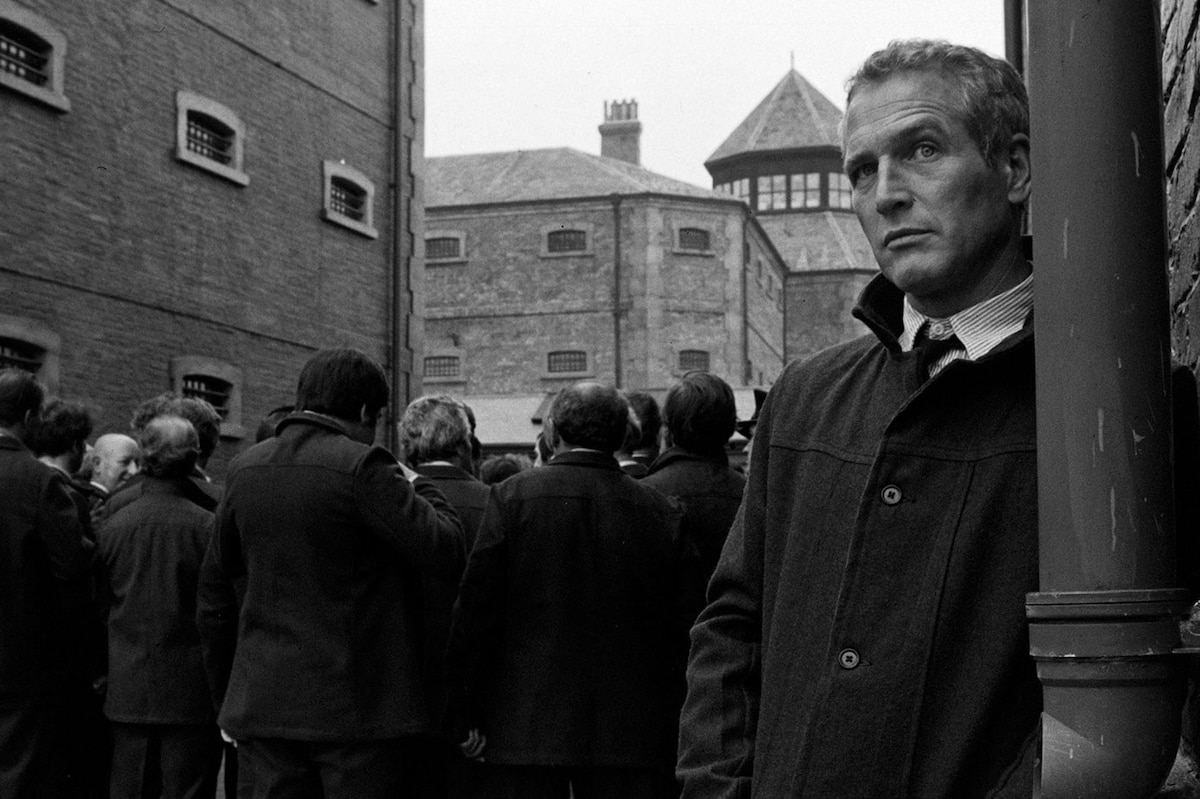
As the titular Lucas “Luke” Jackson in 1967’s Cool Hand Luke, Newman once again brought a certain affability to a character that is in a precarious situation and must rely on his charm and wit to simply survive. Sentenced to two years in a Southern prison and working on a chain gang under some hardened and callous authority figures, it is that gregariousness and devil-may-care attitude that keeps him going despite the harsh, inhumane conditions. Several escape attempts (which each earn him a night in “The Box,” a structure about the size of an outhouse set up on the prison grounds that was used as a cruel punishment for various infractions) and an unapologetic air of defiance hidden under a mischievous grin eventually endeared him to the other inmates, yet those in power targeted him due to Luke’s refusal to conform. As those guards worked overtime to try to break Luke’s spirit, he kept his dander up and constantly fought-right up until the end. Newman would receive another Oscar nomination for Best Actor for the part, and co-star George Kennedy would win for Best Supporting Actor.
He would be nominated for a total of ten Oscars over the course of his career, with eight for Best Actor in a Leading Role (which also includes Hud, 1963; Absence of Malice, 1981; The Verdict, 1982; and Nobody’s Fool, 1994) and one for Best Actor in a Supporting Role for Road to Perdition (2002). While he did not pick up an Academy Award for Best Actor for his role as “Fast” Eddie Felson in 1961’s The Hustler, he would finally nab his single Oscar over 25 years later when he returned to the part in 1986’s The Color of Money. This achievement would place Newman among only a handful of actors who received Oscar nominations for playing the same character in two different films, joining Cate Blanchett, Peter O’Toole, Bing Crosby, Sylvester Stallone and Al Pacino, according to IMDB.
Newman’s lone nomination for a Best Picture Academy Award came from his directorial debut, Rachel, Rachel (1968), starring Joanne Woodward, who he wed in the late 1950s and had three children with in addition to his three children from his previous marriage. Based on the Margaret Laurence novel “A Jest of God,” Woodward played Rachel Cameron, a repressed Connecticut schoolteacher whose overwhelming shyness masks her deep desire to feel a human connection. Living with her mother in the same home they shared following her funeral director father’s death, her days and nights are lonely and mundane. Forming a friendship with fellow teacher Calla (Estelle Parsons), she slowly begins to come out of her shell, but is quite shocked when the enamored Calla eventually makes a pass at her. Once a former childhood friend (James Olson) comes back to town for the summer and pursues her, she is not used to such overt gestures, yet something begins to stir within her. Once they continue to date and then embark on a physical relationship, which was genuine love on her part and more of a lustful fling on his, it awakened something in her that had laid dormant for her entire life: the desire to truly live. In addition to Newman’s Academy Award nomination, both Woodward and Parsons would each receive one in their respective acting categories that year. The couple would work together in 16 films.
Even if you aren’t actively watching his movies, you can still see his face and tremendous influence whenever you take a trip to the supermarket. Created in 1982, and co-founded with author A.E. Hotchner, Newman’s Own is a line of food products that include salad dressings, salsa, cookies, popcorn, beverages, frozen pizza and pasta sauce featuring his recognizable visage on the packaging, often cleverly depicted in various types of garb. With the goal of giving away profits to charity, according to the company’s official website, through the Newman’s Own Foundation over $600 million dollars has gone to various causes.
Newman would continue to act through the early part of the 2000s, including an appearance on a 2001 episode of The Simpsons as himself, as the Stage Manager in a television film adaptation of Thornton Wilder’s play Our Town in 2003 and co-starring with Ed Harris, Helen Hunt and once again, Joanne Woodward in the 2005 television miniseries Empire Falls. His final acting role was as Doc Hudson in the 2006 Disney Pixar animated film Cars, certainly a nod to his well-known love of auto racing, which had led to his professional involvement in the sport. His health took a turn and he passed in September 2008 at the age of 83.
In his six-decade long career, Paul Newman left behind a legacy in film and stage work that could never be contained nor overshadowed by anyone. That versatility and passion for his craft should and will serve as a model for aspiring thespians for many decades more.
