This article was originally written for the Summer Under the Stars programming in the TCM Now Playing newsletter in August 2023.
August 2 | 22 Movies
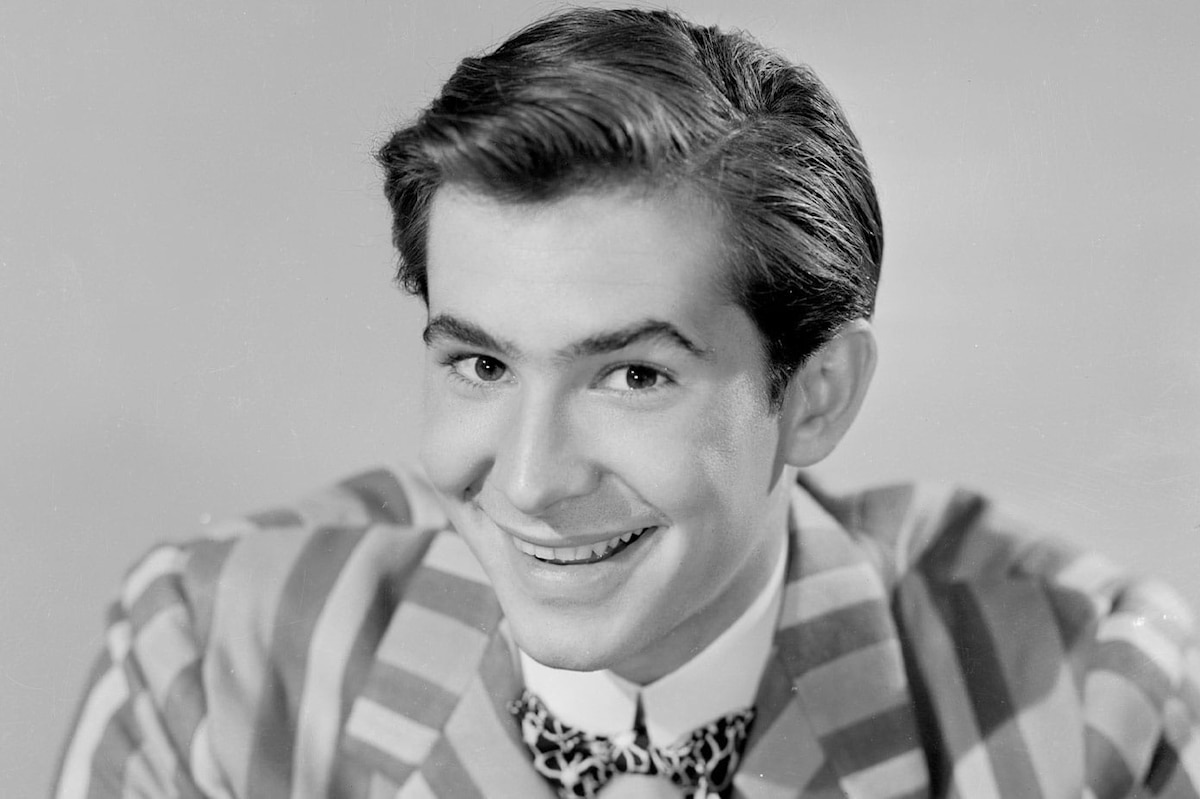
When actors talk about typecasting, or the fear that they may be “typed” as one particular thing and unable to break out of roles set in a predetermined mold, an example that might be held up is Anthony Perkins. During the 1950s, Perkins was one of the hottest young actors in Hollywood, having been born of the stage and turning out winning performance after winning performance in major productions. Then he starred in what is typically cited as one of the greatest and most influential films in cinematic history: Psycho (1960).
His character, Norman Bates, is embedded in pop culture. The boyish Perkins played Norman with such an affable, nervous charm, and the movie itself so seismically shifted how violence was showcased on screen, that the actor would spend the rest of his life running from and to the characterization. While its legend has allowed Perkins to live on in the popular zeitgeist in ways even the most prominent stars may never equal, it is easy for people to overlook the sheer breadth of impressive work with which Perkins lined his resume.
In many ways, Psycho was predestined for Perkins, who had a close relationship with his own mother due to a largely absent actor father, who he came to bitterly resent. When his father died, Perkins felt an intense guilt, as if he might’ve been responsible for his passing through his own intense dislike and jealousy of his father, and in later years he would tell People Magazine magazine that his relationship with his mother had shades of an OedpiusOedipus complex. The uncomfortably close relationship between the character of Norman and his mother in Psycho could be read as almost the extreme version of Perkins’ own childhood trauma.
Perhaps in a move to feel closer to his deceased father, Perkins took to the stage. He began acting in Summer summer Stock stock productions, which ultimately led to his film debut at age 21 in The Actress (1953). He became a more known commodity, however, through Broadway productions. His turn in “Tea and Sympathy” garnered rave reviews, and led to an important role in the Gary Cooper-starring movie Friendly Persuasion (1956). His performance led to an Academy Award nomination for Best Supporting Actor. He signed a contract with Paramount Pictures.
From there he became a true rising star in his own right, starting with Fear Strikes Out (1957), where he was top billed opposite Karl Malden, portraying baseball player Jimmy Piersall.
Roles kept coming for Perkins. He co-starred with Henry Fonda in The Tin Star (1957), took top billing once again in This Angry Age (1957) and had Sophia Loren as a leading lady in Desire Under the Elms (1958). He also appeared in the comedy The Matchmaker (1958) with Shirley Booth and Shirley MacLaine, then Green Mansions (1959) with Audrey Hepburn, then one of the biggest stars in the world. He had a prominent part in Stanley Kramer’s On the Beach (1959). He played a collegiate basketball player opposite Jane Fonda in her first film, Tall Story (1960). Fonda would later recount that Perkins was a major influence, and also a major crush, in her early career.
To say Perkins’ star was ascending at this point would be an understatement. When Psycho happened, he was not necessarily a megastar, but he certainly was on his way.
Psycho changed everything, though. It was a massive hit, the biggest of not only Perkins’ career, but also of its legendary director Alfred Hitchcock. Co-star Janet Leigh, who was Oscar-nominated for her work in the movie, would also become synonymous with the movie – but unlike Perkins, Leigh was not tasked with playing a character that might be seen as a “type.”
During the 1960s, Perkins’ promise as a major film actor would dwindle, with the image of him as a psychotic character almost inescapable, even as Psycho had essentially made him immortal.
He found solace in France, where he lived for sometime a while making European films, including Goodbye Again (1961) with Ingrid Bergman, in which their characters are engaged in a May-December romance. He also appeared in another May-December-plot entitled Phaedra (1962).
He made a second film with Sophia Loren, Five Miles to Midnight (19631962). In The Trial (19631962) he again was given a mentally disturbed character to enact, this time directed by Orson Welles. Perkins would later speak highly of Welles, impressed by his talent and visionary style.
Perkins eventually returned to the United States in the late-1960s, though his work was primarily on television and Broadway. He would begin appearing in supporting roles throughout the 1970s, including the western Western comedy The Life and Times of Judge Roy Bean (1972), directed by John Huston and starring Paul Newman. Other roles in popular films followed, including the all-star Murder on the Orient Express (1974) and the Diana Ross-starring Mahogany (1975).
Now in his 40s, Perkins’ hesitation to be associated with his famed turn as Norman Bates began to dissipate, and he reappeared as the character for the first time in a 1976 Saturday Night Live sketch. He was one of the first hosts of the series during its inaugural season.
He starred alongside Geraldine Chaplin in the melodrama Remember My Name (1978) and alsoand joined the stacked cast roster for Winter Kills (1979), a black comedy that was ultimately a disappointment at the box office.
In 1983, Perkins surprisingly took the surprising opportunity to reprise Norman Bates, beginning what would become a true late-in-life embrace of the character. The resulting film, Psycho 2 II (1983), was a hit, and he followed it with Psycho III (1986), which he also directed. He would play Norman once more in the HBO television film Psycho IV: The Beginning (1990), which ignored many plot points from the initial sequels and presented a flashback-origin story to explain the character’s psychotic history. His final role was another television film, In the Deep Woods (1992), which was released posthumously.
In addition to his acting career, Perkins also co-wrote the film The Last of Sheila (1973) with his friend Stephen Sondheim, and the two won the Edgar Allen Poe Award for Best Motion Picture Screenplay. The movie was based on the scavenger hunt-style games that Perkins and Sondheim played with their New York friends.
Perkins married actress and model Berry Berenson in 1973, and the couple had two children, Oz and Elvis.
Prior to his marriage, Perkins had been in long term relationships with men and had identified as gay. He was notably with dancer Grover Dale and teen idol Tab Hunter, who wrote extensively about his relationship with Perkins in his memoir. According to the biography “Split Image: The Life of Anthony Perkins,” Berenson later said that Perkins had told her of his sexuality before their marriage. After the marriage, there was continued speculation about Perkins’ true sexual orientation amongst friends and colleagues, but Perkins told director Sidney Lumet, as the director related in an episode of Biography, that he wanted to stop living as a gay man.
Regardless of his true feelings, Perkins and Berenson remained married until his death from AIDS in 1992, a diagnosis he revealed just weeks before he succumbed to the disease. Berenson would die a victim of the 9/11 terrorist attacks, on board American Airlines Flight 11.
Not long before his death, The Los Angeles Times quoted Perkins as saying:
“I have learned more about love, selflessness and human understanding from the people I have met in this great adventure in the world of AIDS than I ever did in the cutthroat, competitive world in which I spent my life.”
